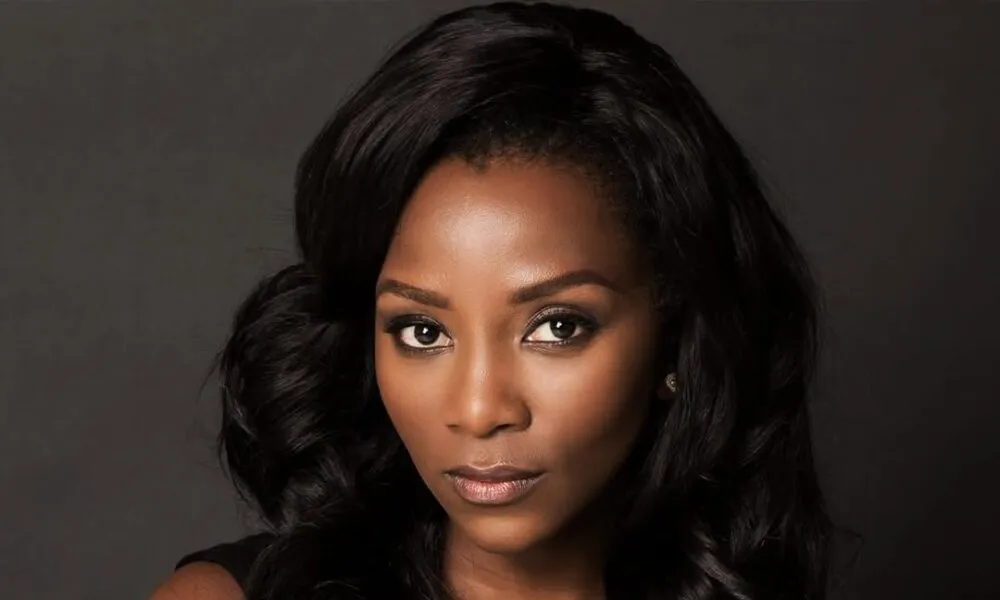
The Gap
Four years. That's how long we've been asking where is Genevieve? The last time Nigeria's biggest screen export worked at full throttle, some of us were still planning pre-pandemic trips to Lagos. Now she's back — not in Nollywood, not in Hollywood, but on BBC One's six-part thriller Wahala. A series about Anglo-Nigerian friends in London whose secrets blow up their lives.
And she's not coming alone. Adelayo Adedayo (Bloodlands). Cush Jumbo (The Good Wife). Susan Wokoma (Year of the Rabbit). Four Black British actresses of Nigerian heritage. Four different answers to the same question: what does it mean to be Nigerian abroad?
The show is adapted from Nikki May's 2022 bestseller — the novel that tore through diaspora book clubs from Peckham to Brooklyn, giving us messy friendships, code-switching, and the kind of secrets we keep from white colleagues but spill at house parties where everyone just gets it. Theresa Ikoko is writing the screenplay. If you watched Rocks, that 2019 film about Black girlhood in London that felt like watching your own life, you already know she understands the weight of carrying two worlds in one body.
Production is rolling now. BBC One hasn't released much — because of course they haven't — but we know enough. Three Anglo-Nigerian women. London. Secrets that surface. Think Big Little Lies meets I May Destroy You, with jollof rice debates and the specific exhaustion of explaining your surname to white people at brunch.
What Genevieve's Casting Actually Means
For those of us who grew up on Nollywood — scratchy DVDs from the African store, iROKOtv at 2 AM because we missed home — Genevieve isn't just an actress. She's the blueprint. The one who made us believe Nollywood could be glamorous, sophisticated, world-class. When she stepped back after Lionheart became Nigeria's first Oscar submission in 2019, it left a gap.
Now she's returning on a BBC production.
Not Nollywood. Not Hollywood. The BBC — the same institution that once told our parents' stories through a colonial lens, now paying Genevieve to play a woman navigating the exact life we live. Alongside British-Nigerian actresses who've been holding down roles in the UK industry for years, refusing to be flattened into the "African friend" or the "strong Black woman" trope.
This is what evolution looks like when it's not performed for white approval.
Wahala is the show we've been starving for. Not African-American stories we love but can't fully see ourselves in. Not "African" stories that flatten fifty-four countries into one narrative. This is about being Nigerian and British. About Sunday lunch at your parents' house where everyone speaks Yoruba or Igbo, then Monday morning at the office where you code-switch so smoothly you don't even notice anymore. Where you're "not too African" but never quite British enough either.
You know the feeling. When you're at brunch with non-African friends and someone makes a joke you can't quite explain. When you're successful by every measure but your aunties still ask when you're getting married. When you navigate white spaces all week, then let your guard down at a house party where everyone just gets it.
That texture is what Wahala promises.
The novel dug into how class works among Nigerians abroad — because yes, we have our own hierarchies, our own codes about who went to which university, who married whom, whose parents came over when and did what. It examined colorism within our community, the kind we don't always want to admit exists. It showed friendship between Nigerian women as complicated, beautiful, and sometimes toxic.
These are conversations we have in group chats and at parties. Rarely on BBC One at primetime.
What This Opens
The infrastructure is finally catching up to the talent. Genevieve doesn't have to choose between Nollywood authenticity and international production values anymore. Shows like Wahala prove we can have both. We can tell our stories with the budget, the distribution, the platform they deserve.
For younger Nigerians in the diaspora — the ones who maybe didn't grow up watching Nollywood, who feel disconnected from their parents' Nigeria — this is an entry point. A story set in the London they know, with characters who look like them, dealing with the specific mess of being both and neither.
The six-part series is in production now. Late 2026 or early 2027 release, likely BBC One first, then streaming platforms for the rest of us. Start reading the book if you haven't. Join the conversation before the show drops. You know our group chats are about to be insufferable when this airs. Every outfit Genevieve wears will be dissected. Every Naija reference will be caught and celebrated. Every moment of code-switching will be recognized by those of us who live it.
This is also the moment to support the other Nigerian-British actresses and creators who've been doing the work. Cush Jumbo, who's been killing it on both sides of the Atlantic. Adelayo Adedayo, whose range is criminally underrated. Susan Wokoma, who brings comedy and depth to everything she touches. Theresa Ikoko, who's proving Nigerian women can write for the biggest stages.
Watch their other work. Learn their names. Wahala isn't a fluke. It's the result of years of Nigerian talent refusing to shrink, demanding space, creating opportunities.
The Claim
Genevieve Nnaji's return isn't about one actress coming back to our screens. It's about Nollywood royalty claiming new territory. It's about the diaspora experience finally getting the prestige TV treatment. It's about Nigerian women — in all our complexity — being centered in a story that doesn't exoticize or simplify us.
We've been here all along, living these lives, carrying these contradictions, navigating these spaces.
Now we finally get to see it reflected back.
