A Londoner Made Perfect Amala. Nigerian Food Didn't Win — It Arrived.
Nigerian food was never waiting to be discovered. It was waiting for everyone else to pay attention.
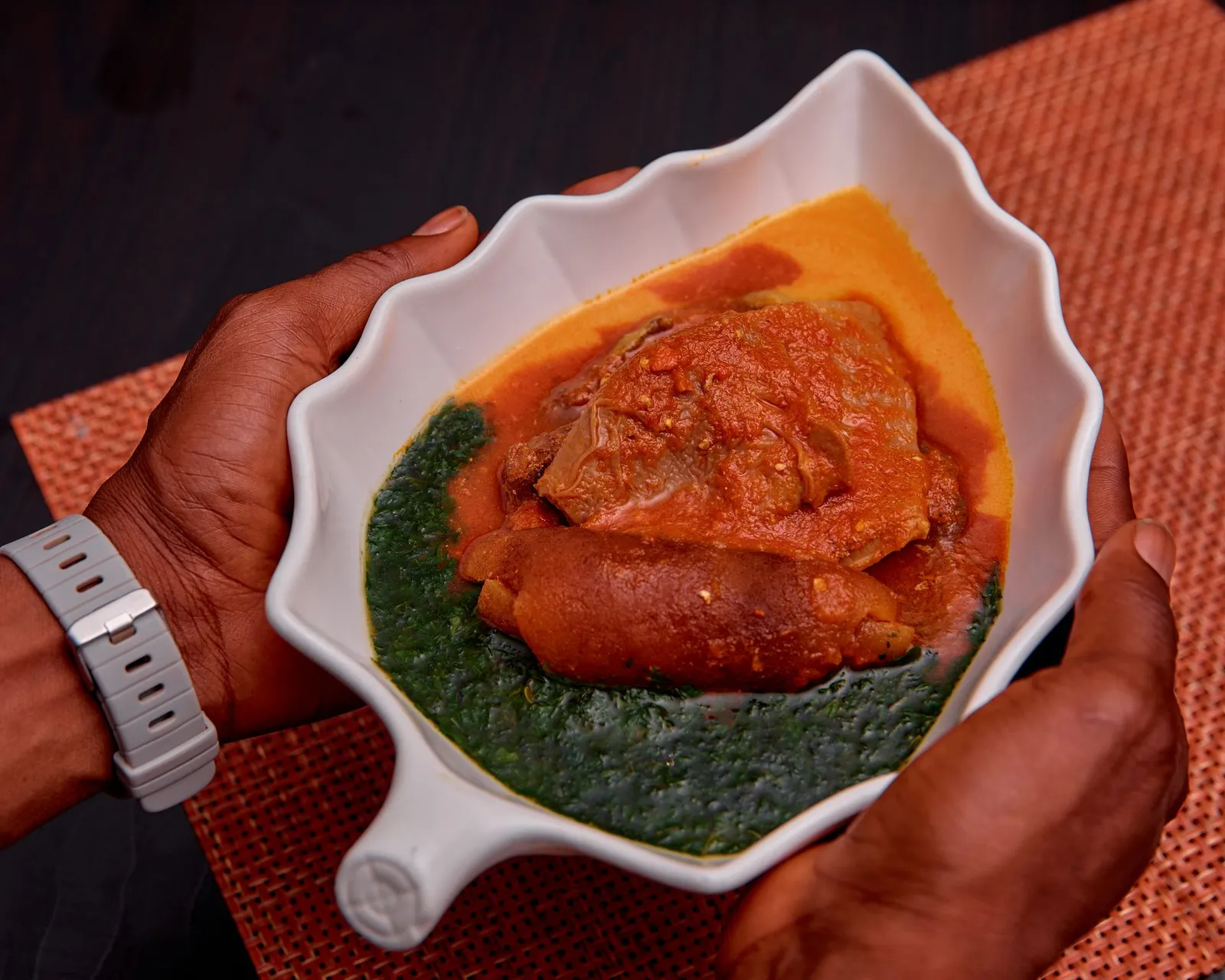
So when broadcaster and food writer Juliet Tontoye — known on air as Tena — watched a young Englishman named Cal make amala and abula from scratch in a London kitchen, the moment didn't feel like a victory lap. It felt like a reckoning. Gbegiri. Ewedu. Buka stew. Assorted meat glossed with palm oil. Every element executed with the kind of confidence that usually takes years and a grandmother's kitchen to acquire.
Tontoye nearly had a heart attack. Then she rewrote her entire understanding of where Nigerian food is headed.
The Architecture of the Dish
If you've ever made amala, you know there is no shortcut. Too little heat and it goes lumpy. Too much water and it loses its pull. It has to be smooth, elastic, and scalding when it hits the table — and no amount of culinary school will teach you that. That knowledge lives in repetition and proximity.
What stopped Tontoye wasn't just that Cal stirred the pot correctly. It was that he understood the structure of abula. He layered it in sequence: yellow gbegiri as the base, slick green ewedu cutting through, deep red Buka stew crowning the top. He didn't just know the ingredients. He understood what they were doing to each other. The dish has an architecture. He read it.
Tontoye called it a love letter to Yoruba cuisine, written from thousands of miles from home.
For those of us who grew up eating this food at buka spots in Ibadan or watching our mothers wrestle with it on a Saturday afternoon in Peckham, that image does something to you.
This Didn't Happen Overnight
In the early 2000s, Nigerian food wasn't content. It wasn't a brand. It wasn't an aesthetic. It was just food — eaten fast before it went cold, served without ceremony, kept close to home.
Fine dining meant French menus. "International cuisine" meant an accent nobody could place. Egusi didn't have a close-up. Suya didn't have a photographer.
Then the 2010s arrived. YouTube and Instagram handed Nigerian food creators a global stage, and they didn't waste it. Sisi Yemmie and Sisi Jemimah were among the first to bring Yoruba and broader Nigerian dishes to international audiences with precision and personality. More followed. Chefs started applying modern plating to traditional recipes. Suddenly our food had composition. Suddenly it had light.
The critics came next — moving between high-end restaurants and roadside buka spots, documenting the full register of what Nigerian food actually is. Diaspora audiences were hooked. Then the Jollof War broke out and the internet was never the same. Nigeria versus Ghana. Pick a side. Millions of people who had never tasted either version got dragged into the argument, and curiosity turned into appetite. Both countries won. Both cuisines went global.
Afrobeats finished the job. When Nigerian music started filling arenas in London, New York, and Toronto, the world's attention landed on Lagos. International celebrities flew in for December. Tourists came for the lifestyle and ended up at a pepper soup spot they'd talk about for years. The music and the food have always been part of the same culture. The world is only now understanding that.
What It Feels Like From the Diaspora Side
We have spent years being the people who explain their food.
To colleagues. To flatmates. To the person at the office who asks whether your lunch "smells like that on purpose." We have eaten jollof quietly at our desks. We have answered "what's in it" about egusi more times than we can count. We have watched our food get labeled "exotic" by people who have never been within a thousand kilometres of Lagos.
And now: a London kitchen is producing technically correct amala. Michelin-starred restaurants run by Nigerian chefs are serving elevated akara — crispy at the edge, yielding at the center, tasting like home and somewhere entirely new at once. Fine dining spots in Lagos are building multi-course menus around local staples, plating them with the confidence of kitchens that know they don't need to prove anything.
MasterChef — 36 seasons, 71 countries — finally turned its cameras on Nigerian cooks, Nigerian ingredients, and Nigerian technique. That took a long time. It happened because of the decade of work that preceded it.
Every food vlog. Every restaurant review. Every Jollof War tweet. Every Afrobeats festival where someone grabbed suya from a vendor and stopped mid-bite. It all stacked up. When a colleague in London tells you they've been trying to learn how to make jollof, or someone at a dinner party in Toronto asks if you know a good Nigerian restaurant because they've been wanting to try it — that is not random. That is cumulative. That is the result of creators, critics, and chefs building an argument, one plate at a time, until the world couldn't look away.
What Comes Next
The momentum is not slowing. Nigerian chefs are pushing deeper into global fine dining. Food creators are getting more experimental — pairing traditional technique with international influence without dissolving the soul of the original. The Afro-fusion wave picking up speed in Lagos is producing a food culture that speaks to the diaspora visiting home and to the international tourist discovering it for the first time in the same breath.
More creators like Cal will attempt Nigerian dishes. The tutorials exist now. The community is engaged. The demand is real, and the demand is growing.
If you're in the diaspora, this is the moment to lean into it. Share the food vloggers. Take someone who has never had Nigerian food to a Nigerian restaurant. Cook for someone who doesn't know what they're about to taste. You have been an ambassador for years. You just have more evidence now.
Nigerian food never needed the world's permission to be extraordinary. Tena understood that watching Cal layer his abula correctly in a kitchen in London: this wasn't the beginning of something. It was the world finally arriving at something that was always already there.
We knew. We were just eating while we waited.
