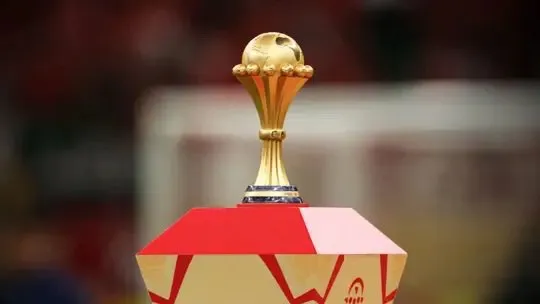
AFCON Isn't Going to One Country. It's Going to Whoever Does the Work.
CAF didn't hand this to anyone. All 54 Member Associations — every single one — are now eligible to bid for the right to host the Africa Cup of Nations in 2028, 2032, and 2036. Three tournaments. Three separate decisions. Three nations that will get to say, for the rest of history: we hosted this.
The bidding process is open. The scramble starts now.
What CAF Actually Built Here
This wasn't announced casually. CAF commissioned PwC as independent expert adviser and assembled technical, financial, and legal teams to construct a framework designed to be transparent, competitive, and — critically — enforceable. They are not looking for the loudest bidder. They are looking for the most prepared one.
Successful bids will need to demonstrate real infrastructure, real commercial capacity, real organisational depth. The bar has been set deliberately high. Every nation that steps up has to clear it.
The announcement lands less than a year before the 2027 edition kicks off in East Africa — a joint bid between Kenya, Tanzania, and Uganda that marks the tournament's first time in the region, running June 19 to July 17, 2027. CAF is already planning a decade beyond that. That is not routine administration. That is a governing body that has decided African football's biggest stage deserves long-range architecture.
What This Feels Like If You're Watching From Abroad
Think back to the last AFCON. Not the football specifically — the WhatsApp.
Your uncle sending voice notes at 2am. Your cousin posting the same goal clip six times. The group chat renamed to something you can't repeat in a published article. Your Ghanaian flatmate going silent after the Black Stars exit. Your Nigerian colleague arriving at the office looking like they haven't slept — because they haven't.
For diaspora in London, Toronto, New York, Johannesburg-by-way-of-Accra — AFCON is the one tournament that makes home feel close enough to touch. It's the event that turns a Nairobi restaurant in Peckham, a Senegalese spot in Brooklyn, or an Ethiopian café in Toronto into something that functions less like a bar and more like a stadium. It's the only football competition that consistently makes people book time off work they cannot afford to lose.
Now put AFCON in a country you have roots in. Your city. Streets you know. A stadium your father mentioned once. That's not hypothetical sentiment. That's precisely what these bids are deciding.
The cumulative global TV audience for AFCON now exceeds 3.2 billion viewers. Digital views have crossed six billion. Six billion. This is not a regional competition that the world tolerates. This is a global event that belongs to us. Hosting it is a statement that no press release, no diplomatic communiqué, and no tourism campaign can replicate. A world-class AFCON, delivered cleanly and brilliantly, is a rebuke to every lazy narrative about what the continent can build and run.
For diaspora who spend real energy — in comment sections, in offices, in family arguments — correcting those narratives, this is the kind of proof that wins the argument without saying a word.
Where the Geography Gets Interesting
Historically, North and West Africa have hosted the most. The 2027 East Africa joint bid shifted that pattern. The map is genuinely open now.
Southern Africa has the infrastructure appetite. Central Africa has the footballing culture and an audience hungry for this moment. North Africa has the organisational precedent. West Africa has nations that have been waiting for the right cycle.
Which Member Associations move first — and which ones come prepared versus which ones come ambitious — will define the next several years of continental football politics. Watch that space carefully. The countries that announce intent early, with serious backing, will shape the conversation before the formal evaluation even begins.
What Comes Next
Formal bids will require detailed submissions: infrastructure plans, commercial frameworks, operational capacity. The timeline will be set by CAF's official channels, and that's where the real information will live as the process develops.
But the public conversation starts now. Which nations should be putting their hands up? Which governments need to be pushed by their own football associations — and by the diaspora communities whose investment, travel, and visibility these tournaments depend on? These conversations aren't peripheral to the bid process. They are part of the pressure that makes bids happen.
CAF opening three tournaments simultaneously is not an administrative convenience. It's a signal about where African football sees itself: not planning for the next season, but building for the next generation.
The hosts of 2028, 2032, and 2036 will be decided by who does the work between now and the submission deadline. Three nations will get to write themselves into the tournament's permanent record.
The bids haven't come in yet. Everything is still to play for.
Start the group chat. Ask why your country isn't announcing. And if they are — watch closely, because this is what it looks like when a sport decides it's done asking for a seat at the table and builds its own.
&w=3840&q=75)

