The Red Carpet Isn't Neutral Territory Anymore
The Met Gala 2026 happened Monday night. By Tuesday morning, every diaspora group chat had already filed the cultural report: we didn't show up for Anna Wintour's approval. We showed up because the world's biggest fashion night now bends toward us.
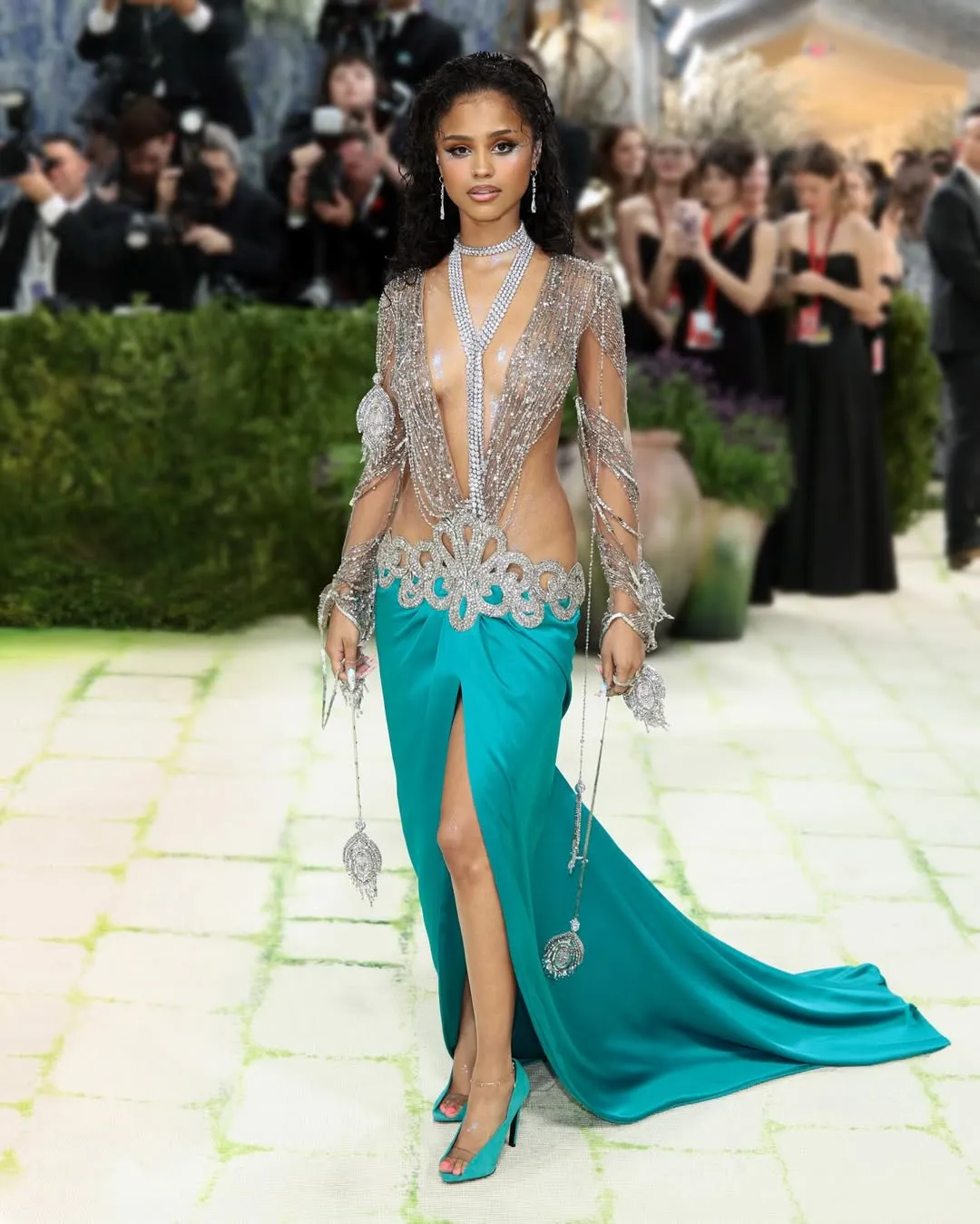
Tyla in custom Valentino — 400 hours of hand-embroidery, every stitch a quiet argument that South African glamour doesn't translate, it defines. Skepta in Thom Browne, sharp enough to cut through every tired narrative about grime artists who "clean up nice." Adut Akech in Chanel, reminding the runway that a South Sudanese-Australian supermodel doesn't accessorize the brand. She elevates it.
This wasn't a moment. This was a shift.
What Actually Happened on Those Steps
Start with Tyla, because the Valentino wasn't just couture. The detail work — indigenous beading techniques reworked into high fashion, the silhouette that nodded to Johannesburg without explaining itself — that's what happens when a 23-year-old from Edenvale walks into a European atelier and the atelier listens.
Skepta's Thom Browne fit carried the whole history of UK Afro-Caribbean tailoring: the mod sharpness of '60s Windrush style, the grime-era refusal to dress down for anyone, the quiet knowledge that a Nigerian-British artist in New York isn't code-switching, he's code-setting. That's not swagger. That's inheritance.
Damson Idris brought Peckham and Nollywood to the same red carpet and made both feel at home. Ayo Edebiri, Barbadian-American and proud, turned fabric into argument: Caribbean excellence doesn't need the Met Gala's co-sign, but the Met Gala needs ours. Adut Akech has been remaking what runway representation means for half a decade. Her Chanel moment wasn't a debut. It was a reminder.
Wisdom Kaye showed up with the kind of energy that makes you wonder why you didn't know the name yet. That's the tell. There's always another one coming.
Why the Group Chats Exploded
You know the feeling. You're scrolling Instagram in Brixton or Brooklyn or Brampton, and suddenly your phone lights up. Auntie who only sends Bible verses is now a fashion critic. Your cousin who never texts is sending voice notes. The group chat titled "Fam 🇳🇬🇿🇦🇬🇭" has 47 unread messages and they're all fire emojis.
This is what representation feels like when it's real. Not the token invite. Not the "first African to" headline that treats the continent like a monolith. This was Tyla, Skepta, Adut, Damson, Ayo — each carrying a specific flag, a specific city, a specific story — and the world watching them like they'd been headlining the Met for decades.
Because here's what Monday night proved: we're past the part where showing up is the win. Showing up is baseline now. The win is showing up and making Valentino, Thom Browne, and Chanel build custom pieces around our aesthetic, not theirs.
For the diaspora kids growing up in Atlanta or Amsterdam, this is their normal. They expect African stars at the Met Gala the way they expect Burna Boy on festival lineups. They don't remember when we weren't in these rooms.
But if you remember when African red carpet presence meant one actress in kente cloth standing next to thirty people in Dior? Then you know Monday night wasn't just fashion. It was proof.
The Craftsmanship Tells the Real Story
These weren't off-the-rack moments. Valentino's atelier spent 400 hours on Tyla's gown. Thom Browne tailored Skepta's suit like they were dressing a head of state. Chanel gave Adut Akech a piece that will end up in a museum.
That's not charity. That's capitalism recognizing where the culture moves now. These houses didn't dress African stars as a favor. They dressed them because when Tyla wears Valentino, Valentino becomes more valuable. When Skepta wears Thom Browne, Thom Browne becomes more relevant. The aesthetic influence runs one direction now, and it's not from Paris to Lagos.
This is the part that matters for the young designers watching from Accra or Nairobi or Joburg: the next generation of African fashion excellence isn't waiting for European approval. They're watching Tyla and thinking, "I could create that. And I could do it better."
What Comes Next
The 2026 Met Gala isn't an endpoint. It's a marker. Next year, expect more. The year after, expect African designers on that red carpet, not just African celebrities wearing European houses. Expect Lagos ateliers and Johannesburg design studios to stop waiting for Vogue to notice and start building their own pipelines to Anna Wintour's guest list.
The fashion industry is learning what we've always known: African creativity isn't a trend. It's a gravity well. Everything moves toward it eventually.
For those of us living between Lagos and London, Accra and Atlanta, Nairobi and New York — this is what our parents sacrificed for. Not the red carpet itself. The right to walk onto it and remake the rules while the cameras roll.
The Shift Is Already Here
Tyla's Valentino will be archived. Skepta's Thom Browne will be referenced. Adut's Chanel will be studied. But the real story isn't the clothes.
The real story is that the Met Gala used to be the place where the fashion world told the culture what mattered. Now it's the place where the culture shows the fashion world what it missed. And Monday night, what it missed was obvious: we don't need the red carpet. The red carpet needs us.
The group chats knew that before the first photo dropped. The rest of the world is still catching up.


