THE MONOKROMATIK DECODE
Our editorial read across the four dimensions we use to assess creative work — an authorship-weighted Cultural-Signal Score, reflecting judgement, not a measured metric.
60 /100BBBCULTURAL-SIGNAL SCOREMixed — the idea outruns the ownershipEvery claim of scale — 8th best-selling, top 3, fastest-growing, R5-7m profit — is self-reported and unaudited, and a public ownership dispute is on the record. Independent market-share data or a resolution of the dispute would move authorship or consequence, and we cannot predict which way.
Assigned 2026-07-21. An outlook states at least a one-in-three likelihood of a change over the next twelve months. How outlooks work
Celebrity-founded premium liqueur is a crowded lane with Cîroc, Cruz and House of BNG already in it. The township-swagger 'taste of wealth' positioning sharpens the execution of a standard play; it does not reframe the category.
Downgraded from 4. The entire ownership claim rests on Cassper Nyovest's own repeated public statements that he is majority shareholder, founder and CEO. Our own notClaimed says the cap table and contract manufacturer are unconfirmed, and a May 2022 public dispute alleged a different owner. Confirmed African origination and creative direction; unverified ownership. Rule 2 — evidence or drop a level.
Real operational push — national listings across Shoprite, Checkers, Pick n Pay and Takealot within a short window, plus brand extensions. Undercut by basics: ABV is not officially published, and every performance number is self-reported.
Wide retail distribution is confirmed and is a genuine outcome, but every claim of scale — 8th best-selling, top 3, fastest-growing, R5–7m profit — is self-reported or an unaudited estimate, and all four are explicitly disclaimed. Plausible impact with no published evidence is exactly a 3.
THE CONTEXT
In December 2021, at a private launch tied to his 31st birthday, South African rapper Cassper Nyovest — Refiloe Phoolo — unveiled Billiato, an 'ultra-premium aperitif liqueur' he positioned as 'a taste of wealth' for 'future billionaires.' The name is a deliberate double-entendre: it gestures at 'billion' while carrying the cadence of Vaal township self-mythology. It was not a fragrance deal or a sneaker collab. It was a bottle, and Cassper wanted the world to know the bottle was his. That distinction — bottle as owned asset rather than borrowed logo — is the reason Billiato is worth decoding at all, and the reason the ownership fight that erupted around it in 2022 was never really about a rumour.
The product itself is modest in disclosure and loud in aspiration: a 750ml bottle, roughly 20–25% ABV (the exact figure has never been officially published), retailing in the R180–R299 band. A 'Billiato Tequila Liqueur' extension followed, along with talk of further variants, so that a single name now spans an aperitif and a tequila-style liqueur — breadth that flatters a young brand but blurs what it actually is. Within months the brand was on the shelves of every major South African grocer and liquor chain — Shoprite, Checkers, Pick n Pay, Ultra Liquors, Norman Goodfellows — and on Takealot, a distribution footprint most craft launches never reach in their first year (allthingsbeverages.co.za).
By October 2022, Cassper was claiming Billiato had become the 8th best-selling liqueur in South Africa and 'the fastest-growing liquor brand' in the country, having broken into the top 10 within twelve months (Kaya 959). By year-end he was claiming 'top 3.' None of these rankings has been independently verified; they come directly from his own social posts, with no market-share data, methodology or third-party audit attached. Industry write-ups later estimated the brand throws off roughly R5–7 million a year in profit for him — again an estimate, not a filing (Briefly; 99hustle). That gap — between a confident claim and a confirmable number — runs through the entire Billiato story, and it is the single biggest thing separating a marketing win from a verified business.
The macro backdrop makes the bet legible. South Africa's 'premium and above' spirits segment grew volume at a 2% CAGR in the first half of 2024 even as 'standard and below' declined 1%, in what Pernod Ricard's own Africa-Middle-East transformation officer calls 'a clear trend of premiumisation … consumers are drinking less overall, but choosing to invest in higher-quality, premium spirits' (The Spirits Business). Diageo, meanwhile, reported 5% organic spirits growth in Africa in its 2025 interim results. Billiato is aimed precisely at that premiumising, aspirational middle — the same current the multinationals are paddling — but from the demand side, using an artist's audience rather than a corporation's ad budget to get there.
Billiato also did not arrive in a vacuum culturally. It rode a South African celebrity-alcohol wave: Bonang Matheba's House of BNG, the Cruz Vodka orbit around AKA, DJ Zinhle's Boulevard, Kelly Khumalo's Controversy Gin, and years of celebrity faces — Cassper's own among them — fronting global SKUs like Ciroc. Most of those arrangements are ambassadorships or licences: the star lends reach, the multinational keeps the asset. Cassper himself sat inside that model for years, listed among the SA celebrities associated with Ciroc alongside a long roster of endorsement deals (MTN, Samsung, Coca-Cola, Castle Lite). Billiato's entire claim to matter rests on being the opposite kind of thing — the artist on the cap table, not the call sheet.
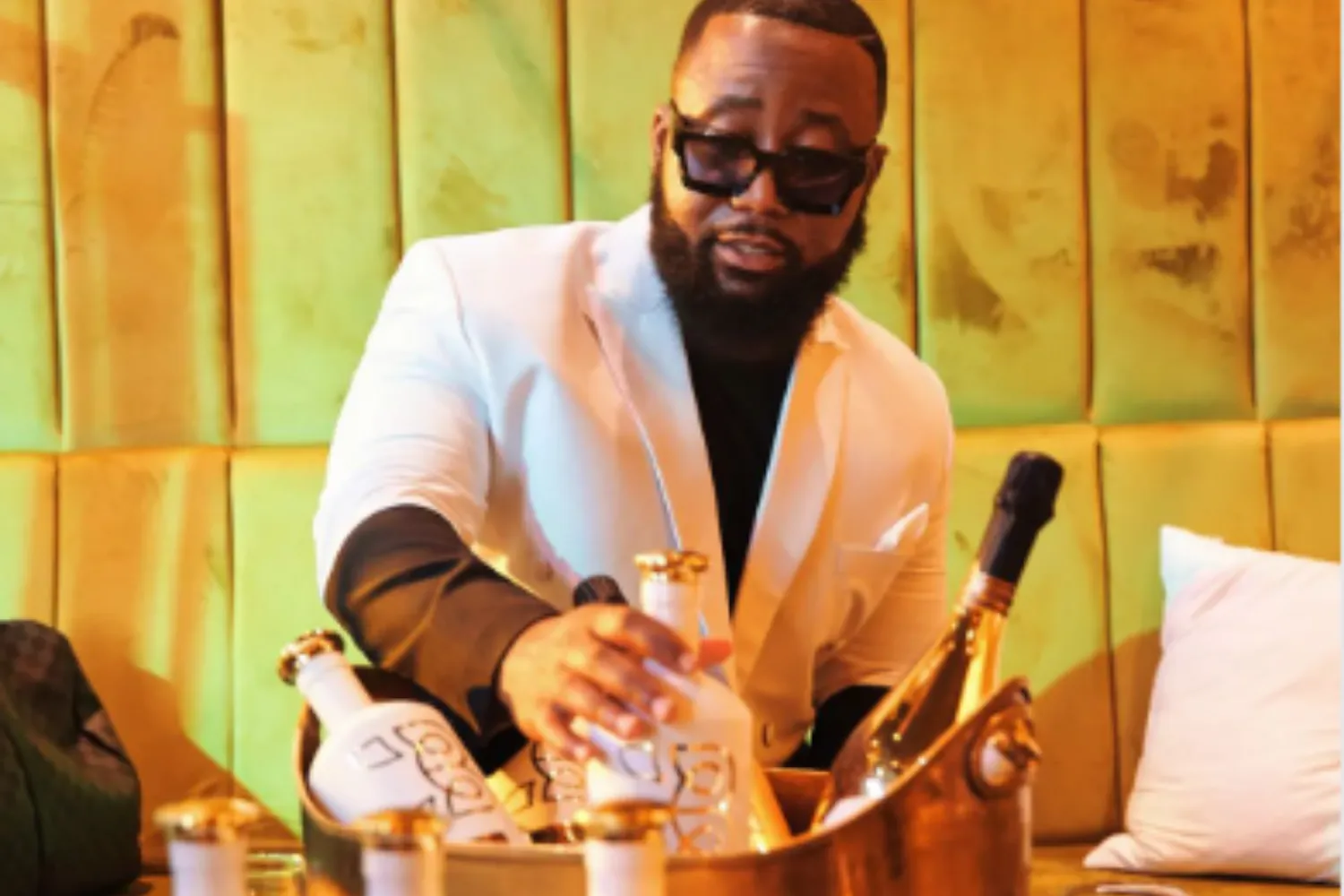
The celebrity-spirits wave is worth almost nothing to African value-capture when the star is a rented face — and worth something real when the star owns the shelf.
THE STRATEGIC BET
The bet is ownership over endorsement — and Cassper has made it explicitly, not as a slogan but as a corporate structure he keeps insisting on. When blogger Musa Khawula alleged in May 2022 that the real owner was David de Mardt (the Cruz Vodka CEO and a former managing director of Pernod Ricard South Africa) and that Cassper was merely 'being paraded' as owner, Cassper's response was immediate and unusually specific: 'I am the majority shareholder of Billiato. Not only am I an owner but I'm the founder, the CEO and Marketing director. I own my products. I'm not a brand ambassador or an influencer' (Jacaranda FM; The Citizen). Note what he chose to defend. He did not argue the drink was superior or the sales were bigger; he argued about the cap table. In the celebrity-spirits economy, that is the only argument that ultimately pays.
To see why the distinction is load-bearing, look at the far end of the same model. Sean 'Diddy' Combs spent fifteen years as the face and profit-share partner of Cîroc under Diageo, and co-owned DeLeón tequila with them — the richest celebrity-spirits arrangement ever struck. It still ended in June 2023 with Diageo terminating the relationship and a January 2024 settlement in which Diageo took sole ownership of both Cîroc and DeLeón, Combs withdrawing his discrimination lawsuit with prejudice (Billionaires Africa; Variety). Even the most powerful celebrity partner in the business did not, in the end, control the asset. Cassper's thesis is a direct answer to that outcome: don't partner into someone else's SKU, however lucrative the fee — own the entity, so that no one can terminate you off your own brand.
The bet also fits his wider playbook, which is consistently about owning the vehicle rather than renting a seat in it. He runs his own label, Family Tree Records, founded in 2014 after leaving Impact Soundz; he built 'Fill Up,' the stadium-concert franchise, as owned IP rather than a promoter's booking; and his Root of Fame sneaker line with Drip Footwear was a co-designed equity play rather than a straight endorsement (Tuko; citiMuzik). Billiato is that same instinct pointed at the highest-margin consumer category available to him. The strategic wager is that an artist's audience is a distribution asset the multinationals cannot buy at any price — and that pairing it with ownership, rather than lending it out for a fee, is how a musician converts fame into a balance sheet that keeps earning after the charts move on.
There is a cost to the bet, and it is worth naming as part of the strategy rather than as an afterthought. Owning the brand means owning the burden of proof: no Diageo-scale audit, no third-party Nielsen ranking, no distillery to tour. The very independence that makes Billiato valuable to Cassper also means every claim about it — 8th best-seller, fastest-growing, top three, R5–7m in profit — arrives unverified, defended on Twitter rather than in a data room (Kaya 959; Briefly). The strategic bet, stated plainly, is that ownership plus audience beats scale plus verification. It is a genuinely African-value-capture wager, and it is also, on the evidence available, an unfinished one.
THE CREATIVE MOVE
The creative move is to collapse the distance between the artist's persona and the product's meaning until they are the same object. Cassper is a self-made-success narrative in human form — the 'Fill Up' stadium shows that put tens of thousands in seats, the relentless flex, the from-Mahikeng-to-mansions arc reported at an estimated R75–100m net worth (Tuko; 99hustle). Billiato doesn't advertise a flavour; it advertises that arc, decanted. 'A taste of wealth,' aimed at 'future billionaires,' is not a tasting note — it is a membership card. Every bottle bought is a small, affordable purchase of proximity to the story, which is exactly why a R280 aperitif can move on aspiration in a premiumising market where consumers are trading up on fewer, better bottles (The Spirits Business).
The naming does a second, quieter piece of work. 'Billiato' fuses 'billion' with a mock-Italian, faux-luxury suffix — the register of imported premium spirits — while carrying the swagger of Vaal and township self-mythology. It lets the brand signal aspiration and local belonging in the same breath: luxurious enough to sit on a table at Konka, native enough to feel owned by its audience rather than sold to them. That is a sharper piece of positioning than the thin product disclosure would suggest, and it is the part of Billiato that is genuinely well-made.
Distribution was the other half of the craft, and it is where the founder's fame did work no ad budget could buy. Rather than the slow craft-spirits route — festivals, tastings, on-trade seeding over years — Billiato went straight for mass grocery and liquor retail plus online (Shoprite, Checkers, Pick n Pay, Ultra Liquors, Takealot), compressing into months a shelf presence challenger brands rarely reach in their first year (allthingsbeverages.co.za). Repeated 'sold out' moments — whether organic demand or scarcity marketing — were then amplified back through Cassper's own channels, turning distribution news into content and content into demand. It is a closed loop that only a founder with a mass audience can run.
The trade-off is real and worth stating without flinching: the brand leans almost entirely on the founder's fame rather than on an independently defensible product story. The ABV isn't officially published, the distillate and the contract producer stay unnamed, and the category itself drifts between 'aperitif liqueur' and 'tequila' as extensions multiply. It is a marketing-led brand in the most literal sense — the marketing director is the product. That makes for fast lift-off and a fragile floor: strip out Cassper's celebrity and there is not yet a visible product moat underneath, which is the precise weakness a craft house like Inverroche was built to avoid.
THE EVIDENCE
Confirmed: Billiato launched in late 2021 at a private event tied to Cassper Nyovest's 31st birthday (IOL; The South African)
Confirmed: Cassper Nyovest publicly states he is Billiato's majority shareholder, founder and CEO — 'not a brand ambassador or an influencer' (The Citizen; Jacaranda FM; TimesLIVE)
Confirmed: A May 2022 ownership dispute, in which blogger Musa Khawula named Cruz Vodka CEO David de Mardt as the alleged owner, is on the record and was rebutted by Cassper (The Citizen; IOL)
Confirmed: Billiato is distributed through major SA retail and online (Shoprite, Checkers, Pick n Pay, Takealot) and has launched brand extensions (allthingsbeverages.co.za)
Confirmed: Pernod Ricard acquired a majority of Inverroche in 2019 and full ownership on 6 February 2025 — its first wholly-owned African spirit brand (Daily Maverick; Pernod Ricard; The Spirits Business)
Confirmed: Diageo took sole ownership of Cîroc and DeLeón in a January 2024 settlement, ending its ~15-year celebrity partnership with Sean 'Diddy' Combs (Billionaires Africa; Variety)
Confirmed: SA's 'premium and above' spirits grew ~2% by volume in H1 2024 while 'standard and below' fell ~1%, reflecting premiumisation (The Spirits Business)
Reported independently: Billiato was the '8th best-selling liqueur' and 'fastest-growing liquor brand' in SA within its first year, later 'top 3' — Cassper's own claims, October–December 2022 (Kaya 959; Cassper Nyovest on X)
Reported independently: The brand is estimated to generate roughly R5–7 million in annual profit — an industry estimate, not audited (Briefly; 99hustle)
Reported independently: Billiato retails around R180–R299 for 750ml at roughly 20–25% ABV (ABV not officially published) (allthingsbeverages.co.za)
Reported independently: Cassper Nyovest's net worth is estimated at roughly R75–100m; he owns Family Tree Records (2014), 'Fill Up' and the Root of Fame line, and previously fronted Cîroc (Tuko; 99hustle)
Not claimed at this stage: We do not confirm any of the sales-ranking claims (8th, top 3, fastest-growing) — no independent market-share data exists in our sources
Not claimed at this stage: We do not confirm the R5–7m profit figure or any revenue number
Not claimed at this stage: We do not confirm who contract-manufactures the liquid, nor the exact ownership/cap-table split beyond Cassper's public statements
Not claimed at this stage: We do not claim Billiato is a superior product to Inverroche or any craft peer
One brand is deep and sold to Paris; the other is shallow and held at home. Authorship is the axis that decides which mattered.
THE AFRICAN READ
Set Billiato beside Inverroche and the two tell one story from opposite ends. Inverroche was the real thing on craft terms: Lorna Scott's family distillery in Stilbaai, Western Cape, pioneering the use of indigenous fynbos botanicals — a genuine product moat rooted in South African terroir, and one of the largest employers in the Stilbaai and Riversdale areas (Daily Maverick). In July 2019 Pernod Ricard took a majority stake; on 6 February 2025 it acquired the rest, making Inverroche the French group's first wholly-owned African spirit brand, with managing director Sola Oke framing the ambition to make it 'Africa's first global luxury spirit brand' (Pernod Ricard). The craft was African. The ownership, and the compounding upside, is now Parisian.
That is the pattern of the drinks land-grab across the continent: let local founders build the brand, the botanical story and the proof of demand, then buy the equity once the risk is retired. It is a rational, even generous, exit for a founder — a real capital event, jobs preserved, the maker often kept on — and Scott herself stays involved. But structurally it moves the asset, the margin and the decision rights offshore, and it is happening while the multinationals also push their own global gins (Beefeater, Gordon's) into the same shelves (The Spirits Business). The African-authorship question is not whether the product was made here; Inverroche's plainly was. It is who ends up owning the thing once it works.
Billiato is the mirror image, and the mirror is unflattering in both directions. The product story is thinner, the numbers are unaudited, the liquid is contract-made by an unnamed producer — Inverroche would win any blind tasting or any due-diligence review. But the equity has, on Cassper's account, stayed with the artist, on the African side of the table, earning for a Motswana entrepreneur rather than a CAC 40 balance sheet. One brand is deep and sold; the other is shallow and held. Neither is the finished article. The synthesis African brand-builders should be chasing is the thing that has both — Inverroche's craft depth and Billiato's retained ownership — and almost no one on the continent has yet built it at scale.
MonoKromatik's read: authorship is the axis that decides which of these mattered, and on authorship Billiato scores where it counts even as it fails on craft. The celebrity-spirits wave is worth almost nothing to African value-capture when the star is a rented face — Cassper's own years fronting Cîroc, and Diddy losing Cîroc and DeLeón to Diageo outright after fifteen years, are the cautionary text (Billionaires Africa). It becomes worth something real only when the star owns the shelf. Cassper's refusal to be called an ambassador is, stripped of the bravado, an economic thesis: own the thing, or you are just decorating someone else's balance sheet. The open, unresolved question — and the reason this is a 'partial' verification, not a victory lap — is whether artist-owned brands can build the operational depth (verified sales, real production control, export beyond South Africa) to survive once the founder's fame cools, or whether they too eventually sell to the Pernods and Diageos of the world. Billiato has won the ownership argument. It has not yet won the durability one.
LESSONS FOR BRAND BUILDERS
Own the shelf, don't rent the face. The celebrity-spirits wave transfers almost no lasting value to the artist when the deal is an ambassadorship. Billiato's one durable asset is that Cassper insists he holds the equity — the founder, the CEO, the margin. That single structural choice is worth more than any endorsement fee, because it is the only version that keeps compounding.
Fame is distribution, not a moat. A famous founder can manufacture demand and win retail placement faster than a craft challenger ever could — but if the product story (distillate, ABV, maker) stays vague, the brand leans entirely on a person. Fame gets you on the shelf; it does not keep you there once it cools. Build product depth behind the persona before it fades.
The African land-grab is bought, not stolen. Inverroche shows the pattern: multinationals let African founders prove the brand, then acquire the equity and move the upside offshore. The defensive move for the cultural economy is not to refuse capital, but to hold ownership long enough — and build enough operational control — that any sale is on the founder's terms, not a rescue.
Unaudited claims are a ceiling, not a flex. Billiato's rankings and revenue are all self-reported. That works for hype but caps credibility with serious partners, retailers and investors. If ownership is the whole thesis, verified numbers are the proof — the brands that endure eventually let someone else count.
PUBLICATION VERIFICATION STATUS
Confirmed: Billiato launched late 2021; Cassper Nyovest publicly and repeatedly states he is majority shareholder, founder and CEO, not a brand ambassador; the brand is stocked across major SA retail; a 2022 ownership dispute with blogger Musa Khawula (naming Cruz Vodka's David de Mardt) is on record; Pernod Ricard took full ownership of Inverroche on 6 Feb 2025; Diageo took sole ownership of Cîroc and DeLeón from Diddy in a Jan 2024 settlement. Reported/unverified: the 8th-best-selling-liqueur and 'fastest-growing'/'top 3' rankings are Cassper's own claims with no third-party sales data; the R5–7m annual profit figure is an industry estimate; who contract-manufactures the liquid and the exact cap table are not publicly documented.