THE MONOKROMATIK DECODE
Our editorial read across the four dimensions we use to assess creative work — an authorship-weighted Cultural-Signal Score, reflecting judgement, not a measured metric.
79 /100ACULTURAL-SIGNAL SCORESound — good work, incomplete captureNo one-in-three likelihood of movement identified in the next twelve months.
An outlook states at least a one-in-three likelihood of a change over the next twelve months. How outlooks work
Held. Making Ghana's imported-textile-waste crisis the material of the garment rather than the marketing story around it is a pointed, place-specific idea — strong and well adapted, though waste-to-wear itself exists elsewhere.
Held. Own label, own IP, own values, founded and directed by a Ghanaian designer building in Accra, who reached the LVMH system as an author rather than a localisation hire. Origination and control both sit with the African principal.
Lowered from 4. Confirmed evidence covers the launch year, an Arise Fashion Week debut and a hand-weaving practice; the decade of craft and the biography are single-outlet reported. Production capacity is unevidenced and, by the entry's own account, still building. Solid where it counts, uneven elsewhere.
Held. First Ghanaian LVMH semi-finalist is real, third-party-corroborated reputational capital — but he did not win, received neither the endowment nor the mentorship, and no revenue, stockist or production figures exist. Plausible impact with no published evidence is precisely a 3.
THE CONTEXT
In 2025 David Kusi Boye-Doe's label Boyedoe became the first Ghanaian brand to reach the semi-finals of the LVMH Prize, and one of only four African designers named among that year's twenty semi-finalists. The shortlist presented to the LVMH jury during Paris Fashion Week — the same programme that has launched a generation of global names.
Boyedoe launched in 2020 and made its runway debut at Arise Fashion Week that same year. Its premise is unusually literal: Ghana is a terminus for the world's discarded clothing, and Boye-Doe turns that textile waste into garments through slow production and hand-weaving — an 'Afroluxurious heritage' brand where the sustainability is structural, not cosmetic.
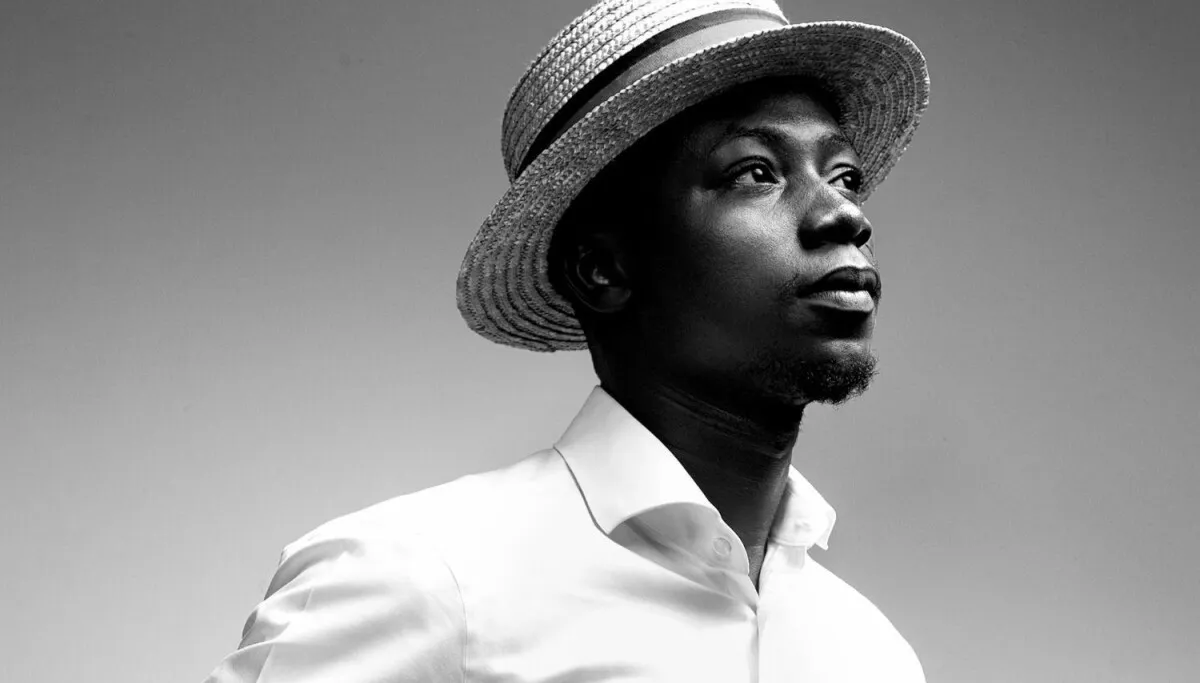
He reached the LVMH shortlist holding the pen — an author, not a localisation hire.
THE STRATEGIC BET
The bet is that African authorship no longer needs to launder itself through a European house to be taken seriously at the luxury tier. Boyedoe entered the LVMH system as a fully-formed brand with its own IP, materials story and point of view — competing on originality, not proximity to a Paris atelier.
THE CREATIVE MOVE
The craft move is deconstruction and reconstruction: strong cuts and genderless silhouettes built from reclaimed material, with hand-weaving as both an aesthetic and an ethic. It reads as luxury because of the labour and intention in it, not despite the recycled inputs — inverting the usual hierarchy that treats African material as budget.
THE EVIDENCE
Confirmed: Boyedoe was named a 2025 LVMH Prize semi-finalist — the first Ghanaian label to do so — and one of four African designers among the twenty semi-finalists, corroborated across OkayAfrica, WWD and BellaNaija Style.
Confirmed: The brand launched in 2020 and debuted at Arise Fashion Week the same year; its practice centres on transforming Ghana's textile waste through slow production and hand-weaving.
Reported independently: Boye-Doe is reported to be 31 and to have spent over a decade in fashion as a personal shopper and stylist before founding the label, on his second LVMH application (OkayAfrica).
Reported independently: The brand's stated philosophy of 'sustainability, sophistication, silhouette and sunsum' (an Akan word for soul) is described in single-outlet interviews.
Not claimed at this stage: Boyedoe advanced as a semi-finalist, not the LVMH Prize winner — it did not receive the winner's endowment or mentorship.
Not claimed at this stage: No audited revenue, stockist or production-capacity figures are available, and the commercial effect of the LVMH exposure is not yet measurable.
THE AFRICAN READ
This is the authorship question answered cleanly. The value — the concept, the IP, the recognition — accrues to a Ghanaian founder building in Accra, not to a global brand borrowing African craft as a season's theme. The LVMH semi-final is a platform, not a takeover: Boye-Doe reached it holding the pen. The open question is capture at scale — whether the recognition converts into the production capacity and stockists that turn a celebrated young label into a durable business.
LESSONS FOR BRAND BUILDERS
Author, don't audition. The strongest route into the luxury system is not to make African-flavoured work for a European house, but to arrive with a fully-owned brand whose material story is the differentiator. Boyedoe competed on originality it controls.
Make the constraint the concept. Textile waste is a liability for Ghana; Boyedoe made it the point. When the sustainability is structural rather than claimed, it survives scrutiny and reads as craft.
PUBLICATION VERIFICATION STATUS
The LVMH semi-finalist status, the count of African designers, the 2020 founding and the waste-to-wear practice are confirmed across multiple independent outlets. The designer's age, career background and stated four-part philosophy are reported by single interviews. Boyedoe was a semi-finalist, not the winner; no audited commercial figures exist.