THE MONOKROMATIK DECODE
Our editorial read across the four dimensions we use to assess creative work — an authorship-weighted Cultural-Signal Score, reflecting judgement, not a measured metric.
46 /100BCULTURAL-SIGNAL SCOREPoor — borrowed authorship, thin consequenceNo one-in-three likelihood of movement identified in the next twelve months.
An outlook states at least a one-in-three likelihood of a change over the next twelve months. How outlooks work
Cutting a loss-making streamer and consolidating on DStv and the Canal+ app is sound, conventional portfolio logic — the standard defensive play, run knowingly.
The continent's largest media group is now French-owned and the decision to kill its home-grown streaming flagship was taken by that owner. African audiences, African content and African staff are inputs; the authorship of this action is entirely external.
A decisive, cleanly sequenced restructuring — announcement in March, migration into DStv Stream, close on 30 April 2026 — delivered without visible operational failure, if brutally. Held off 5 by the Competition Commission scrutiny it drew.
Verifiable and enormous, and it runs the wrong way: the one platform built as an African-owned streaming alternative is closed, and control of the pipes that carry African stories to African audiences now sits in Paris. On the axis's own terms — what changed, and who captured the value — this is value demonstrably surrendered by the African party.
THE CONTEXT
In September 2025, France's Canal+ completed its roughly $2–3 billion acquisition of MultiChoice, the Johannesburg-based group behind DStv and the streaming service Showmax — the largest media transaction in the continent's recent history. Six months later, in March 2026, the new owner announced that Showmax would be shut down after a review of streaming operations; the service ceased on 30 April 2026.
The numbers behind the decision were stark. Showmax had lost about $522 million over three years, with revenue sliding from $61.6 million to $45.2 million — 'not a commercial success', in the new ownership's framing. Selected Showmax Originals and titles were relocated into a section of the DStv Stream app, to be folded eventually into a Canal+ app; the shutdown also drew scrutiny from South Africa's Competition Commission.
Showmax was not a minor product. Launched in 2015, it was positioned for a decade as Africa's answer to Netflix — the home-grown streamer that would keep African audiences, and African stories, on an African-owned platform. Its closure by a European acquirer is the symbolic centre of a larger question about who owns the screens Africa watches.
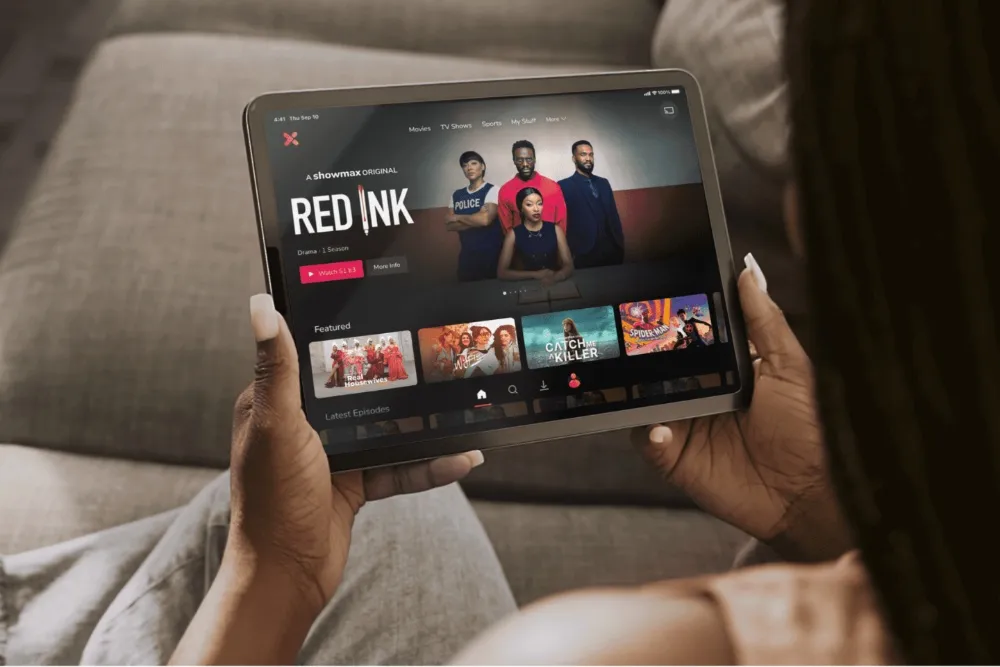
Canal+ did not destroy a healthy African asset; it closed a loss-making one. That is the honest half.
THE STRATEGIC BET
For Canal+, the bet is disciplined consolidation: stop the bleeding of a sub-scale streamer, concentrate spend on DStv and a single Canal+-branded app, and integrate MultiChoice into a global pay-TV portfolio. On a spreadsheet, closing a service losing half a billion dollars is not controversial; it is housekeeping.
But the deeper bet is about control of distribution. Owning MultiChoice gives Canal+ the pipes — the satellite, the subscriber base, the sports rights — that carry African content to African homes. Whoever owns those pipes sets the terms for every African producer who wants to reach that audience.
THE CREATIVE MOVE
The consolidation move is to collapse two streaming propositions into one and route everything through owned infrastructure — DStv Stream now, the Canal+ app next. It simplifies the portfolio and centralises the customer relationship under the new parent's brand.
The uncomfortable part of the move is what it signals: that a home-grown African streaming brand, built over eleven years and hundreds of millions of dollars, was expendable to a new owner's cost logic. The efficiency is real; so is the message about whose priorities now govern the platform.
THE EVIDENCE
Confirmed: Canal+ completed its acquisition of MultiChoice in September 2025 (valued at roughly $2–3 billion) and, in March 2026, announced the shutdown of Showmax after a streaming review; Showmax ceased operations on 30 April 2026 — corroborated across Variety, TechCabal and Ecofin Agency.
Confirmed: Showmax had lost about $522 million over three years with revenue falling from $61.6 million to $45.2 million; its content was migrated into DStv Stream, and the shutdown drew South African Competition Commission scrutiny.
Reported independently: The precise deal value is reported variously as approximately $2 billion to $3 billion across outlets.
Reported independently: The exact sequencing of dates (announcement in early March; final renewals; the 30 April close) is reported with minor variation between sources.
Not claimed at this stage: The full terms of Canal+'s integration plan and the future shape of the Canal+ app in Africa are not fully disclosed.
Not claimed at this stage: The long-term impact on African content commissioning and producer terms is a strategic read, not a stated outcome.
Africa cannot outsource ownership of its distribution and expect to control its narrative.
THE AFRICAN READ
This is the value-capture question at continental scale, and it deserves to be stated plainly rather than mourned or cheered. Showmax's economics were genuinely bad — $522 million in losses is not a rounding error — and no owner was obliged to keep funding it. Canal+ did not destroy a healthy African asset; it closed a loss-making one. That is the honest half of the story.
The other half is structural. The pipes that carry African stories to African audiences — DStv, the rights, the app — are now owned in Paris, and the one platform explicitly built as an African-owned alternative is gone. For every African producer, the terms of reach are now set by a European parent optimising a global portfolio. Sovereignty over distribution is not a sentimental concern; it decides who gets commissioned, on what terms, and who keeps the upside.
The lesson is not that foreign capital is the villain — Showmax's losses show the difficulty is real — but that Africa cannot outsource ownership of its distribution and expect to control its narrative. The screen is the strategic asset. The next Showmax has to be built to survive, and to stay owned, precisely because this one was not.
LESSONS FOR BRAND BUILDERS
The screen is the strategic asset. Whoever owns distribution — the pipes, the rights, the app — sets the terms for every producer trying to reach the audience. Content is downstream of who owns the screen.
Build to survive, and to stay owned. Showmax's losses were real; sentiment does not pay for streaming. The next African platform has to be economically durable precisely so that ownership does not have to be sold to survive.
Sovereignty over distribution is not sentimental. When the pipes are owned offshore, so are the terms of reach. Controlling the narrative requires controlling — or at least sharing — the infrastructure that carries it.
PUBLICATION VERIFICATION STATUS
The Canal+ acquisition of MultiChoice, the March 2026 shutdown announcement, the 30 April 2026 close, the ~$522m losses and the content migration to DStv Stream are confirmed across Variety, TechCabal, Ecofin and South African business press. The exact deal value ($2–3bn) and precise date sequencing vary by outlet. The long-term impact on African commissioning is explicitly an interpretive strategic read.