THE MONOKROMATIK DECODE
Our editorial read across the four dimensions we use to assess creative work — an authorship-weighted Cultural-Signal Score, reflecting judgement, not a measured metric.
61 /100BBBCULTURAL-SIGNAL SCOREMixed — the idea outruns the ownershipNo one-in-three likelihood of movement identified in the next twelve months.
An outlook states at least a one-in-three likelihood of a change over the next twelve months. How outlooks work
Betting early on a cashless Nigeria and building resilient rails plus a physical agent army ahead of demand was prescient and well adapted to the market. The playbook is imported wholesale from Alipay/WeChat, so this is 'recognisable elsewhere, new to this market' — a 4, not a 5.
Held. Founded and chaired by a Chinese billionaire, spun out of Opera, scaled on SoftBank and Sequoia China capital, with the equity revalued on cap tables in Cayman, Tokyo and Beijing. Nigerian users, agents and transactions are inputs; authorship and ownership are external. Textbook level 2.
Downgraded. The entire basis for a 5 — 500,000+ agents, most-downloaded app during the cash crunch, infrastructure holding while bank apps buckled, tens of millions of daily actives — sits in evidence_reported and is company-supplied and unaudited, as the entry itself states. Confirmed evidence covers only launch, funding, valuation and sector-wide volumes. Strong and consistent on what can be verified = 4.
Downgraded from 5. The ₦20.71tn quarterly figure is confirmed and structural — but it is a sector-wide NIBSS number, not OPay's, and OPay's own revenue, deposits and user counts are explicitly notClaimed as undisclosed. More decisively, rubric level 5 requires 'value demonstrably captured by the African/diaspora party', and level 3 is defined as 'impact that accrued mainly to a non-African counterparty'. That is precisely this case, and it is the work's own thesis: the reach is Nigerian, the equity is not.
THE CONTEXT
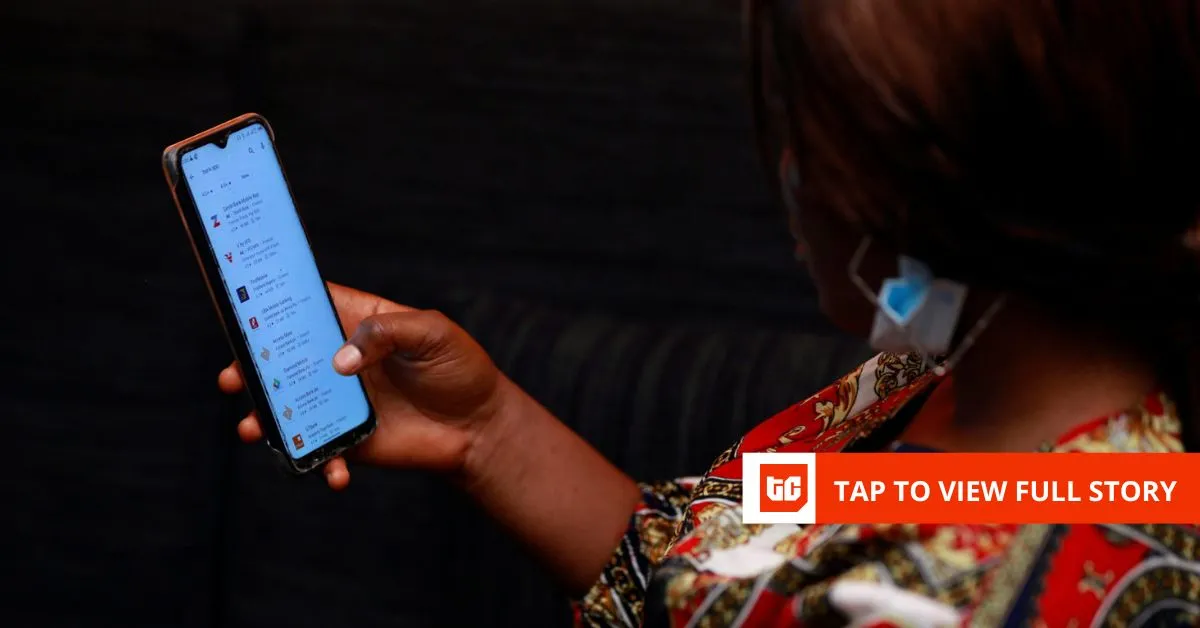
In the first quarter of 2025, mobile-money transactions in Nigeria reached ₦20.71 trillion — about $13.49 billion — a figure that had multiplied more than fifteen-fold since early 2021 (TechCabal, citing NIBSS data). Two names sit at the centre of that surge, and neither was founded by a Nigerian: OPay and PalmPay. Between them they process the daily rituals of Nigerian economic life — the transfer to a trader, the airtime top-up, the POS withdrawal at a roadside kiosk — at a scale that now dwarfs many incumbent banks. This is the record of how the everyday naira came to run on foreign-capital rails.
OPay is the anchor of that story. It launched its payments service in Nigeria in August 2018, spun out of Opera — the browser company — and Balder Investment, an entity controlled by Opera's executive chairman, the Chinese billionaire Zhou Yahui (TechCrunch, 2019). Its early incarnation was a blitzscaling super-app: a wallet bolted to a motorcycle-hailing service (ORide), food delivery (OFood) and more, chasing a million orders a day on the back of heavy subsidy. When COVID and a regulatory crackdown on okada bikes gutted those verticals in 2020, OPay stripped itself back to what worked — payments — and rebuilt around wallets, transfers, and a vast agent network.
The timing proved extraordinary. In late 2022 Nigeria's central bank redesigned the naira and imposed withdrawal limits; poor execution triggered a cash crisis that, by February 2023, had cut currency in circulation to its lowest level since 2008. As bank apps crashed and ATMs ran dry, Nigerians reached for whatever still worked — and OPay worked. By March 2023 it was among the most-downloaded finance apps in the country; by October it was the single most-downloaded app of any kind, with more than 26 million members and reporting, in the words of then co-CEO Olu Akanmu, 'some of the strongest growth in our history' (TechCabal, 2023). Its rival PalmPay — founded in 2019 and backed by the Chinese phone maker Transsion and NetEase — rode the same wave, and today reports over 35 million registered users (Vanguard, 2026).
PREMIUM CASE STUDY
The full strategic decode — the bet, the creative move, the evidence ledger and the lessons — is part of the Intelligence membership.