The Fault Line Just Closed
This isn't a collab. It's a verdict.
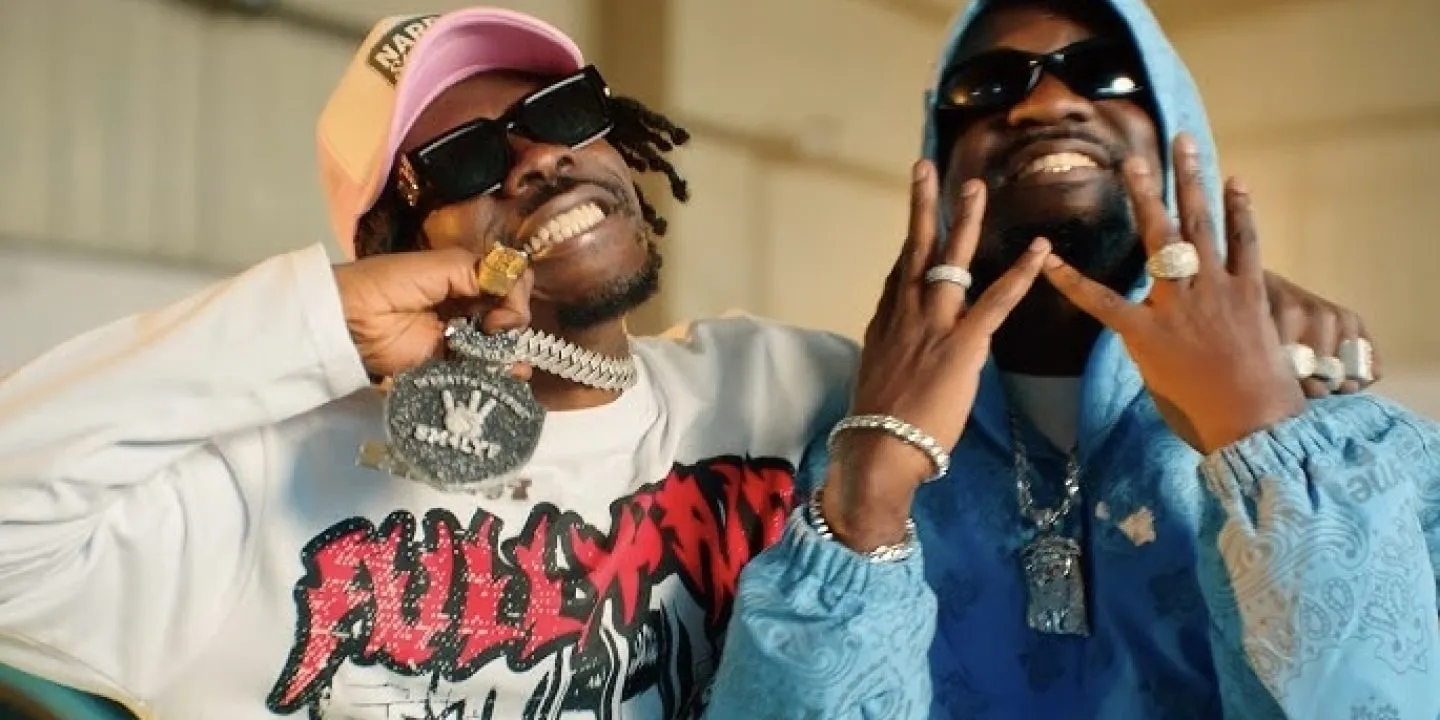
Sarkodie and Shatta Wale — Ghana's hip-hop statesman and the king of Ghanaian dancehall, two men whose public tensions have soundtracked fan debates for the better part of a decade — dropped EVERLASTING this week. Produced by MOG Beatz. Without much warning. And the group chats across London, Toronto, and Atlanta have not recovered.
They don't need to. That's the point.
What MOG Beatz Built
The production is the argument made audible. MOG Beatz anchors the track in traditional Highlife — those warm, rolling melodic figures that feel like late afternoon in Accra, the kind of sound that doesn't need explaining to anyone who grew up near it. Underneath, he drops reggae-dancehall dub basslines that move through your chest before your mind catches up. On top, bright horn loops rise like a procession. Mid-tempo. Unhurried. The track doesn't push you. It waits for you to arrive.
Sarkodie opens with something he rarely gives: a deliberate, conversational flow. No rapid-fire bars. No flex. Just a veteran who has earned the right to speak slowly, every word placed like a brick in a wall he's been building his whole career.
Shatta Wale takes the hook somewhere else entirely. That gravelled delivery — the one that has soundtracked everything from beach parties in Osu to living rooms in Brixton — wraps itself around a chorus that lands like a collective exhale. Lyrically, both men are building toward legacy. The kind that holds its shape even when old headlines come looking.
Two men choosing culture over ego. In this industry, in this moment, that is not a small thing.
What the Rivalry Actually Was
The beef between these two was never just celebrity drama, and anyone who lived inside Ghanaian music culture knew it. It played out in interviews, in diss tracks, in the comment sections of every music post you ever scrolled through at midnight. Real fans picked sides. Conversations got heated. The question of whether Sarkodie and Shatta Wale could ever share a studio felt, for a long stretch, genuinely unanswerable.
That tension mattered because of what it mirrored: the fierceness with which people love this culture and the artists who carry it. When you invest that deeply in the music, the conflicts inside it become personal. The reconciliation hits harder because of that history.
EVERLASTING doesn't sound like a label-engineered streaming play. It sounds like two men who have sat with the weight of what their conflict cost the culture — and decided their combined legacy is larger than any of it.
Why It Lands Different When You're Abroad
If you left Accra, Kumasi, or Tema and now find yourself navigating London winters or Toronto commutes, you already know what this collab is on a frequency below language. But say it out loud anyway.
The music has been carrying the culture for you this whole time.
When Sarkodie came on at a house party in Peckham and the room stopped being grey for three minutes — that was real. When Shatta Wale's energy took over a speaker and everyone in the room, Ghanaian or not, just moved — that was real too. You can't always fly home for Easter. You miss funerals and naming ceremonies and watch graduations on WhatsApp with a bad connection. But the music is on your phone. It's in your earbuds on the Tube. It's the first thing you turn up on a Sunday when you're cooking and need to remember who you are.
So when the two biggest figures in that music decide to set aside years of public conflict and record something together, it doesn't just feel good. It feels like something got resolved. Something that was sitting unfinished in the background of every Ghanaian music conversation you've had abroad — in a kitchen in Tottenham, at a cookout in Scarborough, in someone's car in East Flatbush — finally got a conclusion.
That's what EVERLASTING is carrying. Brotherhood over ego. Legacy over noise. It's a lesson that travels.
What Comes Next
The question the industry is already asking: is this a moment, or is this the beginning?
Speculation about a full collaborative project, a joint performance, and a music video is circulating. A proper visual — shot in Ghana, scaled to match the magnitude of what just happened — would be the right next move. Watch both artists' channels for announcements.
Watch MOG Beatz too. A producer who just scored this session is going to have a very loud year.
And stream the record. Ghanaian music earns its algorithm the same way everything else does — through the people who love it enough to push it.
The Culture Was Always Bigger
Some records document a moment. This one is the moment.
Ghana didn't need these two men to agree on everything. It needed them to agree on this: that what they built together — the genre, the fanbase, the cultural export that reached Brixton and Brooklyn and Johannesburg before the industry caught up — is worth more than any conflict inside it.
They agreed. Now it's EVERLASTING.
The culture outlasts the conflict. It always did.

