THE MONOKROMATIK DECODE
Our editorial read across the four dimensions we use to assess creative work — an authorship-weighted Cultural-Signal Score, reflecting judgement, not a measured metric.
79 /100ACULTURAL-SIGNAL SCORESound — good work, incomplete captureNo one-in-three likelihood of movement identified in the next twelve months.
An outlook states at least a one-in-three likelihood of a change over the next twelve months. How outlooks work
An all-mesh silhouette built off a township word and a local sock-display trend is a recognisable sneaker-brand play executed with genuine local specificity; the thirteen factory rejections are confirmed and evidence the idea was not the obvious thing to make.
Confirmed built on personal savings and reinvested revenue with no outside funding — founder-originated, founder-owned, and the IP and the mark have never been traded away. This is the cleanest 5 in the batch.
Confirmed evidence covers one store opening in 2018 and founder awards; the ~40 stores, 3,700sqm base, ~500 staff and 15,000 pairs a month are all reported and explicitly disclaimed as varying by source. Solid where documented, unverified everywhere else.
Every consequence claim — jobs, store footprint, production volume, revenue — sits in evidence_reported or is expressly notClaimed, including the '$1m+' figure the piece refuses to stand behind. Plausible national impact with no published evidence is a 3.
THE CONTEXT
Bathu — township slang for 'shoes' across South Africa — was registered in 2015 and launched from a single room in Alexandra, one of Johannesburg's oldest and densest townships. Its founder, Theo Baloyi, was not a designer or a streetwear insider but a chartered-accountant-in-training who had spent roughly five years at PwC, including a posting to the firm's Middle East practice in Dubai. The origin story he tells is specific: the idea crystallised during a layover, staring at a global sneaker wall and noticing that none of the brands on it told an African story from the inside.
The product answer was deliberately narrow. Rather than a full range, Baloyi bet everything on a single silhouette — a sneaker with a predominantly honeycomb-mesh upper, a material the industry normally uses only as a small accent panel. The design rode a 2015 sock-culture moment, when young collectors were showing off busy, colourful socks above the ankle; an all-mesh shoe let the sock become the outfit. It took reported 18 months of development, more than twenty samples, and thirteen factories turning him away before one agreed to produce an all-mesh shoe at all. The Mesh Edition launched in 2016.
From there the brand climbed the physical-retail ladder that most direct-to-consumer startups avoid: a first store in Newtown Junction Mall in Johannesburg in 2018, then a rapid rollout into malls and standalone locations. Later accounts put the estate at close to 40 brick-and-mortar stores across South Africa and the SADC region, including one in Namibia, with an online channel contributing around 30% of revenue and production reportedly reaching 15,000 pairs a month. Baloyi himself became the story's currency — Forbes Africa 30 Under 30 in 2019, GQ Business Leader of the Year in 2021, and repeated appearances on 'most admired African brand' lists.
It is worth being precise about the competitive frame, because the whole point of Bathu is the contrast. Nike and Adidas do not sell shoes in South Africa so much as import a global aspiration built over decades of athlete deals, film, and music placement; the swoosh already means something before the box is opened. Bathu entered a market where that aspiration was fully priced in and, rather than trying to buy a competing myth, it manufactured a local one — cheaper to originate, impossible for an offshore incumbent to counterfeit. The figures move around depending on when a source was written (earlier pieces describe roughly a dozen stores and a hundred staff; later ones describe forty stores and around five hundred), and that spread is itself the story: this is a brand caught mid-climb, documented at different altitudes.
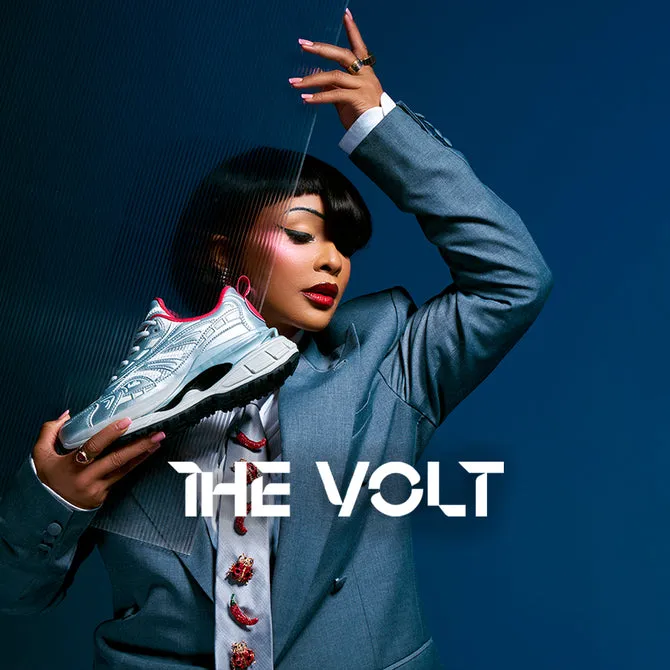
Nike's African revenue is a footnote in Beaverton; Bathu's revenue is South African money staying in South African hands.
THE STRATEGIC BET
The load-bearing bet at Bathu is not the shoe. It is ownership. Baloyi built the company on personal savings and reinvested cash flow rather than venture or private-equity money, and the brand's own materials make a point of the growth having happened 'without funding.' In a continent where the default script for a promising consumer brand is to raise, dilute, and eventually sell control to a strategic acquirer or an offshore holdco, choosing to stay founder-owned is the actual strategy — everything else is downstream of it. The decode scores AUTHORSHIP at 5 for exactly this reason: there is no cap table to explain away, no foreign parent quietly booking the margin.
The second bet is that identity beats specification. Bathu cannot outspend Nike on R&D, athlete endorsements, or supply-chain scale, and it does not pretend to. Instead it competes on a story a South African consumer can only get from the inside: a name in kasi slang, mesh detailing that nods to the visual language of pantsula and Soweto street culture, and a founder whose rise from a township room is the marketing. Priced around R1,200 (roughly $70–75), the shoe sits deliberately below the imported flagships while claiming a premium the giants structurally cannot — belonging. You are not buying performance; you are buying authorship of your own culture.
The third bet — the riskiest and least resolved — is vertical ambition. Bathu has publicly framed local manufacturing as the endgame, floating a South African production facility via BRICS-linked collaboration with Chinese partners. This matters because the brand's honesty problem lives here: for now, the shoes are largely made offshore, where a run takes about four weeks versus the roughly eight months Baloyi has said domestic production would require. The empowerment narrative — jobs, dignity, a homegrown value chain — is real at the retail and warehouse layer but thins out at the point where sneakers are actually assembled. The bet is that scale and patient capital eventually close that gap.
These three bets are stacked in a deliberate order, and the order is the sophistication. Ownership first, because it is the only thing that cannot be recovered once sold. Identity second, because it is the cheapest durable moat available to a company with no R&D budget. Manufacturing last, because it is the most capital-hungry and the easiest to get wrong — a premature domestic factory at eight-month lead times could have starved the brand of the trend-speed and cash flow it needed to build the store estate in the first place. Read that way, the offshore production that dents the empowerment story is not hypocrisy so much as sequencing: Baloyi appears to have chosen to win the retail and ownership game with a fast, imported supply chain, and to attempt localisation only once there is a business large enough to absorb the cost. Whether that sequence resolves is the open question the next five years will answer.
THE CREATIVE MOVE
The sharpest creative move is that Bathu made scarcity of design a feature, not a constraint. A single hero silhouette meant every marketing rand compounded on one recognisable object instead of being diluted across a catalogue. The honeycomb mesh is doing double duty: it is a genuine product differentiator (few mainstream sneakers are all-mesh) and a semiotic one, reading as 'ours' to a domestic audience while remaining legible as a real sneaker to everyone else. Thirteen rejections became part of the folklore — the difficulty of manufacturing the thing is retold as proof the thing is worth making.
The second move is treating retail as media. Where digitally-native brands treat stores as a cost, Bathu used mall real estate as the message — a Bathu storefront in a South African shopping centre is a statement that a township-born brand now sits in the same corridor as the imported giants, on equal architectural footing. The first store in 2018 and the subsequent push to dozens of locations is less a distribution decision than a positioning one: physical presence in premium retail is how you tell a mass market you are permanent, not a pop-up.
The third move is founder-as-format. Baloyi's biography — perfume sales door-to-door, a Big Four accounting career deliberately walked away from, the layover epiphany, the rejections — is engineered for retelling, and he has been generous with it across youth-month features, business press, and awards stages. This is deliberate brand architecture on the cheap: in a category where competitors buy global superstars, Bathu's most valuable endorser is its own origin story, and it costs nothing to reprint.
Underneath all three sits a quieter cultural move: Bathu named itself in the language of the market it wanted, not the language of the market it hoped to impress. Calling the brand a kasi word for 'shoes' is a small act with large consequences — it signals that the shoe is addressed to the township first and the boardroom second, and it makes the brand almost untranslatable in the way a global marketer would want, which is precisely why it travels domestically. The mesh detailing does similar work, reading as a nod to the sharp, self-made aesthetics of pantsula and Soweto street style rather than to any imported design lineage. Together these choices let a mass-market product carry the emotional charge of a subculture, so that buying Bathu feels less like a purchase and more like a vote for a version of yourself the global brands were never built to sell.
THE EVIDENCE
Confirmed: Bathu was registered/founded in 2015 and launched from a room in Alexandra township; 'Bathu' is township slang for 'shoes'.
Confirmed: Founder Theo Baloyi is a former PwC accountant (c. five years, including a Middle East posting) who conceived the brand around a Dubai layover.
Confirmed: Thirteen factories rejected the all-mesh concept before one agreed; the Mesh Edition Sneaker launched in 2016.
Confirmed: First physical store opened in 2018 at Newtown Junction Mall, Johannesburg.
Confirmed: Baloyi won Forbes Africa 30 Under 30 (2019) and GQ Business Leader of the Year (2021).
Confirmed: Bathu was built on personal savings and reinvested revenue, described by the brand as growth 'without funding'.
Reported independently: Store count grows across sources over time — from ~12 stores/103 staff in earlier accounts to 'close to 40 stores' and ~500 employees (about 90% directly in the value chain) in later ones, including a Namibia location.
Reported independently: Production reportedly reaching ~15,000 pairs per month; online contributing ~30% of revenue; retail price around R1,200.
Reported independently: Baloyi has publicly targeted a South African manufacturing facility via BRICS-linked collaboration with Chinese partners.
Reported independently: The brand has featured on 'most admired / most recognisable African brand' rankings (e.g. 9th, 2021).
Not claimed at this stage: We do not claim audited annual revenue or profit; the widely-cited '$1m+' figure is a press characterisation, not a filed number.
Not claimed at this stage: We do not claim the sneakers are currently manufactured in South Africa at scale — domestic production remains an ambition, not a confirmed operating reality.
Not claimed at this stage: We do not claim precise current store or headcount totals; these figures are point-in-time and vary by source and date.
Not claimed at this stage: We do not assert Baloyi was born in Alexandra; Alexandra is the brand's birthplace, and his profile records a Hammanskraal upbringing.
Bathu has won the ownership battle outright while still fighting the manufacturing one — and that order is the lesson.
THE AFRICAN READ
Read honestly, Bathu is a genuine authorship win and a scale reality-check at the same time, and both need saying. The win: this is one of the few African consumer brands of the last decade where the founder still owns and controls the company, built it without surrendering equity, and made it a household name domestically — the AUTHORSHIP the MonoKromatik Index weights most heavily is fully intact. Nike's African revenue is a footnote in Beaverton; Bathu's revenue is South African money staying in South African hands. That distinction is the entire point of the 'wear your heritage' proposition, and it is not marketing — it is the balance sheet.
The reality-check is scale, and pretending otherwise would insult the reader. A brand producing on the order of 15,000 pairs a month across roughly 40 stores is a serious South African business and an almost invisible one next to companies that move hundreds of millions of units a year through global logistics. The empowerment story is strongest in retail and warehousing and weakest at the factory floor, because the shoes are still largely assembled offshore while a domestic plant remains an ambition rather than a line item. 'African-authored' here is precise: the brand, the design language, the ownership, and the storefront are African; a meaningful share of the physical manufacturing, for now, is not.
The strategic lesson for the continent is that ownership and manufacturing are two different battles, and Bathu has clearly won the first while still fighting the second. It has proven that an African-authored identity brand can take shelf space and mindshare from the giants without foreign capital or a foreign parent — a template Maxhosa, Drip, and a wave of local labels are now extending. The unfinished work — local production at competitive cost and speed — is the harder, more capital-intensive fight, and it is the one that would turn Bathu from a proudly-owned brand into a genuinely homegrown value chain. Getting the first right buys you the runway to attempt the second; skipping straight to the second usually costs you the first.
For the MonoKromatik Index, Bathu is close to a model case of why authorship is weighted above execution. On raw execution and consequence, plenty of offshore-owned brands out-operate it — bigger factories, tighter supply chains, more units moved. But those brands export the value; Bathu retains it, and retention is what compounds into a continental capital base over time. The honest scorecard, then, is neither a hagiography nor a takedown: it is a brand that has done the hardest and most valuable thing (keep control) and the second-hardest thing (build a recognisable identity), while deferring the most expensive thing (make the product at home). That is a defensible order of operations, and it is one more African founders should study — not because Bathu has finished the job, but because it has sequenced the job correctly, and sequencing is where most homegrown consumer brands quietly lose the plot.
LESSONS FOR BRAND BUILDERS
Own the cap table before you scale the footprint. Bathu's most durable asset is not its mesh upper; it is that Baloyi never traded control for growth capital. For African founders, staying bootstrapped is slower and harder, but it is the only version of 'African-authored' that survives an acquisition offer. Ownership is a strategy, not an afterthought.
One hero silhouette beats a catalogue. By betting everything on a single all-mesh shoe, Bathu concentrated every marketing rand onto one recognisable object and turned a manufacturing headache — thirteen rejections — into brand folklore. Focus is how a small brand buys mindshare it cannot afford to purchase outright.
Compete on belonging, not specification. Against Nike and Adidas, Bathu cannot win on R&D, athletes, or scale, so it doesn't try. It sells a name in kasi slang, a township origin, and a founder story the giants can never authentically replicate. When you can't out-spend, out-belong.
Be honest about where the value chain actually lives. Bathu's empowerment narrative is real in retail and warehousing and still thin at the factory floor, where production remains largely offshore. The credible version of 'homegrown' names the gap and treats local manufacturing as the unfinished fight — not a claim already won.
PUBLICATION VERIFICATION STATUS
Core facts (2015 founding, all-mesh design, 13 factory rejections, awards) are well-sourced. Store and headcount figures are point-in-time and grow across sources (from 12 stores/103 staff in early accounts to ~40 stores/~500 staff in later ones); we cite the range and date it. Note: the brand was launched from a room in Alexandra, but founder Theo Baloyi was raised in Hammanskraal per his Wikipedia profile — we describe Alexandra as the brand's birthplace, not necessarily his.