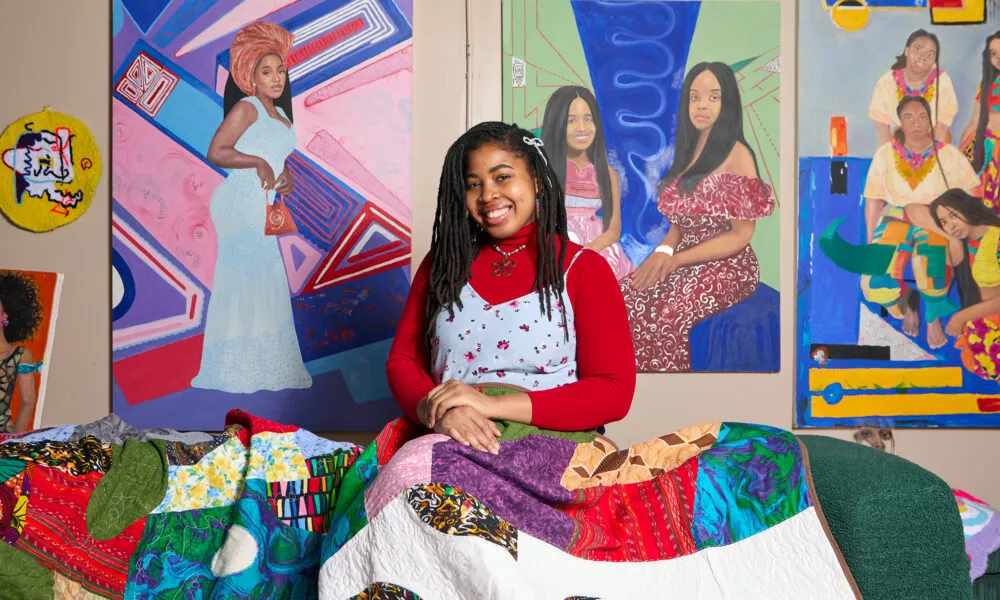
The craft our grandmothers mastered is now hanging in a consulate residence in Manhattan.
Mesoma Hammida Onyeagba's quilts don't belong in bedrooms anymore. One just entered the permanent collection of the Finnish Consulate General in New York City. First quilt they've ever acquired. They didn't buy it because it was African. They bought it because it was undeniable.
This isn't "African art breaks through." This is what happens when an artist refuses the choice between heritage and rigor — and institutions finally catch up.
What Mesoma actually does
She quilts. The same technique your aunty uses when the sewing machine comes out and fabric scraps become something whole. Except Mesoma's quilts carry the weight of gallery walls and the patterns of home in the same breath. New York collectors don't ask if it's "craft" or "art." They ask which piece is still available.
The Finnish Consulate didn't commission this as a diversity checkbox. They saw her work. They wanted it in their space. Permanently. That distinction matters.
Her quilts tell stories the way good art does: without explaining. The colors feel like Lagos markets. The textures speak Igbo without translation. You either recognize it or you don't, but either way, you stop walking.
Why this lands different
Here's the diaspora tax we pay: Half our energy goes to explaining Africa isn't a country. The other half goes to proving African art isn't just masks and ceremonial objects. Mesoma didn't argue the point. She stitched past it.
When the art world says "textile art" now, Nigerian quilting sits in that sentence. When institutions build contemporary collections, African artists are no longer the afterthought. Mesoma made space by refusing to ask for permission.
For those of us in London flats or Toronto apartments trying to carry home in our pockets, this matters. The things our mothers created weren't just functional. They were art before the institutions said so. Mesoma took what we already knew and made them write it down.
She didn't code-switch her way into Western galleries. She made them learn her language.
What changes after this
The Finnish Consulate's acquisition isn't symbolic. It's structural. Other embassies will notice their African art gaps. Other consulates will ask which contemporary African artists they're missing. The door just got wider, and the precedent just got set.
For collectors in the diaspora: Mesoma's work proves that investing in African art isn't charity. It's acquisition of pieces that institutions will value long after we're gone. That quilt in Manhattan will represent Nigeria for decades. It's not going anywhere.
For young Africans trying to reconcile heritage with ambition: You don't have to choose. Mesoma quilts like her grandmother and sells to diplomats. Both are true. The tension is the point.
What happens next
Mesoma isn't stopping at one consulate. Artists like her don't reach a milestone and retire. The Finnish acquisition is proof of concept. More exhibitions coming. More collections. More reminders that Nigerian creativity doesn't need a Western co-sign to be legitimate — but when the co-sign comes, we take it and keep building.
Keep her name in your mouth. When your non-African friends talk contemporary art, mention her. When your cousins back home ask if success abroad means forgetting where you're from, send them this.
We don't change narratives by arguing. We change them by creating work so undeniable that institutions have no choice but to make room.
The thread holds
From Lagos to New York. From kitchen tables to consulate walls. The technique stayed the same. The context shifted. The essence remained.
Mesoma picked up the thread our grandmothers handed down and stitched her name into permanent collections. That's not just her win. It's confirmation of what we already knew.
What we come from is valuable. What we create is canon. The Finnish Consulate now knows it. The rest of the art world is taking notes.
