THE MONOKROMATIK DECODE
Our editorial read across the four dimensions we use to assess creative work — an authorship-weighted Cultural-Signal Score, reflecting judgement, not a measured metric.
83 /100AACULTURAL-SIGNAL SCOREStrong — clear authorship, real consequenceNo one-in-three likelihood of movement identified in the next twelve months.
An outlook states at least a one-in-three likelihood of a change over the next twelve months. How outlooks work
Treating the global feature as authored work you walk away owning rather than access granted is a genuinely sharp reframe of the African crossover, well adapted rather than category-inventing.
Self-taught producer, own imprint and confirmed songwriting credit on an Oscar-nominated song — but the piece expressly notClaims ownership of the masters on 'Wait for U' and 'Lift Me Up', the very records the case rests on. A material layer, the major-label capital and distribution, sits elsewhere.
A No. 1 Hot 100 debut, two Grammy wins across 2023 and 2025, an Academy Award nomination and the highest-charting album by a Nigerian woman are all in evidence_confirmed. The results are unambiguous and independently checkable.
Chart and award positions are third-party verifiable and sustained from 2020 to 2025, and the Leading Vibe Initiative ran a pan-African programme in 2025 — a real documented outcome. But capture is partial and shared: royalties and splits are notClaimed, and the masters on the landmark records are not hers.
THE CONTEXT
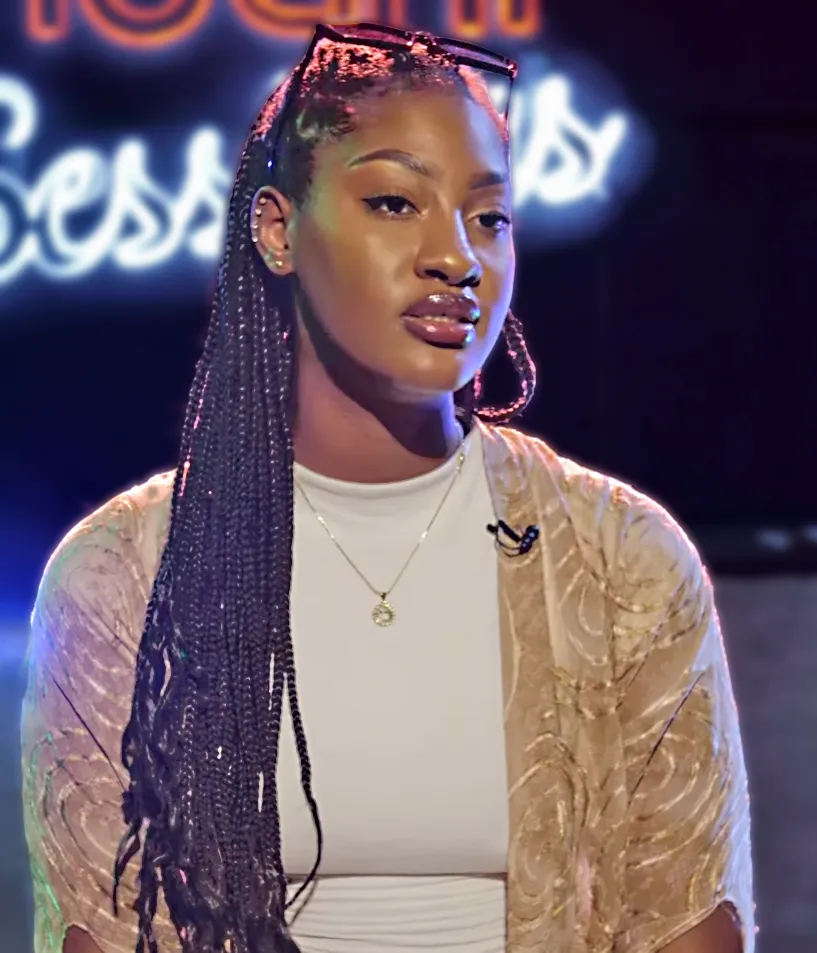
Temilade Openiyi — Tems, born in Lagos in 1995 — arrived in global pop culture the way African artists are usually allowed to: as a guest. In 2020 her voice sat at the centre of Wizkid's "Essence," a song that would climb to No. 9 on the Billboard Hot 100 after a Justin Bieber-assisted remix and earn a Grammy nomination for Best Global Music Performance. It was the record that made America notice Afrobeats had a texture it did not have language for — smoky, unhurried, unmistakably hers. On paper, she was the featured artist. In practice, she was the reason the song worked.
That distinction — featured artist versus author — is the whole story. The music industry has a long, well-documented habit of routing African talent through the side door: the exotic vocal, the 'world music' category, the guest slot that flatters a Western headliner while the credit, the publishing and the narrative stay offshore. Tems is interesting precisely because she walked through that same door and refused the terms on the other side of it. She is a songwriter and a self-taught record producer who produced her own 2020 debut EP, "For Broken Ears," and released it through her own imprint, Leading Vibe. The crossover, when it came, was built on a person who already owned her means of production.
By early 2023 the guest had become a record-holder. Future's "Wait for U," featuring Drake and Tems and built around a sample of her own song "Higher," debuted at No. 1 on the Billboard Hot 100 — making Tems the first African artist to debut atop that chart. In February 2023 it won the Grammy for Best Melodic Rap Performance, her first Grammy and, for the Afrobeats generation, the first won by a Nigerian woman. Weeks later she was an Oscar nominee: her co-writing credit on Rihanna's "Lift Me Up," the lead single from "Black Panther: Wakanda Forever," earned a nomination for Best Original Song, making Tems the first Nigerian musician nominated in that category. This case study is about how she got there without giving herself away.
The context that makes this remarkable is the specific decade she emerged from. The late-2010s Afrobeats wave carried a generation of Nigerian artists to global attention, but attention and ownership are not the same thing, and the industry's structural machinery — advances, distribution, publishing administration — remained overwhelmingly offshore. Many crossovers of that era were, in the cold light of the paperwork, licensing deals dressed as validation. Tems is worth isolating because she is the case where the artist arrived with her own infrastructure already in place, which changed what 'making it' could mean. She is not the loudest name of the wave, but she may be the most instructive one for anyone studying how African value is captured or lost at the point of contact with the global industry.
PREMIUM CASE STUDY
The full strategic decode — the bet, the creative move, the evidence ledger and the lessons — is part of the Intelligence membership.