THE MONOKROMATIK DECODE
Our editorial read across the four dimensions we use to assess creative work — an authorship-weighted Cultural-Signal Score, reflecting judgement, not a measured metric.
76 /100ACULTURAL-SIGNAL SCORESound — good work, incomplete captureNo one-in-three likelihood of movement identified in the next twelve months.
An outlook states at least a one-in-three likelihood of a change over the next twelve months. How outlooks work
Fashion's apex institution built its most valuable annual asset on Black dandyism and took its intellectual frame from a Black scholar's book — the first Costume Institute exhibition centred on Black fashion. Genuinely new for the category. Holds.
Dropped from 4. The diaspora contribution is substantial and named — Miller's book and guest curation, Hurston's essay, Dyson's architecture, Boateng's atelier, a dozen African and diaspora houses. But Bolton remained curator in charge, the Met owns the exhibition and Louis Vuitton made it possible. Participation in the making is genuine; direction and ownership are external. That is a 3.
A twelve-part curatorial structure drawn from a 1934 essay, purpose-built exhibition architecture, and a carpet that made the thesis legible globally in one evening. Nine sources, all confirmed. Holds — the strongest execution case in the batch.
Held at 3 on corrected reasoning (21 July 2026). The $31m and 291,000-plus visitors are third-party-verifiable but were captured by the Met, with a top-line credit to Louis Vuitton. Our earlier rationale said no funding reached the African side; that is now wrong — Afreximbank underwrote Ozwald Boateng’s showcase through CANEX and published it. The level still holds because that money was INPUT to the evening rather than an outcome caused by it, and CANEX’s $2bn commitment predates the gala by seven months. What remains unevidenced a year on is any commercial consequence flowing back to the designers: no order books, no stockist growth, no creative-director appointment traceable to Superfine.
THE CONTEXT
On 5 May 2025 the Metropolitan Museum of Art held its annual Costume Institute benefit under the theme “Superfine: Tailoring Black Style”. The exhibition it opened ran at The Met Fifth Avenue from 10 May to 26 October 2025 and was the Costume Institute's first show devoted to menswear in more than two decades. It was curated by Andrew Bolton, the Wendy Yu Curator in Charge of The Costume Institute, with Monica L. Miller of Barnard College as guest curator. Its source text was Miller's own 2009 book, Slaves to Fashion: Black Dandyism and the Styling of Black Diasporic Identity — meaning the intellectual property at the centre of fashion's biggest institutional year was written by a Black academic sixteen years before the institution built a season around it.
The structure was unusually rigorous for a fashion blockbuster. Rather than a chronology, the show was organised into twelve characteristics of Black dandyism — Ownership, Presence, Distinction, Disguise, Freedom, Champion, Respectability, Jook, Heritage, Beauty, Cool and Cosmopolitanism — a framework informed by Zora Neale Hurston's 1934 essay “Characteristics of Negro Expression”. The galleries themselves were designed by the artist Torkwase Dyson, whose “hypershape” forms were used as free-standing architectural zones rather than conventional vitrine runs. Two Black women, a novelist-anthropologist long dead and a living artist, supplied the show's conceptual and physical architecture.
The gala was co-chaired by Colman Domingo, Lewis Hamilton, A$AP Rocky and Pharrell Williams alongside Anna Wintour, with LeBron James as honorary chair — the first time the gala's co-chairs were all Black men. James withdrew before the night with a knee injury. The dress code was “Tailored for You”. The evening raised a record $31m for the Costume Institute, up from $26m the previous year. That number matters more than it looks: the Costume Institute is the only curatorial department at the Met that funds its entire operation from what this one night brings in.
The credit line is where the case study actually begins. The exhibition and the benefit were made possible by Louis Vuitton, with major funding from Instagram, the Hobson/Lucas Family Foundation, Dr Precious Moloi-Motsepe and Africa Fashion International, and The Perry Foundation, and additional support from Condé Nast. A show about who gets to author Black style was underwritten by a French luxury house whose menswear creative director, Pharrell Williams, was also one of its four co-chairs. That is not a scandal. It is a structure — and reading the structure is the whole job.
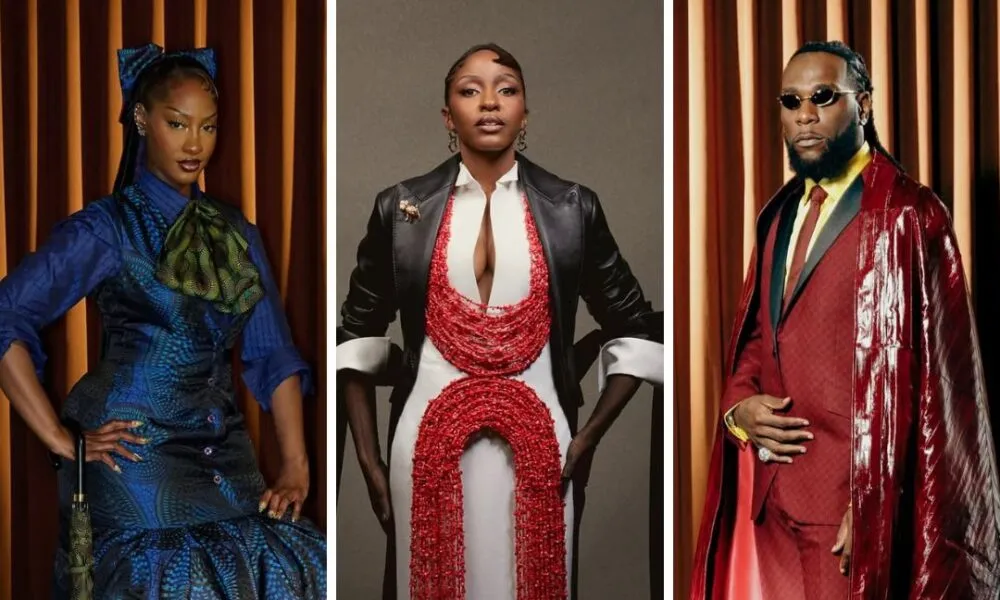
PREMIUM CASE STUDY
The full strategic decode — the bet, the creative move, the evidence ledger and the lessons — is part of the Intelligence membership.