THE MONOKROMATIK DECODE
Our editorial read across the four dimensions we use to assess creative work — an authorship-weighted Cultural-Signal Score, reflecting judgement, not a measured metric.
64 /100BBBCULTURAL-SIGNAL SCOREMixed — the idea outruns the ownershipNo one-in-three likelihood of movement identified in the next twelve months.
An outlook states at least a one-in-three likelihood of a change over the next twelve months. How outlooks work
Downgraded from 5. The inversion is genuinely sharp — the state arriving as late brand manager of a culture its own diaspora built — but the mechanism is the category's standard nation-branding kit: a task force, tourism/cultural economic zones, a restructured presidential council and sub-brands. Strong idea, conventional instruments; not a reframe of what the category can attempt.
The branding act is originated and owned by African principals — a Nigerian ministry and federal executive — and the underlying cultural asset is diaspora-built. Docked one level because the state is annexing authorship of a phenomenon artists, promoters and returning diaspora created, and the coinage attribution itself is only 'reportedly' sourced.
As of publication this is announcements plus a single Abuja showcase. The hard delivery — visas, aviation, power, security — is unproven, and there is no evidence the framework has changed any of them in practice. Visible weakness that undercuts the idea.
Nothing has happened yet. The confirmed evidence is a cabinet decision, an announcement and one event; every economic figure is reported by a single secondary source and unaudited; the 100%-growth projection is explicitly unverified. On four sources, with no post-December 2025 outcome data of any kind, this is little discernible consequence.
THE CONTEXT
"Detty December" — Pidgin for a 'dirty', let-loose end-of-year season of concerts, parties and homecoming — was reportedly coined by Afropop artist Mr Eazi around 2016 and grew, with no central owner, into a continent-spanning travel and culture economy across Lagos, Accra, Mombasa, Kigali and beyond. In late 2025 the Nigerian state moved to formalise it: at a Federal Executive Council meeting chaired by President Bola Tinubu on 6 November 2025, the FEC approved a Presidential Task Force on 'Detty December', Tourism and Cultural Economic Zones across the six geopolitical zones plus the FCT, and a restructured Presidential Council on Tourism Promotion and Investment. The decisions were announced on 11 November 2025 by Hannatu Musa Musawa, Minister of Art, Culture and the Creative Economy.
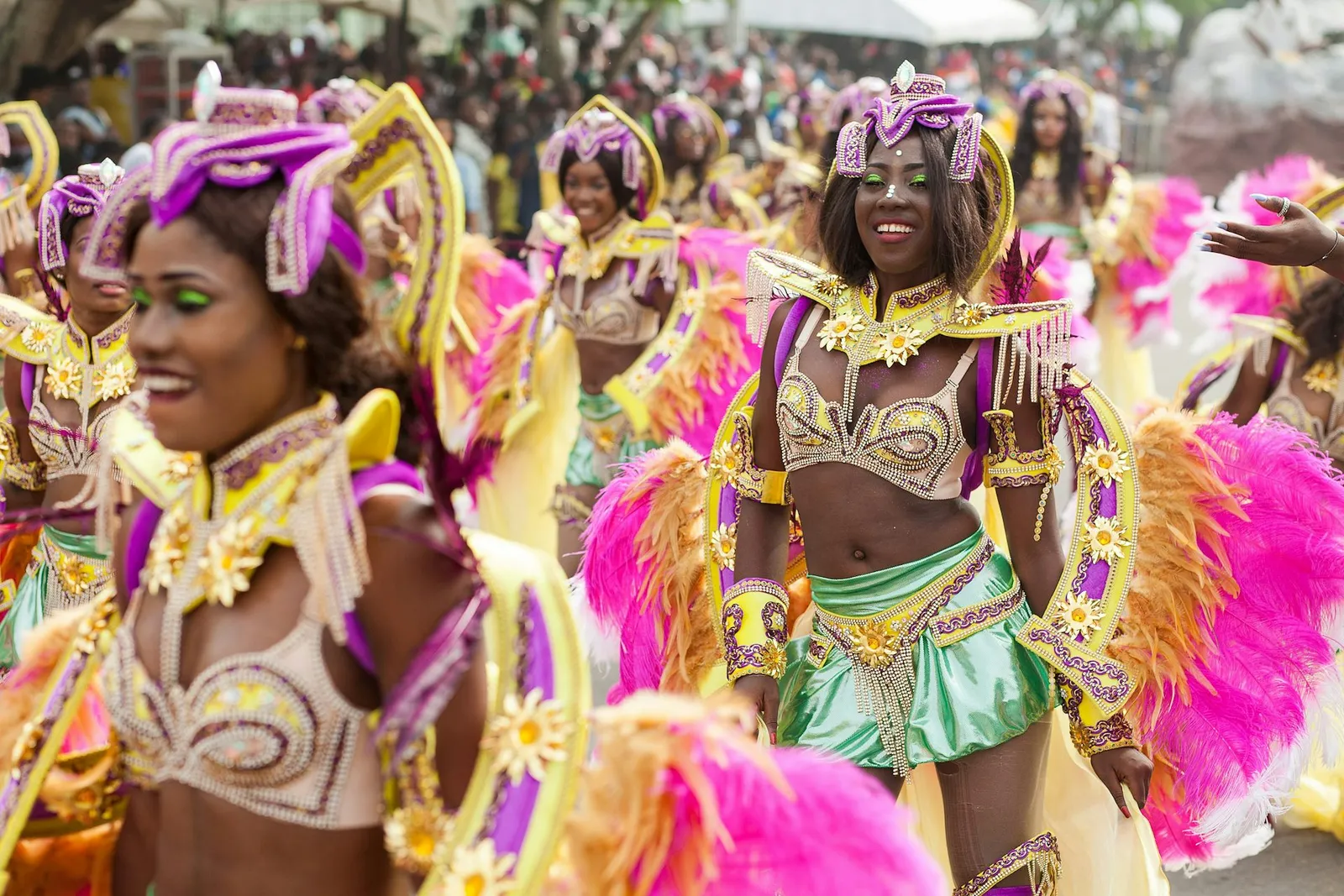
The culture was built bottom-up by artists and a returning diaspora; the state arrived after it had product-market fit, to coordinate and harvest it.
THE STRATEGIC BET
The bet is that a viral, artist-built cultural moment can be re-platformed as durable, year-round nation-brand infrastructure — and that the state's role is coordination, not creation. The task force is explicitly an inter-agency body (aviation, interior, power among the MDAs named) meant to remove the friction — flights, visas, electricity, security — that throttles a season Lagos already runs on. The deeper bet sits in the 'Naija Season' brand, developed by the National Council for Arts and Culture to curate festivals across all 36 states, January–December: converting a one-month diaspora spike into a 12-month calendar so the brand isn't hostage to December.
THE CREATIVE MOVE
Rather than invent a top-down campaign, the state adopted the audience's own language as the brand name — keeping the Pidgin, the irreverence and the 'Detty' — and wrapped a brand architecture around it: a flagship (Naija Season) plus regional sub-brands Homecoming East and Capital Vibes and standalone destinations (Obudu, Yankari, Cocoa Beach). The first visible activation was the NTDA's 'Naija Flavour: Destination December 2025', held 13 December 2025 in Abuja as a marketplace of food, fashion, music and live theatre, positioned to showcase 50+ SMEs to an expected 2,000+ attendees including diaspora visitors.
THE EVIDENCE
Confirmed: The FEC decision date (6 Nov 2025), the announcement (11 Nov 2025), Minister Musawa's name and title, the three approvals (task force, tourism/cultural economic zones, restructured presidential council), and the brand names Naija Season, Homecoming East and Capital Vibes — corroborated across Premium Times, Punch and BusinessDay.
Confirmed: The 'Naija Flavour: Destination December 2025' event date (13 Dec 2025) and format, confirmed by Nigerian press.
Reported independently: Lagos generating ~US$71.6m in state revenue from the 2024 season; ~1.2m visitors to Lagos in Dec 2024 with ~90% diaspora; >US$220m injected nationally in 2023; Ghana's 'December in GH' ~115,000 participants in 2023 — all reported by The Conversation, not audited primary data.
Reported independently: The Mr Eazi 2016 coinage, 'reportedly' attributed in the same source.
Reported independently: No audited outcome data exists yet for the task force, and the 100%-revenue-growth-by-2026 projection is unverified.
Not claimed at this stage: No audited outcome data exists yet for the task force or any post-December 2025 ROI.
Not claimed at this stage: No independent confirmation of the 100%-revenue-growth-by-2026 projection (attributed in early reporting to a diaspora commission, not a primary government release).
Not claimed at this stage: No evidence the framework has yet changed visa, aviation or power delivery in practice. Whether 'nationalising' the brand improves or dilutes it is, at publication, untested.
A brand owned by everyone and managed by a task force needs published outcomes — or it becomes a press release.
THE AFRICAN READ
This is a reversal of the usual sequence. Normally a state commissions an agency to manufacture a nation brand ('Incredible India', 'Proudly South African') and pushes it outward. Here the culture — and the IP — was built bottom-up by artists, promoters and a returning diaspora, and the state arrived after the brand had product-market fit, to coordinate and harvest it. That is a genuinely African-authored brand asset, and the reported ~90% diaspora-visitor read makes the real customer explicit: this is less inbound tourism marketing than a homecoming-and-remittance engine wearing a tourism jacket. The risk is equally familiar — a grassroots, irreverent thing becoming a government programme can sand off the exact looseness ('Detty') that made it travel. The sub-brand logic (Homecoming East, Capital Vibes) is the more durable play: it spreads value beyond Lagos's gravity well.
LESSONS FOR BRAND BUILDERS
Steward, don't invent. The strongest nation brands of this cycle may be the ones you don't invent but steward — adopting the audience's own language, resisting the urge to over-polish, and competing on coordination (logistics, safety, infrastructure) rather than slogans.
A brand owned by everyone needs published outcomes. A brand managed by a task force needs measured, public results, or it becomes a press release. The move is real and well-documented; the payoff is, for now, a promise.
PUBLICATION VERIFICATION STATUS
Institutional facts (FEC decision 6 Nov 2025, announcement 11 Nov by Minister Hannatu Musawa, the three approvals, the brand names) are confirmed across multiple independent Nigerian outlets. All economic/visitor figures are reported by secondary sources, not audited primary government data, and are flagged as such. No audited outcomes exist yet for the task force.