THE MONOKROMATIK DECODE
Our editorial read across the four dimensions we use to assess creative work — an authorship-weighted Cultural-Signal Score, reflecting judgement, not a measured metric.
70 /100ACULTURAL-SIGNAL SCORESound — good work, incomplete captureNo one-in-three likelihood of movement identified in the next twelve months.
An outlook states at least a one-in-three likelihood of a change over the next twelve months. How outlooks work
A tourism board behaving like a global consumer brand is sharp and new for an African state, but the piece's own read concedes Emirates, Qatar Airways and Turkish Airlines run precisely this playbook with more money. Strong adaptation to a new market, not a category invention.
Confirmed as conceived, funded and directed from Kigali by the Rwanda Development Board and Convention Bureau — genuinely African-originated. But every surface is rented: the shirt, the club and the distribution belong to Aston Villa, and Arsenal's exit shows how little control sits at the Rwandan end.
The eight-year portfolio narrative (PSG, Atlético, BAL, Clippers, Rams) is asserted, not evidenced; confirmed evidence covers the Villa deal, the Arsenal wind-down and the betting-rule context, while Bayern appears only as reported and restructured. Disciplined and consistent on what is documented, so 4 rather than 5.
The Villa deal is an announcement dated 14 July 2026 for a season that has not started — the announcement rule caps it at 3, and there is no post-hoc outcome at all. What documented after-effect exists cuts the other way: the eight-year Arsenal partnership ended, Amnesty briefed against on day one, and the piece explicitly declines to link the sponsorships to tourism revenue.
THE CONTEXT
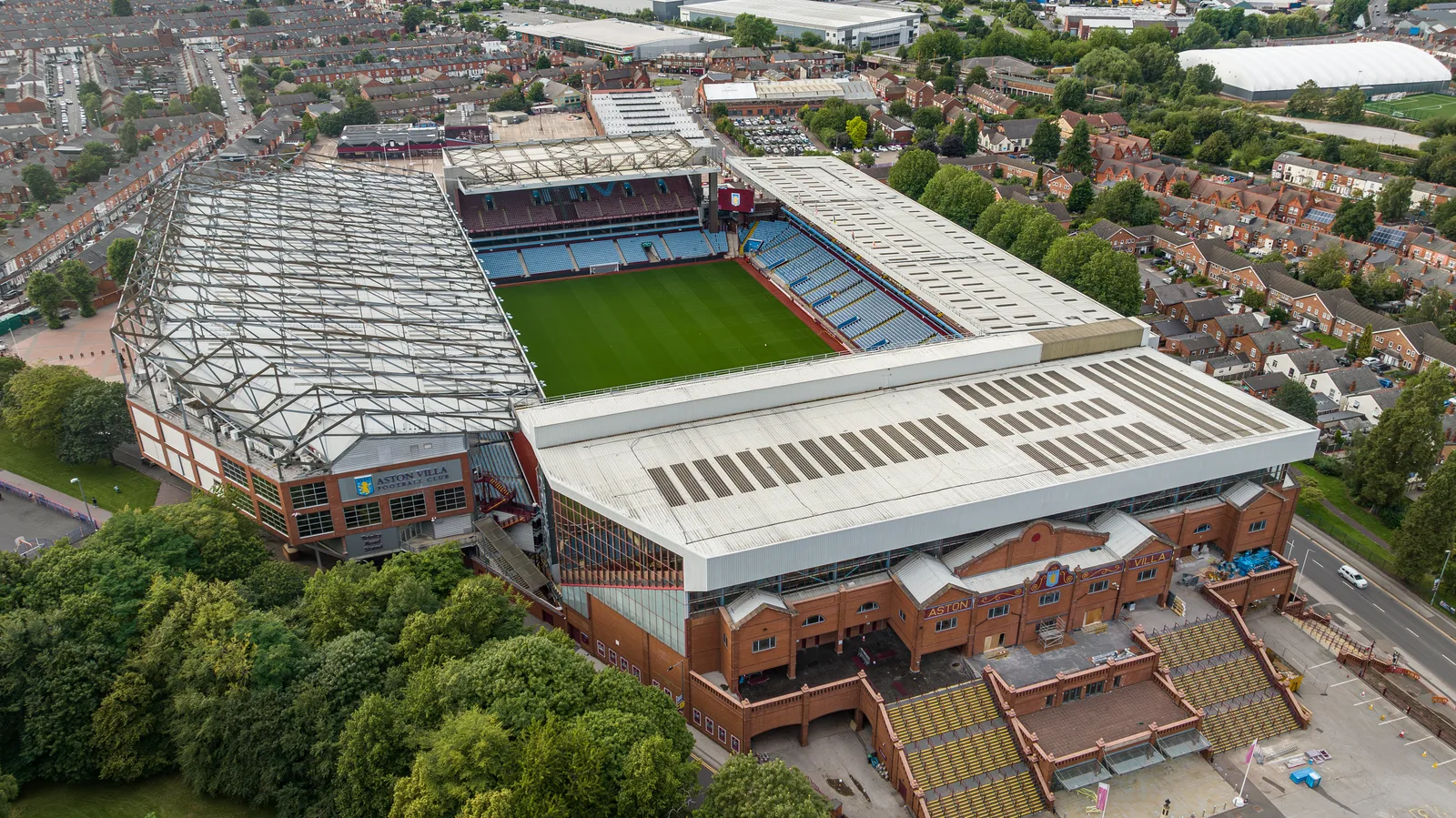
On 14 July 2026, Aston Villa announced Visit Rwanda as the club's new principal partner from the 2026/27 season. The Rwandan tourism brand will appear on the front of the men's, women's and academy shirts across all competitions, and will simultaneously hold two further titles: Official Tourism Partner and Official Coffee Provider. Villa's president of business operations, Francesco Calvo, called it "the most important sponsorship deal in the history of the football club" and a symbol of the club's "continuing expansion and growth into international markets". Neither party disclosed the value. The Athletic reported it at just over £20m (roughly $26.8m) a season including bonuses. Villa and the press have called it the biggest in the club’s history; the reported arithmetic does not quite bear that out. The outgoing partner, Betano, was signed in 2024 on a reported ~£40m across two seasons — about £20m a season, flat — and was itself billed as Villa’s most lucrative front-of-shirt deal at signing. The Rwanda figure is an "up to" ceiling that includes performance bonuses, so the base rate may sit at or below Betano’s. What is defensible is that a small East African state now buys more of the club than any sponsor before it: men’s, women’s and academy shirts, where Betano held the men’s kit alone.
The timing is not coincidental in any of its dimensions. Villa are replacing Betano, the Kaizen Gaming brand that occupied the shirt for two seasons and which Premier League rules now push off the front of every kit in the league from 2026/27 — a self-imposed betting-sponsorship ban that removed a large tranche of demand from the market at exactly the moment Rwanda was shopping. And Villa are not the club they were: Unai Emery's side beat Freiburg 3-0 in Istanbul on 20 May 2026 to win the Europa League, the club's first European trophy since 1982, which carries them into the 2026/27 Champions League. Rwanda is not buying a mid-table Midlands club. It is buying a Champions League front-of-shirt at a moment when the inventory got scarce and the club got hot. Villa, for their part, were negotiating from the strongest position in four decades and still needed a non-betting buyer at betting-money prices. Rwanda was the buyer willing to clear it. That is the trade, and both sides knew exactly what the other one needed.
It is also a replacement rather than an expansion. Arsenal and the Rwanda Development Board mutually agreed to end their eight-year sleeve partnership — reported at around £10m a year, and the deal that started all of this in 2018 — at the close of 2025/26, after sustained pressure from supporter groups. Bayern Munich converted its Visit Rwanda arrangement from a commercial sponsorship into a youth-development partnership centred on the FC Bayern academy in Kigali. Rwanda did not retreat from the Premier League. It moved down the table and doubled the spend, from a sleeve at Arsenal to the chest at Villa — and in the process turned a partner that had become a liability into a partner that had something to prove.
PREMIUM CASE STUDY
The full strategic decode — the bet, the creative move, the evidence ledger and the lessons — is part of the Intelligence membership.