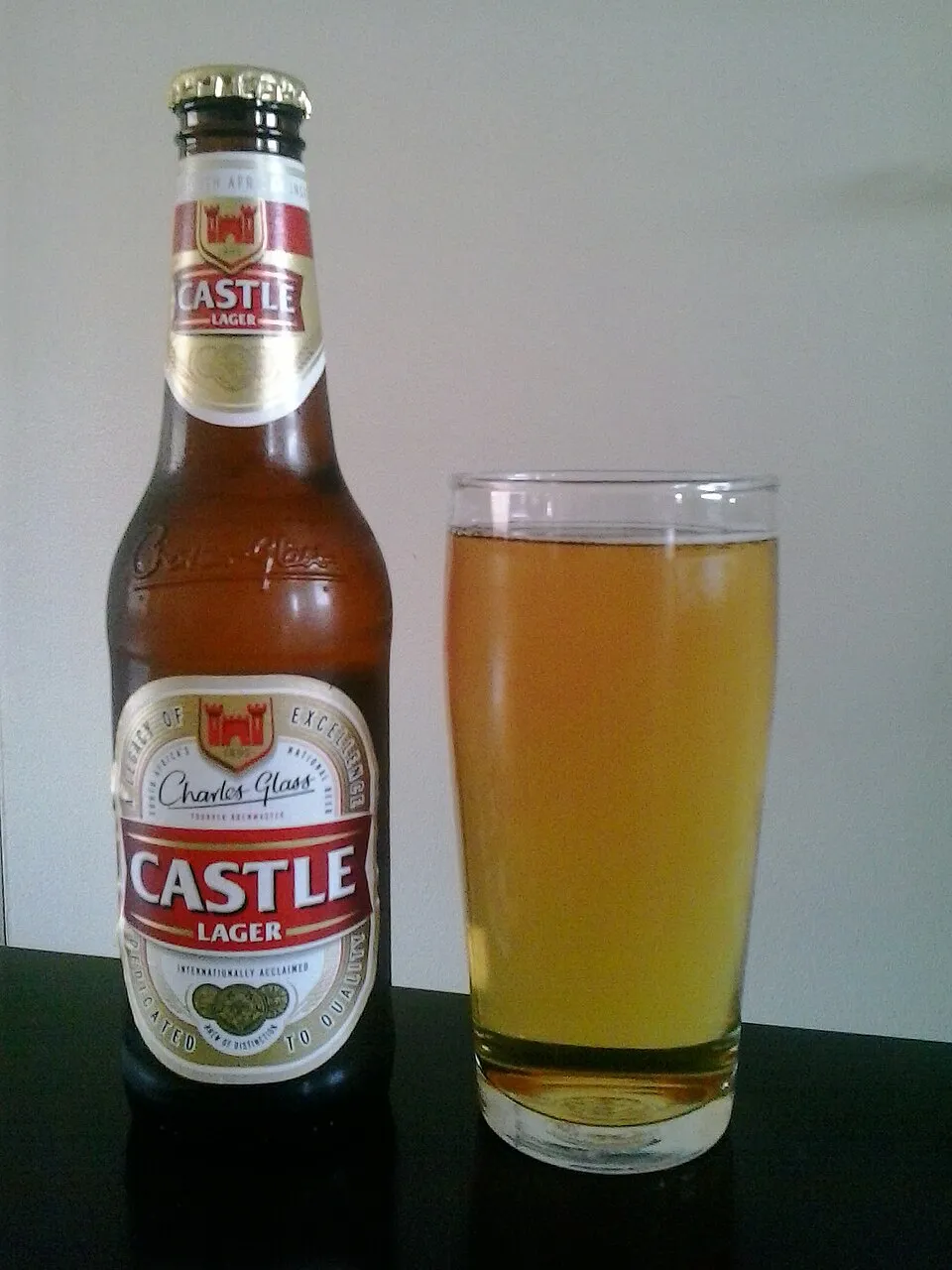
A beer born on the goldfields
Castle Lager did not begin in a boardroom. It began on the dusty Witwatersrand goldfields, where Charles Glass — a brewer who had honed his craft supplying British troops in India — spotted a thirsty market among the miners of the 1886 Johannesburg gold rush. His Castle Brewery grew fast, and in 1895, on the back of that success, South African Breweries was founded with the Castle Brewery as its head office. Two years later SAB became one of the first industrial companies to list on the Johannesburg Stock Exchange. 1
The founding myth is worth pausing on. The official story centres Charles Glass, but University of Cape Town historian Anne Kelk Mager has argued that his wife, Lisa Glass, was primarily responsible for the brand's creation — a reminder that even a national origin story is a piece of authored marketing. 1 What is not in dispute is the outcome: from a single brewery serving gold-rush labour, Castle became the flagship of what would grow into one of Africa's largest business exports.
The lager that learned to speak South African
More than a century later, Castle Lager is not simply a beer — it is a piece of national infrastructure for how South Africans gather. The brand has embedded itself in the country's sporting life more deeply than almost any competitor: it is the premier sponsor of the men's national football team, Bafana Bafana, the team sponsor of the Proteas cricket side, and a long-standing associate sponsor of the Springboks rugby team. 15
That three-code footprint — football, cricket, rugby — is unusual, because those sports have historically mapped onto South Africa's racial and class fault lines. Castle's long-running "It all comes together with a Castle" line is doing quiet, deliberate work: positioning the beer as the shared object around which a divided country can, for the length of a match, cohere. It is a rare mass-market brand that credibly claims all three sporting nations at once, and it has spent decades and hundreds of millions of rand earning that claim.
From Johannesburg to the world
The more remarkable story is the corporate one. Through the 1990s and 2000s, SAB executed one of the most aggressive globalisation runs ever mounted by an African company. In 1999 it formed a UK holding company, SAB plc, and moved its primary listing to London to raise the capital for an international acquisition drive. 2 In 2002 it bought Miller Brewing in the United States from Altria, becoming SABMiller and vaulting into the ranks of the world's largest brewers. 2
For roughly a decade and a half, SABMiller was a genuine heavyweight — a company with African roots operating a portfolio spanning the Americas, Europe, Africa, Asia and Australia. It was the kind of outbound success African business commentary rarely gets to celebrate: not a foreign multinational extracting from the continent, but a South African firm buying its way onto the world stage.
The mega-merger — and the ownership question
Then the acquirer became the acquired. In 2015, Anheuser-Busch InBev — the Belgian-Brazilian-American brewing colossus behind Budweiser and Stella Artois — moved on SABMiller. The deal closed on 10 October 2016 3, and it was enormous: valued at roughly US$107 billion 4, it stands among the largest corporate takeovers in history and created a brewer controlling close to a third of the world's beer.
For South Africa, the win was double-edged. The transaction handed SABMiller shareholders a rich payout and, as a condition of local regulatory approval, AB InBev committed to a multi-billion-rand fund for South African small farmers and enterprises and pledged to protect jobs. But the corporate brain — the strategy, the capital allocation, the ultimate ownership — moved offshore. The African company that had gone out and conquered the world was folded into a bigger foreign one. Castle Lager remains a proudly South African brand in every consumer-facing sense; the profits it generates now answer to a headquarters in Leuven.
The brand read
Castle is a case study in the difference between a brand and its ownership. The beer never stopped being South African — the sponsorships, the slogan, the goldfields myth are all intact and locally resonant. What changed sits above the label, in the capital structure. SAB's rise proved an African company could build a global champion; the AB InBev deal proved how easily that champion can be absorbed once its shares trade in London and New York rather than being anchored to home. For African brand-builders, the lesson is not to avoid global scale but to understand that authorship of the culture and control of the balance sheet are two separate assets — and the second is far easier to lose.
