The call didn't ask. It claimed.
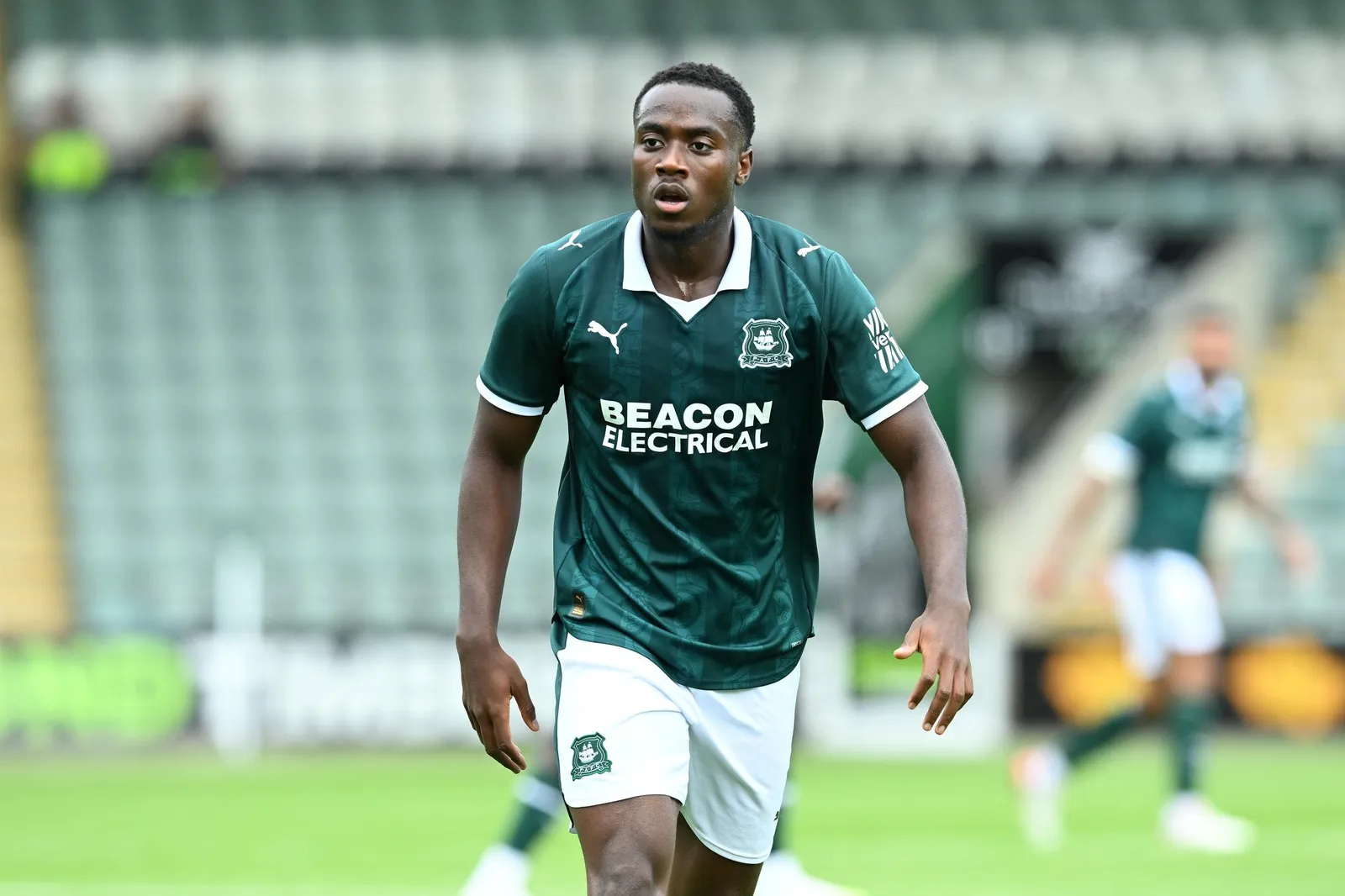
Owen Oseni couldn't believe his phone. The 23-year-old Plymouth Argyle striker—Irish passport, Ivorian mother, Nigerian father, League One wages—just got handed a Super Eagles jersey. Not a trial. Not a maybe. A full call-up for the 2026 Unity Cup and friendlies against Poland and Portugal.
"Disbelief," he told BBC Sport.
We believe him. Because this is how it works when you're diaspora and the nation calls: you weren't expecting it, but you were always ready.
Three goals in four games. 240 million people competing for the same jersey.
Let's be clear about what earned this. Oseni joined Plymouth last summer from Scottish side St Mirren—his first season in English football's third tier. Took him time to settle. Then the final four matches happened: three goals. Ten goals from 33 appearances overall. Not world-beating numbers. Just the right numbers at the right time.
But here's the scale that makes this matter: Nigeria has 240 million people. Oseni estimates half of them want to play for the Super Eagles. That's 120 million people in the queue, and Éric Chelle just waved a League One striker to the front.
"I know I had an alright season," Oseni said, with the kind of humility that either means he's genuinely humble or he hasn't checked his mentions yet. "But to get called up for a country where there's more than 240 million people and probably 50% want to play for their country was quite a big deal for me so I was really buzzing."
Buzzing undersells it. This is the lottery every diaspora kid enters without buying a ticket.
Three passports. One choice. The same choice we've all made in different rooms.
Oseni qualifies for Nigeria through his father. His mother's Ivorian—the Elephants could've called. Born in Ireland—the Boys in Green were an option. Three countries, three jerseys, three entirely different World Cup qualification paths.
We've watched this movie. Tammy Abraham picked England over Nigeria. Folarin Balogun went USA after flirting with England and Nigeria. Eddie Nketiah stayed English. Talented players with African surnames choosing between the country that raised them and the country that named them.
Oseni chose us.
"I'd love to represent any country on a national level," he said. "It's massive for me and my career and Nigeria, the Super Eagles, when they came knocking, it was a decision that I couldn't turn down."
That last sentence is the tell. Not "I wanted to." Not "I thought about it." I couldn't turn down. That's not politeness. That's gravity. That's what happens when you grow up hearing your father talk about Lagos the way other people talk about heaven—both real and unreachable at the same time.
For those of us living in London, New York, Toronto, Johannesburg—navigating two worlds, code-switching between accents, explaining jollof rice to colleagues who think Nando's is authentic—this part lands different. We know what it means when home calls. You don't debate it. You answer.
League One isn't the Premier League. Talent doesn't care.
Some will question this. A third-tier striker? When we've got players in top European leagues? When Victor Osimhen just won Serie A? When we're supposed to be building a squad that can challenge at the World Cup?
Fair questions. Wrong framing.
Victor Osimhen was playing in Belgium before he became one of the deadliest strikers in Europe. Ahmed Musa came from VVV Venlo in the Dutch second division. Odion Ighalo was at Watford when he became our World Cup lifeline. The Premier League doesn't have a monopoly on Nigerian strikers. It just gets the credit after they've already proven themselves.
Oseni's late-season form caught Chelle's eye for a reason. When Plymouth was chasing a playoff spot and the pressure mounted, he delivered. That's the kind of timing you want. Not just goals—important goals. Not just skill—mentality.
League One is where you prove you're serious. The Premier League is where you prove you were right.
The diaspora group chat is doing what it always does.
Right now, in every WhatsApp group with "Naija" or a flag emoji in the name, the debates are flying.
"Who's this Oseni guy?" "Plymouth Argyle? Is that even a real place?" "Wait, he chose us over Ireland? That's big." "League One though… you think he's ready?"
The YouTube highlights are being shared. The cautious optimism is building. Someone's cousin back in Lagos is texting asking if we've heard of him. Someone else is already arguing about whether he should start or come off the bench against Poland.
This is what we do. We invest before the returns are in. We hope before the evidence arrives. We plan our schedules around match times, calculate time zones, debate formations like Chelle's reading our texts. We screenshot squad announcements and forward them with one word: "Finally."
This is how we stay Nigerian while living 5,000 miles away. This is how home stays home.
Éric Chelle is building something. Oseni is part of the blueprint.
The 2026 Unity Cup is coming. Friendlies against Poland and Portugal after that. Real tests. European opposition. The kind of matches where a 23-year-old League One striker either proves he belongs or gets exposed.
But here's what matters beyond results: Chelle is betting on hunger over resume. New faces, new energy, new possibilities. Oseni didn't expect this call. He said it himself: "I didn't think there was a possibility that that could happen."
The coaches were watching anyway. They saw the three goals in four games. They saw the work rate. They saw something worth the risk.
Whether Oseni starts or comes off the bench, whether he scores or just gets minutes, he's now part of the Super Eagles story. And for a 23-year-old who was grinding it out in League One six months ago, that's not a step up. That's a leap.
Home isn't where you live. It's where your name gets called and you run.
From Plymouth to the Super Eagles. From League One to international football. From disbelief to buzzing. This is Owen Oseni's moment, but it's also ours.
Another player choosing green and white. Another reason to text our parents and say "we're playing tonight" and know exactly which "we" we mean. Another name to chant, another jersey to consider buying, another story to tell when people ask why we care so much about a team from a country some of us left decades ago.
Because home doesn't ask politely. It doesn't wait for you to be ready. It just calls.
And when the Super Eagles call, you don't turn it down.
You answer.


