Golf Didn't Lock Kenyan Women Out. It Just Never Built the Door Wide Enough.
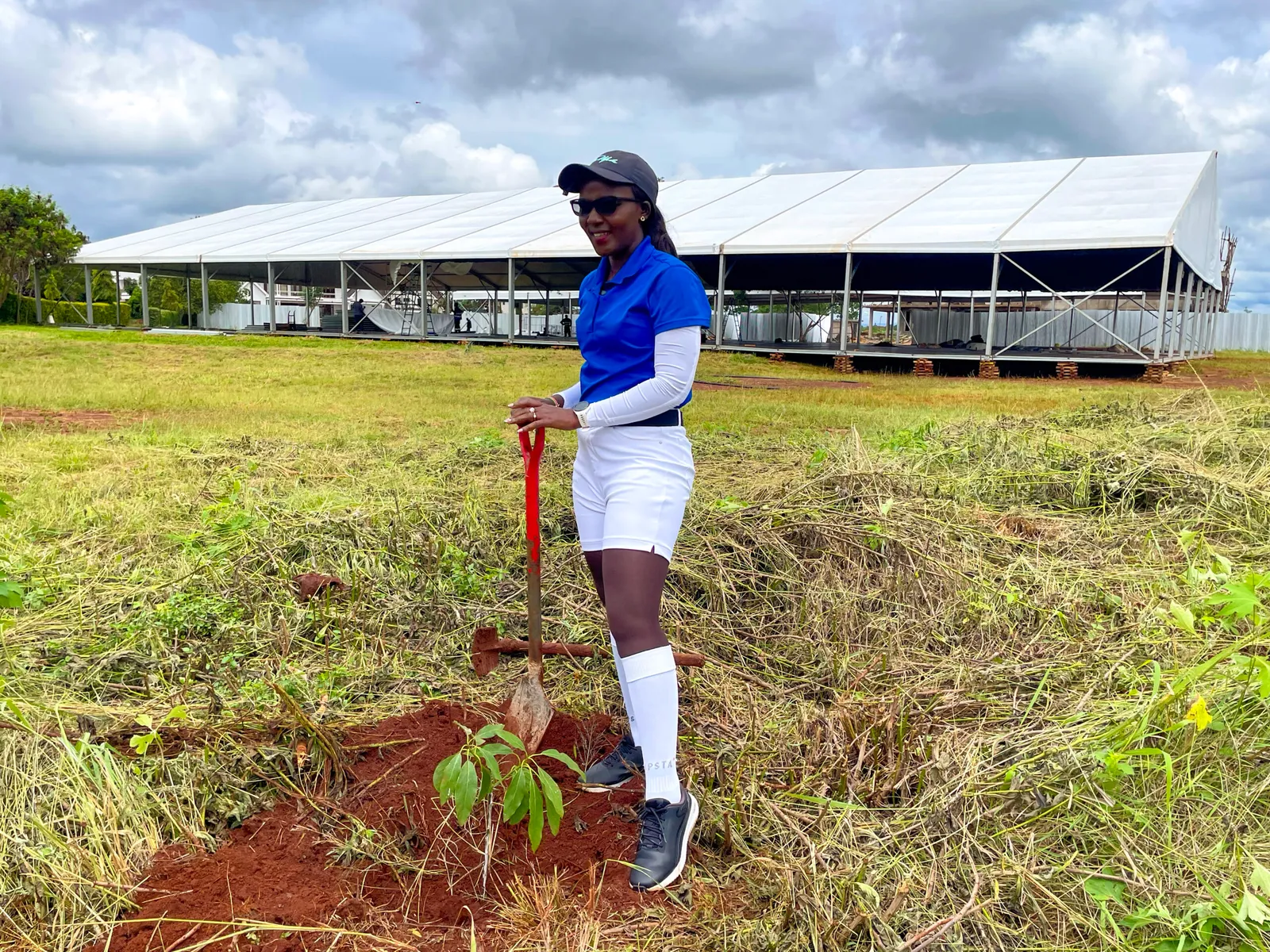
Jackline Cherop Sirai walked onto a Nairobi golf course and felt what a lot of us feel in rooms that weren't designed for us: present, but not quite placed. She was good enough to play. She simply hadn't been expected to arrive.
She didn't leave. She built Girls Who Golf NBO.
What the Pandemic Made Room For
Sirai runs Densey Tours & Travel out of Nairobi. In 2020, COVID-19 took that from her the way it took everything — quietly, completely, without warning. Borders closed. Itineraries dissolved. The business, as she says plainly, "slowed down by itself."
So she played golf.
"Instead of just sitting in the house, I would go play golf," she says.
Those months gave her something tourism rarely allows: stillness. Time to sit with a feeling she'd been too busy to name. "You would come here and still feel lonely, like you don't belong," she recalls. The course was beautiful. The welcome was conditional.
By the time restrictions lifted, she had an answer to that condition. She called it Girls Who Golf NBO.
The Work Itself
This is not a networking brunch that happens to own clubs. Girls Who Golf NBO is a structured community built on a single premise: Kenyan women belong on this course, and they always did.
Sirai launched informally during lockdown, pulling together a small group of women who already loved the game. That circle grew. It kept growing. Today the initiative runs golf clinics, competitive friendly tournaments, and professional networking events across the city. The more important work happens between those events — when experienced players and complete beginners end up in the same space, and mentorship moves through the gap between them.
The junior programme is where Sirai's thinking sharpens into strategy.
"The best age to start is three years," she says. "As this child grows up, they know this is what they are supposed to do."
Golf coach Emmanuel Wekesa has watched this from close range. He's been coaching in Nairobi since 2018 — men, women, juniors. The numbers he's seeing now are different from anything before.
"I've taught approximately more than 400 women since 2021, right from scratch, starting golf without knowing anything," he says. "Before, golf used to be seen as a sport for men, but what I'm seeing now is that it has really changed. Women are really playing and they love the sport."
Four hundred women. From scratch. In four years.
Why This Is a Structural Shift, Not a Feel-Good Story
For those of us who grew up in the diaspora, golf has a specific cultural weight. It's where contracts get signed and futures get shaped — on back nines we were never invited to join, in clubhouses whose membership fees were one more signal that the room wasn't meant for us.
The 2024 R&A Global Golf Participation Report tracks something happening beneath that history. Female engagement in golf across the continent is rising sharply. In Nigeria and Morocco, women now represent approximately 30% of adult registered golfers. In Kenya, both the Kenya Ladies Golf Union and the Junior Golf Foundation have logged a steady intake of new women players year on year.
Sirai isn't riding that wave. She's part of what's making it.
Rachel Ndei has played since 2015. She's one of the more experienced members of Girls Who Golf NBO. Before the community existed, she describes the sport as individual, disconnected — something you did alongside other people without it meaning anything shared. The group changed the texture of it. Mentorship, she says, happens naturally in the middle: you don't have to schedule it. You just show up, and the knowledge moves.
Then there's Ruby Abura — new to the game, already clear about where she's headed.
"I've just started, but I'd like to be top most," Ruby says. "Hopefully with the help of Girls Who Golf, I'll reach there."
That's not ambition despite the circumstances. That's ambition because of the environment someone built around her.
What a Three-Year-Old in Nairobi Changes
Consider what it means — practically, historically — for a girl in Nairobi to walk onto a course and see women who look like her holding putters with the ease of belonging. To have a coach hand her a club not as an exception, but as an expectation.
The junior partnerships Sirai has built with clubs across the city are still expanding. Every woman the network reaches becomes a potential reference point for the next one who arrives feeling slightly out of place. The pipeline is real. It's young. And it's already on the course.
For the diaspora: if you're visiting family and Girls Who Golf NBO has an event, go. Bring your daughter, your niece, the girl who sits quietly at every family gathering taking everything in. Put this in the group chat that only wakes up for football.
A girl trained in a Nairobi clinic today is a name you'll hear at an international tournament in ten years. You'll want to say you already knew.
The Point of the High-Five
On a Nairobi fairway, Sirai reads the slope, sets the ball, and rolls it into the hole. Rachel's hand goes up. Sirai meets it. They laugh, push their carts forward, move to the next hole.
That moment — that ordinary, joyful, unremarkable moment — is the whole argument.
Golf in Nairobi is no longer waiting to be unlocked. Jackline Cherop Sirai already changed the combination.


