This Isn't a Comeback. It's a Handoff.
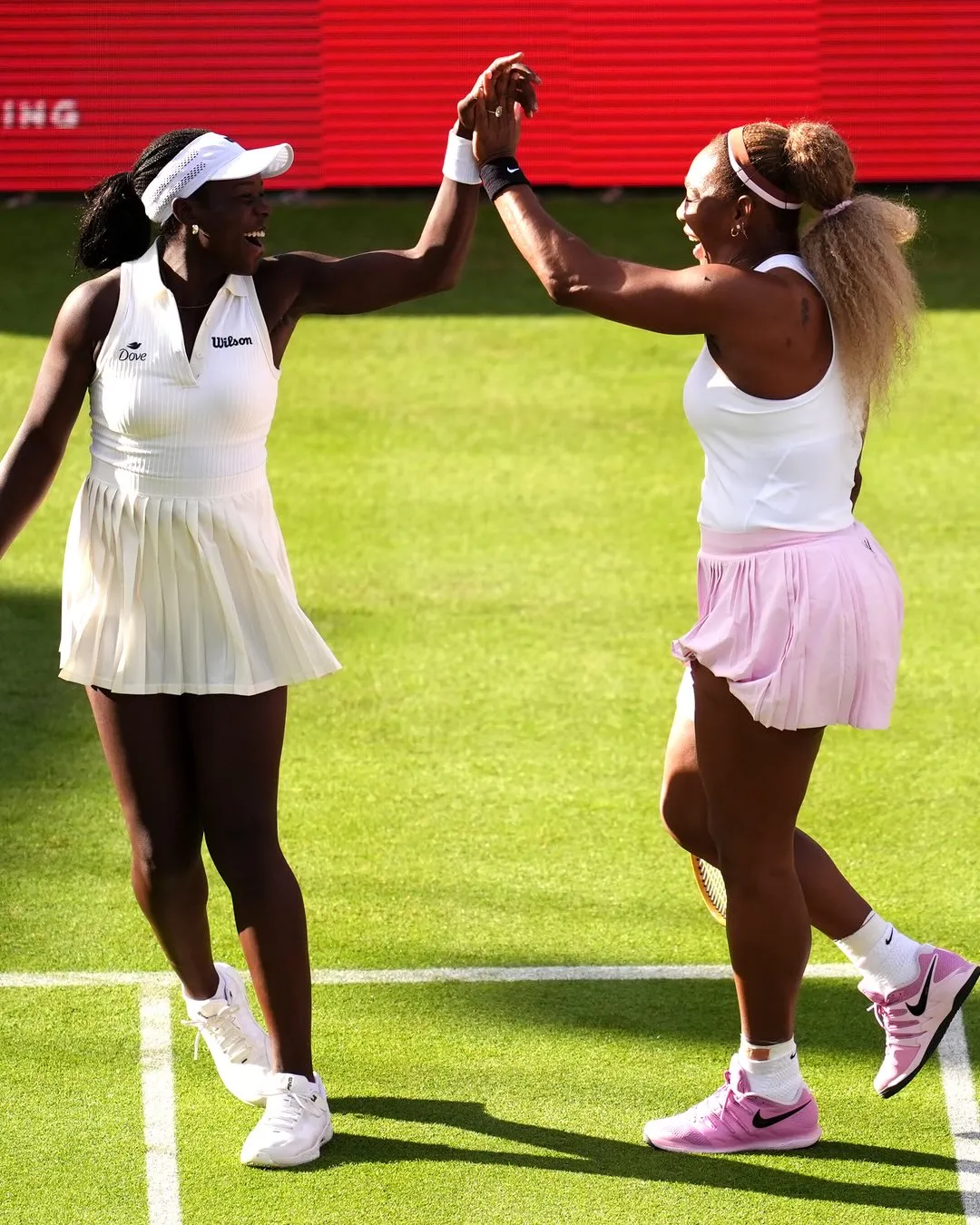
Serena Williams didn't come back to tennis to prove something to the world. The world already knows. She came back to Queen's Club in London last Tuesday, walked onto the Andy Murray Arena, and — partnered with a 19-year-old from the Democratic Republic of Congo — dispatched the third seeds 7-6(2), 6-2 in the first round of the HSBC Championships doubles draw. She came back, in other words, to win.
The partner who won with her: Victoria Mboko. Congolese-Canadian. Nineteen years old. A teenager who grew up watching Serena Williams on a screen and somehow found herself on the same bench, swapping tactics mid-match, celebrating at the net.
That image is the whole story. Everything else is footnotes.
What Happened on That Grass Court
Queen's Club is not a neutral venue. The grass smells like summer and Wimbledon warm-ups and a century of inherited prestige. Serena entered as a wildcard — because even at 44, even with 23 Grand Slam titles, the draw doesn't make exceptions — playing her first professional match since the 2022 US Open, the retirement that broke hearts across time zones.
Nicole Melichar-Martinez and Erin Routliffe, their opponents, were the tournament's third seeds. Not a courtesy draw. A real test for a pairing that had never shared a court before.
They didn't scrape through. They controlled. The pair won 78 percent of their first-serve points. Serena closed the match the only way she knows how — two aces and a service winner in the final game. Four years off. Didn't matter.
Alexis Ohanian was in the stands. Daughters Olympia and Adira were courtside. When the match ended, Serena stood on court grading herself with the precision of someone who has 23 data points to compare against: "A C-minus." The grass, the gap, the conditions — she factored all of it in. "Overall, I think it was decent."
Decent. The woman won 78 percent of her first-serve points after a four-year absence and called it decent. Some people are just built differently.
On the partnership itself, she said: "It was so fun. I had so much fun playing with Victoria. We've never played together but it just felt so natural playing with her."
Natural. That word does a lot of work here.
What Victoria Mboko Changes
For the Congolese diaspora — in Brussels, Paris, London, Montreal — this is not background noise. This is the lead story.
DRC has not had many athletes commanding sustained global sports coverage at the highest level. Victoria Mboko is changing that in real time. On grass. At one of the most historically white, historically European tennis venues on the circuit. Partnered with the greatest women's tennis player who ever lived.
We know what Serena Williams meant to those of us who grew up in African households — in Kinshasa, Nairobi, Lagos, Accra, or in the diaspora cities: Toronto, Houston, Johannesburg. She walked into rooms built to exclude her and rewired them. Didn't ask. Didn't soften. Won. Every Grand Slam felt communal. Like something our whole community had taken.
Now she is the elder on that court. And Mboko is the one receiving.
Think about what a young Congolese girl watching this from Lubumbashi sees. Or from a flat in east London. She doesn't see an icon and a sidekick. She sees two Black women — one who already changed the sport, one who is still deciding how far she will take it — winning together on the most established grass in tennis. She sees a path that wasn't visible last week.
That is not sentiment. That is infrastructure.
The chemistry is real, too — not manufactured, not a marketing pairing. Two players who had never shared a court found a rhythm on instinct and held it for two sets against seeds. Serena said it herself: natural. The veteran auntie passing the recipe without measuring anything. The younger one catching it perfectly, first try.
What Comes Next
The quarter-final draws harder. Serena and Mboko face Leylah Fernandez — the Canadian star of Ecuadorian descent, herself a cultural figure for Latin diaspora tennis — partnering Laura Siegemund. Another serious test.
After Tuesday, we're not worried.
If the rhythm holds, if Mboko keeps playing with that fearless tempo and Serena keeps finding her timing, this grass-court fortnight becomes something genuinely unrepeatable. Wimbledon is two weeks away. The stakes are climbing.
Know Victoria Mboko's name now. Not because she's Serena's partner. Because she is nineteen, Congolese-Canadian, and nowhere near her ceiling. In ten years, the debut everyone will want to have caught is this one — on a Tuesday in London, in the first round, against the third seeds, with the GOAT on the other side of the net.
Say both names when you share this. The headline puts Serena first. The story belongs to both of them.
Serena Williams came back to grass after four years and won. She brought a 19-year-old from the DRC with her. The handoff has already started.

