In December 2026, Singita will open Elela, its first lodge in Botswana's Okavango Delta — eight circular, stilt-raised camps threaded through the 175,000-hectare NG26 concession, better known as the Abu area of the Delta. 2 Rates run from US$3,100 a night in low season to a rack rate of US$33,950 a night for the four-bedroom camp in peak. 3 That single price tag is a useful lens on an entire industry: African luxury travel is one of the most valuable premium experiences the continent produces, and a growing share of the world's ultra-wealthy will pay almost anything to have it. The question MonoKromatik keeps returning to is not whether the product is world-class — it plainly is — but who owns it, and how much of that $33,950 ever settles on African soil.
The founders' club still runs the top of the market
The surprising answer, at the very top of the market, is that Africans still hold a lot of the ground. Singita is the clearest case. The brand traces to a farm the Bailes family bought in what became the Sabi Sand in the 1920s; Luke Bailes opened the first Singita lodge, Ebony, in 1993 and has built it into 19 lodges and camps across South Africa, Tanzania, Zimbabwe and Rwanda, positioned as custodian of roughly two million hectares of wilderness. It remains a private, family-controlled company. When Singita opens Elela, the value chain — brand, design language, conservation model, ownership — is overwhelmingly South African.
andBeyond, founded in 1991, is the other pillar. It runs 29 luxury lodges and camps and a bespoke travel business spanning Africa, Chile and Bhutan, and is owned by Yellowwoods, the private investment group chaired by Dr Adrian Enthoven — the same South African family office behind the Hollard insurance group. Here too, the equity, the strategy and the profits sit with an African owner, even as the guest list is global.
Wilderness — the Botswana-born operator that dropped "Safaris" from its name in a 2022–23 rebrand ahead of its 40th anniversary — shows how quickly that picture gets complicated once outside capital arrives. Wilderness protects some six million acres across seven-plus African countries, but its cap table now runs through global private equity. In 2018, TPG's impact vehicle, The Rise Fund, bought a 34% stake 4; a year later the group was taken private and delisted from the Botswana and Johannesburg exchanges. After the 2019 offer closed, African Wildlife Holdings held 55.1% and The Rise Fund 33.9%, with CEO Keith Vincent's concert party holding another 4.2%. 5 Wilderness is still African-led and Botswana-rooted, but its ownership now answers, in part, to a San Francisco fund.
The foreign set owns the postcard
Move one rung down from the owner-operated bush brands, and the ownership map tilts sharply offshore — especially in the trophy hotels. Cape Town's Mount Nelson, the pink grande dame that has operated since 1899, became a Belmond property in 2014. Belmond itself was acquired by LVMH — the French luxury conglomerate behind Louis Vuitton, Dior and Cheval Blanc — in a 2019 deal valued at about $3.2 billion. 6 Belmond's African footprint also includes three Botswana safari lodges (Eagle Island, Khwai River and Savute Elephant), meaning some of the most iconic addresses in South African and Botswanan hospitality now report, ultimately, to Paris.
That is the pattern that repeats across the wider hospitality layer: the branded hotels, the international chains, the airlines and the tour-operator front-ends that assemble the trip are disproportionately foreign-owned. The safari lodge may be African; the flight, the booking platform, the credit-card rails and the five-star city hotel on either end of the trip frequently are not. And that is exactly where the money leaks.
Where the $33,950 actually goes
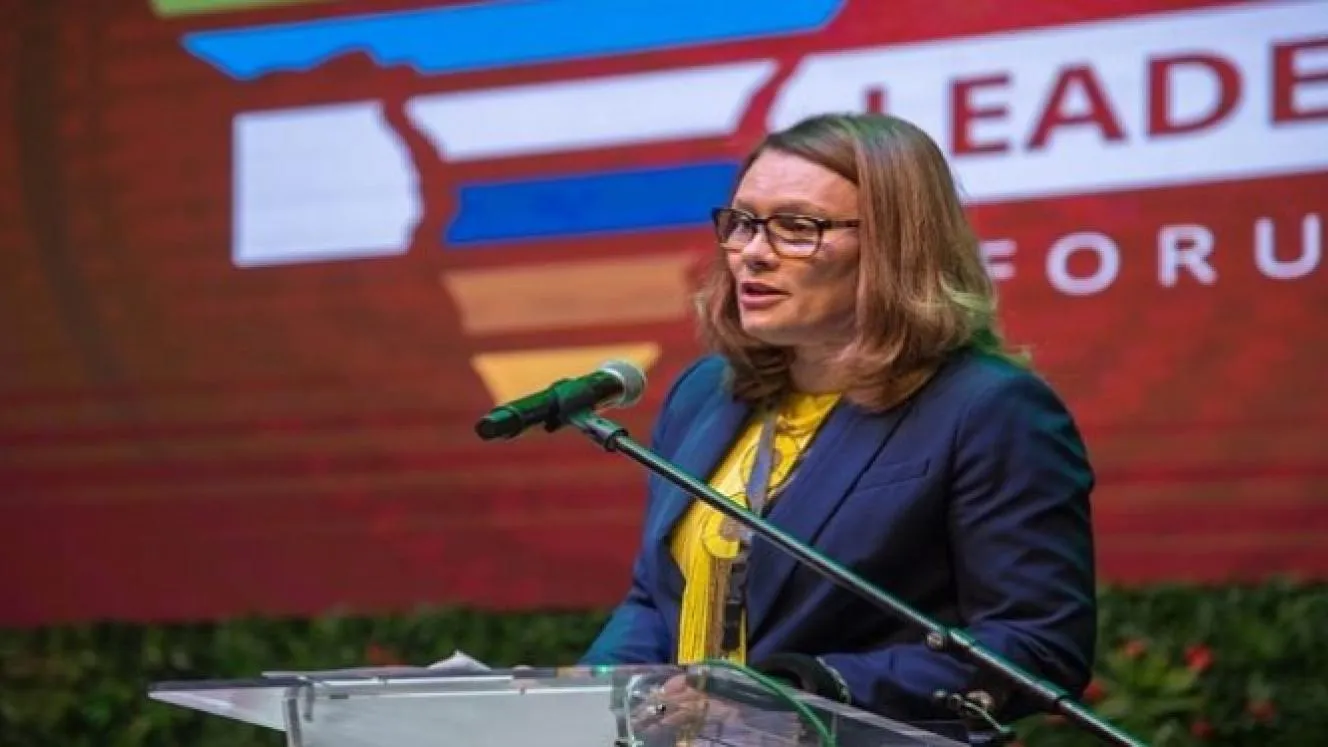
The uncomfortable arithmetic of African tourism is that a headline dollar and a retained dollar are very different things. Speaking at the Africa Tourism Leadership Forum in Gaborone, the UN World Tourism Organization's regional director for Africa, Elcia Grandcourt, put it starkly: of every US$100 that tourists from developed countries spend, only about US$5 remains in the developing-country economy they came to visit. 1 The rest is "leakage" — it exits via foreign airlines, foreign-owned hotels, imported food, wine, fittings and expatriate salaries.
The mechanics are well documented. On all-inclusive package tours, roughly 80% of travellers' spend flows to airlines, hotels and international companies often headquartered in the traveller's home country. 7 Only a minority of the goods and services consumed on safari are locally sourced — one frequently cited estimate puts local sourcing at around 17% of accommodation inputs, with food and beverage even lower. The most profitable eco-lodges, researchers note, are often the foreign-owned ones, precisely because they can capture the booking, the branding and the supply chain in a single vertically integrated stack.
This is why ownership matters beyond national pride. A family-owned Singita or an Enthoven-backed andBeyond keeps the brand equity, the design IP and the operating margin on the continent, and both channel a defined share of revenue into land purchase, anti-poaching and community trusts. An LVMH-owned Belmond or a chain-flagged resort can employ hundreds of local staff and still see the bulk of its economic surplus — the licensing fees, the management fees, the shareholder dividends — routed to Europe or the United States. Employment is real and valuable. But wages are the smallest, most substitutable slice of the value a luxury brand creates; the fat margins live in ownership, and ownership is the thing hardest to localise.
The conservation defence — and its limit
The strongest argument the incumbents make is that this is not extraction but preservation: Singita, andBeyond and Wilderness all run genuine conservation models, converting nightly rates into protected acreage, wildlife recovery and rural jobs in places with few other formal employers. That case is credible, and it is a large part of why these brands command the prices they do. The limit is that conservation storytelling can also function as a moat — a reason for wealthy travellers and global capital to keep owning African land and African wilderness on the argument that they are the responsible custodians. "Impact" and "purpose" are now standard vocabulary in every safari deck, including the ones written by private-equity funds.
The MonoKromatik read
African luxury travel is one of the rare categories where the continent authors the culture and, at the very top, still owns a meaningful chunk of the value. That is worth defending and building on. The vulnerability is the middle and the edges: the hotels, the airlines, the platforms and the supply chains where the money quietly changes passports. The next decade of this industry will be decided less by who designs the most beautiful camp than by who controls the booking engine, the concession lease and the cap table — and whether African capital, from pension funds to family offices, shows up to buy the assets before the next global luxury group does.
The brochures sell wilderness. The business is real estate, brand and financial engineering — and on those three, the scoreboard is closer than the postcards suggest.