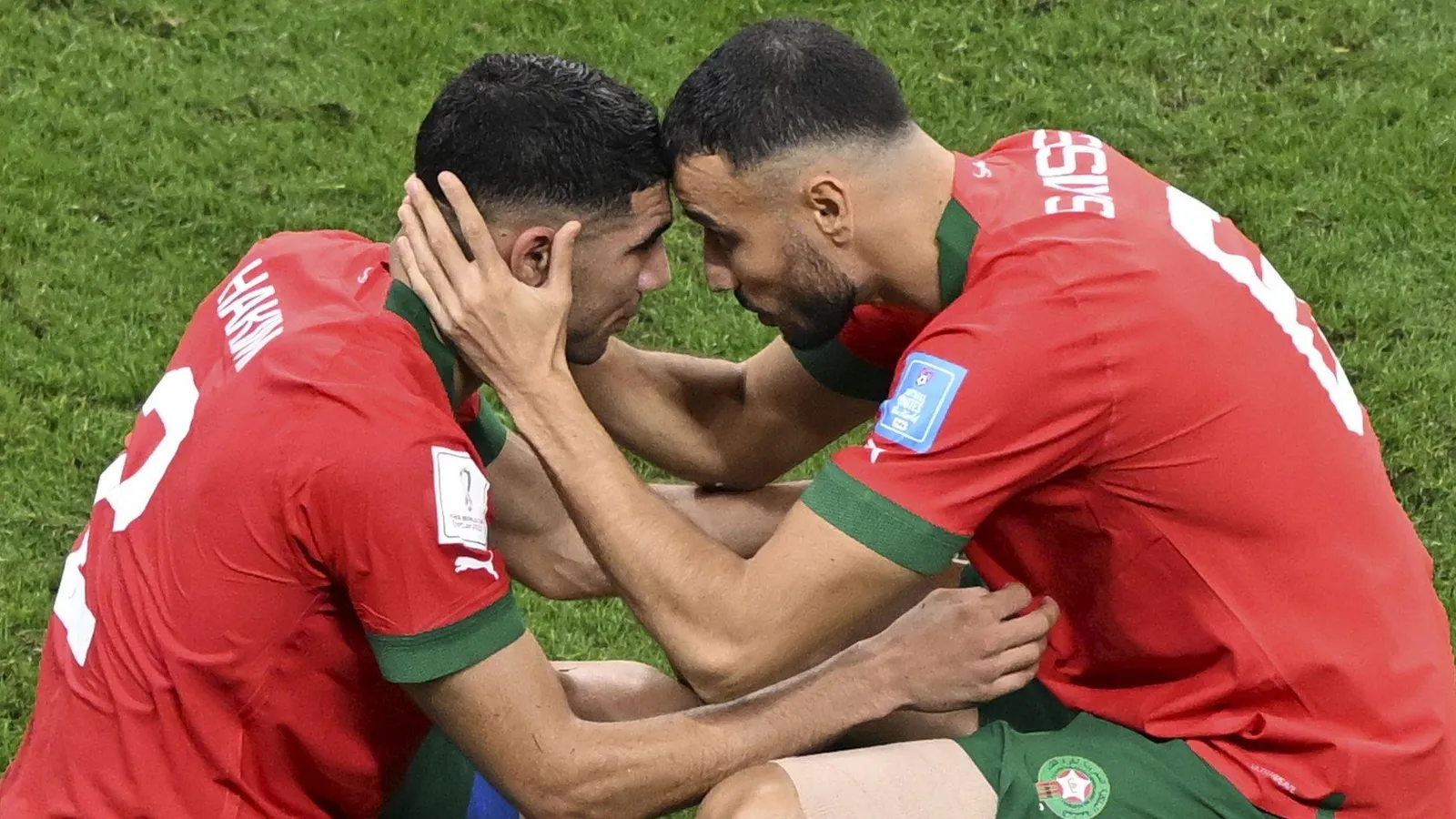
The Netherlands Built Them. Morocco Called Them Home.
The Dutch system gave Hakim Ziyech his first pitch, his first academy kit, his first senior call-up. Then Morocco called. Not with a form. Not with a deadline. With a long-term vision and the words: we need you. Ziyech said yes. So did Noussair Mazraoui. So did Sofyan Amrabat. So did seventeen more.
Now all of them are standing in Monterrey, wearing the Atlas Lions crest, about to face the Netherlands in the last 32 of the 2026 World Cup.
That is not a coincidence. That is a decade of deliberate work paying off in front of the world.
What the Scoreboard Won't Tell You
The Netherlands topped Group F with seven points and ten goals — their best-ever group-stage return. Morocco came through unbeaten too, finishing behind Brazil on goal difference after seven points from a group that included Scotland and Haiti. Two clean slates. One match.
But the number that matters most isn't on any league table.
Nineteen of Morocco's 26-man squad were born outside Morocco. Against Brazil in the group stage, Walid Regragui's side became the first team in World Cup history to field an entire starting XI born abroad. Eleven players. Eleven birthplaces outside the country they were representing. And they played like Morocco was home.
Because it is.
Nearly one in four players at this tournament was born outside the country they represent. Eight of the 48 squads carry as many foreign-born players as home-born ones. The map of international football has been redrawn. Morocco didn't just benefit from that shift — they engineered it.
The Choice That Changed Everything
The story starts with a different assumption. In 1998, when Dries Boussatta — born in Amsterdam's De Baarsjes district — became the first Dutch-born player of Moroccan heritage to pull on the Oranje jersey under Frank Rijkaard, the logic was simple: if you were good enough for the Netherlands, you chose the Netherlands. Morocco wasn't a competing option. It was, at best, a sentimental secondary identity.
That assumption is dead. Ziyech killed it.
Ziyech was born in Dronten. He came through the Dutch system entirely — technically, tactically, professionally. He received a senior Oranje call-up in 2015. Then the Dutch coaching structure shifted after Guus Hiddink left, and Ziyech felt what diaspora communities know intimately: the moment when an institution stops seeing you.
Morocco did the opposite. Federation officials called regularly. They laid out a vision. They made clear he wasn't a fallback option — he was central to what the Royal Moroccan Football Federation was building.
He committed to the Atlas Lions. People in the Netherlands were surprised.
Ziyech was not.
"I've always felt Moroccan," he said. "You choose with your heart."
Four words. That is the whole architecture.
After Ziyech, the precedent was set. Mazraoui came through Ajax's academy, born in Leiderdorp. Amrabat grew up in Huizen. Anass Salah-Eddine was raised entirely within Dutch football before committing to Morocco. Ismael Saibari trained at PSV Eindhoven for years before the Atlas Lions called. These are not players who fell through gaps in a system. They are elite footballers the Netherlands developed — who then chose to represent Morocco.
This Didn't Happen by Accident
The Royal Moroccan Football Federation (FRMF) built this deliberately, over more than a decade. Scouts deployed across France, Belgium, Spain, and the Netherlands — not chasing signatures, but building relationships with players and their families years before senior football was a realistic conversation. Former Morocco technical director Pim Verbeek said it plainly: family plays as important a role as football in these decisions.
The FRMF understood what European federations were slow to see. You don't win a dual-national player by sending a call-up letter six months before a tournament. You win them by showing up when they're seventeen, speaking to their parents, making them feel seen — not as a convenient option, but as essential.
By the 2018 World Cup, five of Morocco's squad had been born in the Netherlands alone. By Qatar 2022, when Morocco became the first African nation to reach a semi-final, 14 of their 26 players were foreign-born. Now in 2026, they are unbeaten in the last 32, playing the country that once assumed it had first claim on all of them.
Community thinking produces community results.
If You Know, You Know
If you're reading this in Amsterdam, London, Toronto, or anywhere else the diaspora landed — you already understand what this match is.
You know what it is to grow up between two worlds. To speak one language at home and another everywhere else. To carry two passports and feel the pull of two identities every time something consequential happens. This match is not a metaphor for that experience. It is that experience, in football boots, in front of sixty thousand people in Monterrey and millions more at home.
Watch how Ziyech orchestrates. Watch Mazraoui on that right flank, facing the club system that produced him. Watch whether the structural intelligence Morocco has built over years of deliberate planning can match Dutch firepower.
And watch the group chats. They'll tell you everything the broadcast won't.
Clarity Is Not a Conflict
Ziyech chose with his heart. Mazraoui chose with his heart. Amrabat chose with his heart. All nineteen of them did. And now they are in Monterrey, representing Morocco, standing across the pitch from the country that developed them.
That is not a conflict of loyalties.
It is the clearest thing in the stadium.

