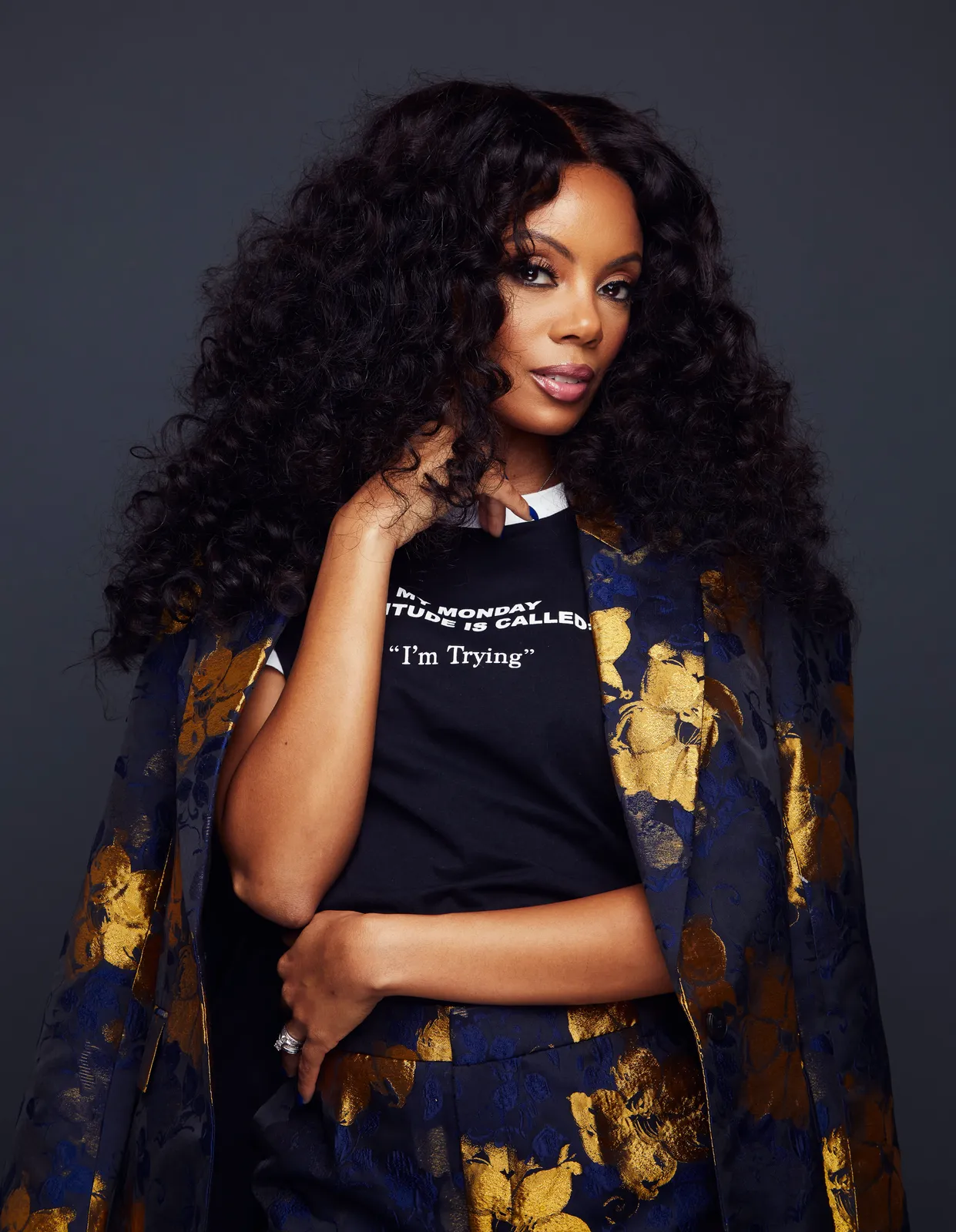
A nine-figure exit, and a comment section on fire
When Monique Rodriguez sold Mielle Organics to Procter & Gamble in January 2023, she framed it in a phrase that would follow her for years: she was "selling up," not selling out 1. A nurse-turned-founder who had built a textured-hair brand from her kitchen into a retail juggernaut, Rodriguez had just pulled off what Forbes later called a historic nine-figure exit 2 for a Black woman founder.
Within hours, the loyalists who had made Mielle a cult name were calling her a sellout. The fear was specific and rehearsed: that a beloved Black-owned brand, once absorbed into a white-owned conglomerate, would follow the familiar pattern of higher prices, reformulated products and diluted intent. One viral moment even saw a beauty influencer urging Black women to stockpile their Rosemary Mint oil before the 'gentrification' set in.
The episode is a near-perfect fable for the category it lives in. Black hair care is one of the most culturally authored consumer markets on earth — its language, rituals and product formats invented largely by Black women, for Black hair, in kitchens and salons and YouTube tutorials. It is also one where the value, again and again, ends up captured by someone else.
The size of the thing
Start with the money, because the money is not small. The global Black hair care market was valued at roughly US$7.5 billion in 2024 and is projected to reach US$11.2 billion by 2031 3. That figure understates the cultural footprint: the natural-hair movement reshaped how an entire generation of Black women relate to relaxers, wigs, texture and self-image, and it did so faster than the incumbents could formulate for.
On the continent, the same demand is compounding. South Africa's hair care market is forecast to grow from about US$527 million in 2025 toward US$741 million by 2031 4, with natural and organic products the fastest-moving segment as chemical relaxers fall out of favour. This is a category being pulled by culture, not pushed by advertising — which is exactly why it keeps attracting acquirers who did not build the culture.
The SheaMoisture parable
No brand carries more scar tissue than SheaMoisture. Its parent, Sundial Brands, was founded by Liberian-born Richelieu Dennis, and it became shorthand for the movement itself — the shea-butter jar on the shelf that said this was made for you.
In 2017, Unilever acquired Sundial Brands, reportedly in a deal valued near US$1.6 billion 5. That same year, in a moment that still gets taught in marketing classes, SheaMoisture released an ad under a "Break free from hair hate" theme that centred largely white women. The backlash was immediate and brutal: Black women read it as the erasure of the exact customers who built the brand, and the company pulled the spot within a day with a rare, plainly worded apology — "so guys, listen, we really f-ed this one up." 6
The ad and the acquisition were not the same event, but in the public imagination they fused into one lesson: the moment a brand chases scale beyond its founding community, it risks trivialising the very struggle it was built on. Dennis's own next moves complicated the sellout narrative in an instructive way. He recycled a chunk of the exit into a US$100 million New Voices Fund, seeded by Unilever, to back women-of-colour founders 7, and separately reacquired Essence magazine from Time Inc., returning it to Black ownership 8. That is the more sophisticated read of these deals: a big exit is not the end of the story, it is capital that can either leave the community or be recycled back into it.
The brands that were never yours to begin with
The harder truth is that many of the products framed as "Black brands" were corporate long before the natural-hair movement crested. Cantu — a fixture on textured-hair shelves worldwide — was founded by Rick Cantu in 2003, acquired by PDC Brands, and now sits under the private-equity firm CVC Capital Partners 9. It markets fluently to Black consumers and employs many, but it is not Black-owned in any ownership-and-control sense.
When a wave of consumers began auditing their bathroom shelves during the 2020 racial-justice reckoning, the list of non-Black-owned brands they had assumed were Black — SheaMoisture, Carol's Daughter, Cantu and others — landed as a genuine shock. The category had perfected a kind of cultural ventriloquism: heritage storytelling, founder mythology and community language, sitting atop conventional multinational cap tables.
This is the central tension MonoKromatik keeps returning to. Authorship and ownership are different assets. Black women authored the aesthetic, the vocabulary and the demand. Multinationals and PE funds increasingly own the equity, the distribution and the margin. In a functioning cultural economy those two things would converge over time. In this one, they routinely diverge.
The African counter-move
The most interesting response is not a boycott — it is a build. On the continent, a generation of founders is treating the ownership gap as a product opportunity rather than a grievance.
In South Africa, NativeChild — founded by Sonto Pooe, who launched with a hair-growth castor oil in 2016 and now sells across more than a dozen African countries and every major SA retailer 10 — is a template for what locally owned, locally manufactured, natural-hair scale can look like. The brand has moved into brick-and-mortar salons and beauty bars, and its pitch is explicitly built for Afro, kinky and ethnic hair using plant-based formulation — the same white space the multinationals were slow to serve. Nigeria's fast-growing herbal and organic hair segment, leaning on shea, black seed and moringa, is chasing the same opening.
These brands enjoy a structural advantage the American incumbents can't easily buy: they own both the authorship and the equity, on home soil, close to the raw materials and the culture. The risk, of course, is that success invites the same acquisition playbook — that a decade from now the story of a NativeChild or a Nigerian naturals champion ends with a European or American logo on the parent company.
The MonoKromatik read: authorship is not equity
Here is the so-what. The natural-hair movement is one of the clearest cases of Black cultural production generating a multibillion-dollar market — and one of the clearest cases of that value being captured downstream by those who did not create it. Every acquisition, from Unilever's SheaMoisture to P&G's Mielle, is a transfer of ownership over something the community authored for free.
That does not make selling wrong. Rodriguez's "selling up" is a legitimate strategy: liquidity, distribution and generational wealth are real prizes, and refusing every exit on principle can be its own trap. But the movement's long game isn't measured by how many Black founders sell to multinationals. It's measured by how much of the proceeds — and how much of the next generation of equity — stays in Black and African hands. Dennis funnelling his exit into a fund and buying back Essence is the model; a quiet absorption with no capital recycled back is the cautionary tale.
For African founders and investors, the strategic instruction is blunt: the coil economy is proof that culture reliably creates markets. The unfinished work is making sure the people who author the culture also hold the cap table when the cheque clears.