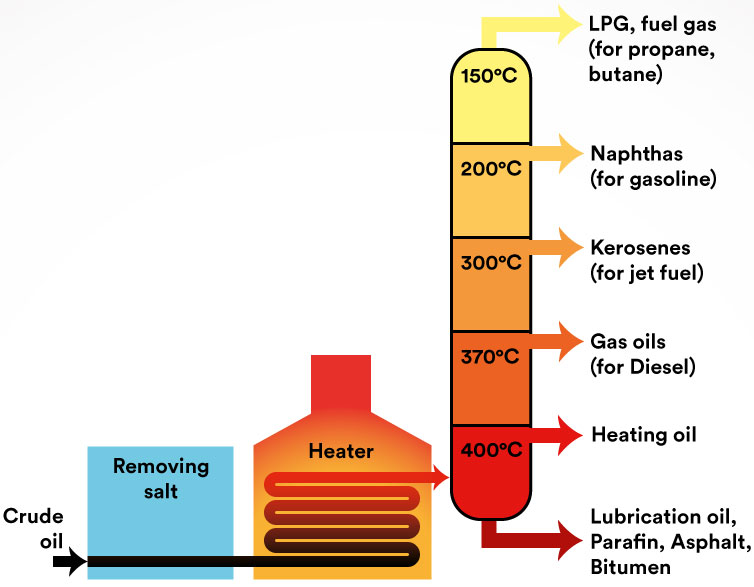
The oldest wound in Africa's economy is a round trip. Crude leaves the continent by tanker; it comes back as petrol, diesel and jet fuel at a markup somebody else set. Nigeria — one of the largest crude exporters on earth — spent decades running this trick against itself, pumping oil out of the Niger Delta and buying it back refined. The Dangote refinery is the first serious answer to that in a generation. At 650,000 barrels a day, it lets a major crude exporter stop importing the fuel it was always sitting on top of (Semafor) 2. That is not an efficiency gain. That is a wound closing.
Now Aliko Dangote wants to close a second one.
The plan, filed with Nigeria's Securities and Exchange Commission 4, is to take the refinery public: a raise of roughly $4bn at a valuation of about $40bn, which would be the largest initial public offering the continent has ever run, advised by Stanbic IBTC Capital, Vetiva and FirstCap, carried on a national roadshow between May and August 2026, and pointed at a debut on the Nigerian Exchange (Businessday; Semafor) 12. Those are the mechanics. The pitch on top of them is the part that travels. Dangote, the coverage reports plainly, "wants every African to own a share," with secondary listings under discussion in South Africa, Kenya, Ghana and the regional West African market (Billionaires.africa) 1.
Read that sentence twice, because it is doing two jobs at once. It is a share sale. It is also a story about who Africa's biggest assets belong to. For a continent whose most valuable companies have, for most of the modern era, been headquartered and owned somewhere else, "every African a shareholder" is not a line about liquidity. It is a line about repatriation. And the question worth sitting with — the one a national roadshow is designed to skate past — is whether the structure underneath delivers the repatriation the story promises, or only the feeling of it.
The second wound is worth naming as precisely as the first, because it is older and it bleeds more quietly. The crude round trip is at least visible; you can point at the tanker leaving and the tanker returning. The ownership wound is harder to see because it is written into the cap table rather than the shipping manifest. The pattern is familiar to anyone who has looked at where the continent's biggest mines, banks and telecoms networks actually book their control: the profit is African-made and the ownership is often somewhere else, so the dividend takes the same one-way flight the refined fuel used to. A continent can generate enormous value and still watch the title deeds emigrate. That is the wound the IPO is being marketed to close — the promise that this time, the asset and the people who live around it sit on the same side of the ledger. It is a genuinely powerful promise. It is also the one most easily performed without being kept.
Start with what is unambiguously real, because it is considerable. The refinery is a value-capture triumph of a kind the continent almost never gets to book. The extraction trap runs like this: a country exports a raw commodity cheaply, adds no processing, and re-imports the finished good expensively, exporting its own margin in both directions. Nigeria ran that trap on its own crude for a generation. The refinery breaks it. The barrel that used to leave and come back now stays, gets refined at home, and keeps its margin inside the border. That is the single most important thing to say about this project, and no ownership quibble erases it: at 650,000 barrels a day, the extraction loop is cut.
And the ambition is not to hold the line — it is to compound it. On 24 July 2026 the refinery secured $2.5bn to fund an expansion from 650,000 to 1.4 million barrels a day, part of a $40bn five-year programme to double refining capacity, quadruple fertiliser output, and build a second refinery in Tanzania — pushing the model out of Nigeria and into East Africa (Semafor) 35. Read that as a map, not a memo. Fertiliser is food security. A second refinery on the other coast is the extraction fix exported as a template. The through-line from crude to petrol to fertiliser to a Tanzanian plant is one continuous argument that Africa can process its own inputs into its own outputs at scale. On the industrial merits, this is exactly the kind of build the continent has been told for fifty years it could not execute. It is executing.
The bankers know what they have. They call the listing a "landmark," one that would prove the Nigerian Exchange can host a complex, globally significant transaction rather than watching its biggest companies raise money in London or New York (Semafor) 2. That claim matters beyond Dangote. Africa's capital-markets problem has never been a shortage of assets worth owning; it has been a shortage of deep, credible venues to own them through. If the NGX can clear a $40bn float without the price discovery, the settlement, or the confidence leaking offshore, that is infrastructure the next hundred companies inherit. The rail is arguably worth more to the continent than this one train running on it.
So the industrial case is settled and the market-plumbing case is strong. Which is exactly why the ownership claim deserves to be interrogated rather than applauded — because it is the one part of the story where the narrative and the structure can quietly diverge, and where a continent that has been sold ownership stories before has every reason to check the paper.
Here is the tension, stated cleanly. A $40bn asset controlled by one family is being sold, in part, to the public, under a banner that invites every African to own a share. Both halves of that sentence are true. The question is what the word "own" is carrying. In a raise of roughly $4bn against a $40bn valuation, the public is being offered a slice of about a tenth of the company (Businessday; Semafor) 12. Ninety percent of the upside — and, more to the point, effectively all of the control — stays exactly where it is. That is not a criticism of the deal. It is the deal. But it is the difference between distributed ownership and a distributed ownership narrative, and the two are not the same asset.
Our read is that this distinction is the whole game, and it is the one the roadshow is least incentivised to make. Owning a share is not owning the thing. A retail shareholder in Lagos or Accra or Nairobi buying into the float captures dividend and price appreciation on a minority stake. They do not capture control. They do not sit where the decisions about the $40bn expansion, the Tanzanian build, or the eventual dividend policy get made. The upside they hold is real and it is worth having. But it is a rent on someone else's asset, not co-authorship of it. And the gap between those two — between holding a share and holding the pen — is precisely the gap that "every African a shareholder" is engineered to blur.
None of which makes the concentration sinister. It makes it normal. This is how founder-led industrial empires are built everywhere, and the concentration is arguably the reason the refinery exists at all — a project this large, this long, and this contested needed a single will behind it that a committee could never have supplied. The honest position is not to pretend the family's grip is a scandal. It is to refuse to let a genuine, hard-won industrial victory get relabelled as a democratisation of ownership it does not structurally deliver. You can bank the first without believing the second. That is the discipline the story asks for, and the discipline a roadshow will not volunteer.
The pan-African weave around the deal tells you what kind of ownership is actually consolidating — and it is not retail. In January 2026, MTN Group's chief executive Ralph Mupita was appointed to the board of Dangote Fertiliser (allAfrica) 6. Read the route, not the headline. The continent's largest telecoms operator and its largest industrialist are threading their governance together at the top. That is a real, deepening form of African ownership: an interlocking blue-chip elite building the kind of dense, mutually reinforcing corporate network that every mature economy runs on. It is also, unmistakably, ownership concentrating rather than dispersing. The elite is becoming more African. It is not becoming more plural. Those are two different wins, and the roadshow is selling the second while the boardroom delivers the first.
Zoom out and the stakes of getting the language right come into focus. Brand Africa's 2026 ranking found that African brands make up only about 15% of the hundred most-admired brands on the continent, with the top five foreign for a ninth straight year (Brand Africa 100; African Business) 7. Sit with that number. On their own soil, in their own consumers' esteem, African companies still lose the podium to outsiders nine years running. Against that backdrop, a homegrown $40bn industrial champion listing on a homegrown exchange is not a footnote. It is a direct rebuttal — proof that the continent can build, own and float an asset of genuine global weight without leaving home to do it. This is why the ownership question is worth guarding so carefully. When African ownership is still this scarce, you cannot afford to spend the word loosely. Every time "ownership" gets stretched to mean "bought a small share of," the real thing gets a little harder to name when it finally arrives.
So hold both, honestly, without collapsing either into the other. The refinery is one of the most important pieces of value capture the continent has executed in a generation, and the IPO genuinely widens the circle of Africans with a financial stake in it — that is worth celebrating without an asterisk. And the ownership deepening fastest here is concentrated, familial and elite, not distributed and popular — and calling it "every African a shareholder" describes the marketing, not the cap table. Both are true at once. The maturity, for a reader deciding what this means, is refusing to trade one truth for the more flattering one.
The move for anyone reading this as more than a headline is to watch the structure, not the slogan. Watch the float size against the valuation — a tenth sold is a tenth of the story. Watch whether the secondary listings in Johannesburg, Nairobi and Accra actually put shares in ordinary hands or simply widen the institutional base. Watch the dividend policy, because that is where minority upside is either honoured or quietly starved. And watch whether "every African a shareholder" ever hardens into a real distribution mechanism — a broad-based scheme, a workers' allocation, a genuinely retail tranche — or stays a line in a prospectus. The slogan is the lagging indicator. The cap table is the leading one.
Because here is the thing the round trip taught us, and it applies to ownership exactly as it applied to oil. The wound was never that Africa lacked the asset. It was that Africa didn't keep the margin. Dangote has proven the continent can keep the barrel. The unfinished question — the one no roadshow closes for you — is who gets to keep the share.
