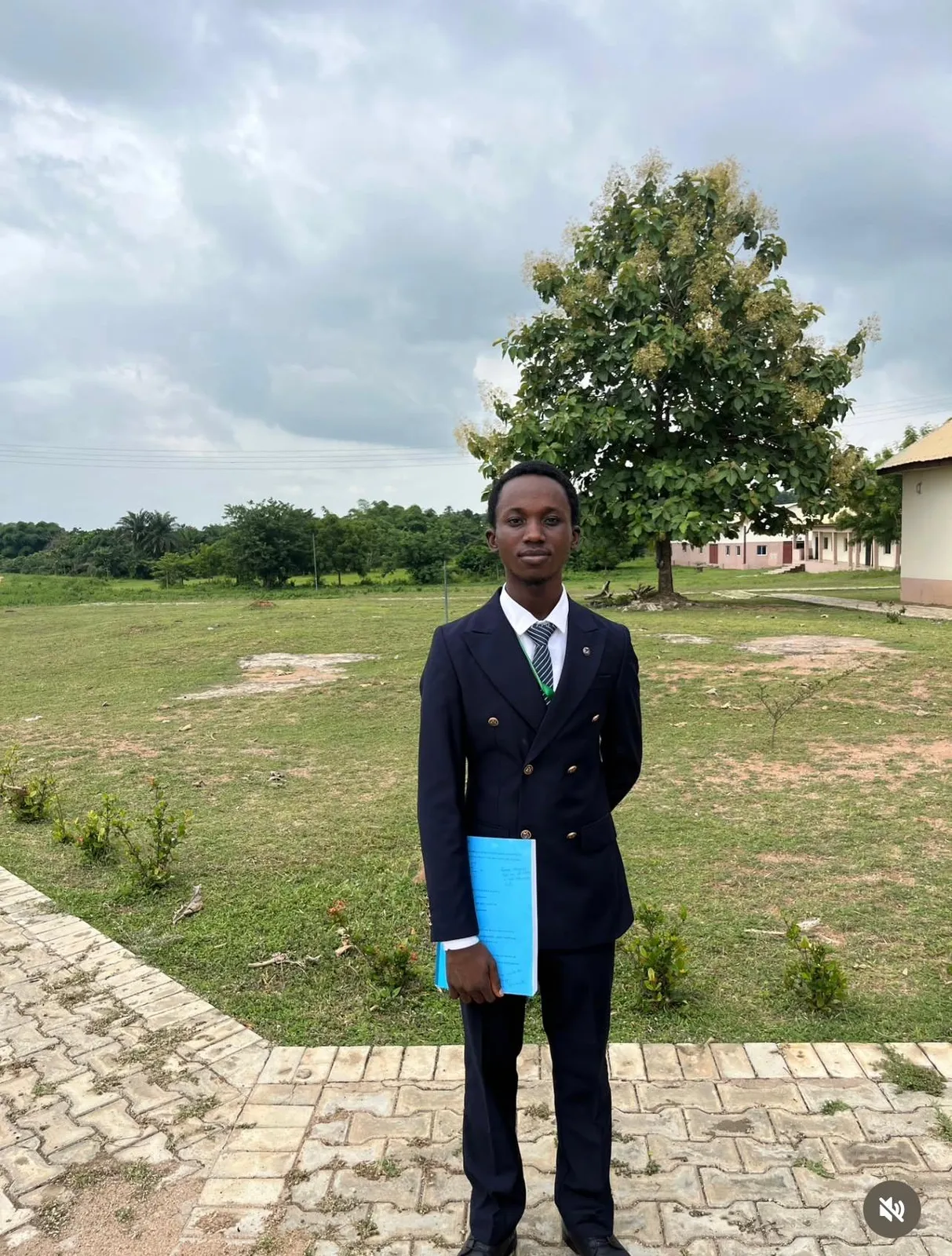
He Wasn't Too Young. The Door Was Too Small.
In 2021, a university looked at Enoch Adeagbo and saw a liability. Fourteen years old. Academically ready. Administratively inconvenient. The rejection letter cited no failed exam, no low score. Just his age — bureaucratic gatekeeping dressed as concern.
On 25 November 2026, Ajayi Crowther University in Oyo handed him a First-Class degree in Civil Engineering. CGPA: 4.79 out of 5.00. Second in his department. Third in the entire Faculty of Engineering.
Somebody go tell that first admissions office.
What Five Years of Quiet Work Looks Like
His parents didn't let him sit in the rejection. They pushed him to try another door. ACU opened it.
What followed wasn't a montage. It was five years of methodical, unglamorous commitment — the kind that doesn't photograph well but compounds over time like interest.
FREE DOWNLOAD
Get The African Ownership Map
One page: Africa’s most valuable brands, sorted by who really owns them — every entry sourced. Free when you join The Weekly Signal.
The Weekly Signal · brand, culture and commercial intelligence for Africa and its diaspora. Unsubscribe anytime.
Enoch had been showing up to construction sites with his father since he was a child, watching concrete and steel become something you could walk into. That curiosity didn't fade. It enrolled with him. By his second year — at 15 years old — he picked up the Overall Best Student in Engineering of the Year award at 200-level. He hadn't been chasing it. It found him.
But the cleaner story would be a lie.
In his 400-level first semester, he got a C in Structural Analysis. A course he thought he had covered. That grade hit differently — not because it damaged his average, but because it exposed something he hadn't reckoned with: confidence without understanding is just noise. He restructured his approach. Started teaching coursemates as a way to test the edges of his own knowledge. Started asking harder questions of himself.
That moment is where this stops being an impressive story and starts being an instructive one.
The Part That Doesn't Make International Headlines
By July 2026, Enoch was on active construction sites in Nigeria — still a teenager — supervising ribbed slab works and shear walls on five and seven-storey buildings. Instructing artisans old enough to be his uncles. Earning their respect not through rank but through the precision of what he knew.
Let that sit.
A 19-year-old, hardhat on, reading structural drawings with experienced tradesmen waiting on his call. That is not a headline the wire services are chasing. But it is exactly the kind of competence the diaspora needs to hold in its mind when it thinks about what's being built back home.
Along the way, he served as Academic Officer for the NUESA chapter at ACU. He logged real internship hours — site work, drainage, reinforced concrete, not observation hours ticked off a form for a portfolio. The CV he assembled at 19 is the kind that makes graduate admissions committees lean forward.
He also had to learn, early, how to exist in spaces that constantly clocked him differently. Coursemates were older. His age came up — regularly — as though youth were a liability rather than a data point. That specific pressure, being measured by everything except what you can actually do, is something a lot of us in this community have carried. Enoch didn't perform his frustration with it. He just outran it.
A Mirror, Not Just a Headline
If you're in London, Toronto, or somewhere in the American South reading this — you already know what 14-year-old Enoch felt. Maybe it wasn't a university rejection. Maybe it was a teacher who underestimated you, a recruiter who passed you over, a room that made you feel like you arrived too early or came from somewhere they'd never heard of.
We know that feeling. We tend to carry it quietly.
What Enoch did with his version of it was refuse to make it the story. He just went and built something instead.
For those of us raising children abroad, or working in fields where belonging still has to be proved with every project — his record is both a data point and a mirror. He wasn't exceptional because the conditions were favorable. The conditions were the same imperfect, under-resourced, age-conscious Nigerian system that produced complaints and produced engineers in equal measure. He was exceptional because he treated every obstacle as a structural problem to be solved rather than an injustice to be survived.
There is a difference. It is worth naming.
What Happens Next
Postgraduate study abroad — through scholarship — is the next target. Structural engineering. Water resources engineering. Research. Infrastructure that actually serves people rather than just passing inspection.
If you work in engineering, academia, or know anyone running graduate programs in civil or structural engineering: put this story in front of them. That is how the diaspora network functions — not in speeches, but in forwarded links and quiet introductions made at the right moment.
And if you are currently sitting with your own version of a rejection letter that said nothing about your actual ability: Enoch didn't wait for anyone to tell his story. He wrote and published it himself. He just needed someone to open one door.
One door was enough.
In 2021, a 14-year-old was told the room wasn't ready for him. In 2026, he graduated third in a Faculty of Engineering and walked off a construction site where men twice his age had taken his instruction.
The room was always ready. It just had the wrong door.

