The season's biggest cheque clears before you land
Detty December's spending is usually counted in hotels booked, tickets sold and short-lets cleared. But for most people coming home, the single largest line of the trip is the flight — and that money is booked, and largely captured, before anyone touches down in Lagos or Accra. Nigeria now has the most expensive skies in Africa: a Lagos passenger to London pays nearly three times what a traveller in Nairobi does 3. The homecoming has a tax, and it is levied at the departure gate.
That tax is why a season that generates real local wealth still leaks its biggest transaction offshore. The party happens in Lagos; the most valuable receipt is written by an airline that isn't Nigerian.
Who collects the tax
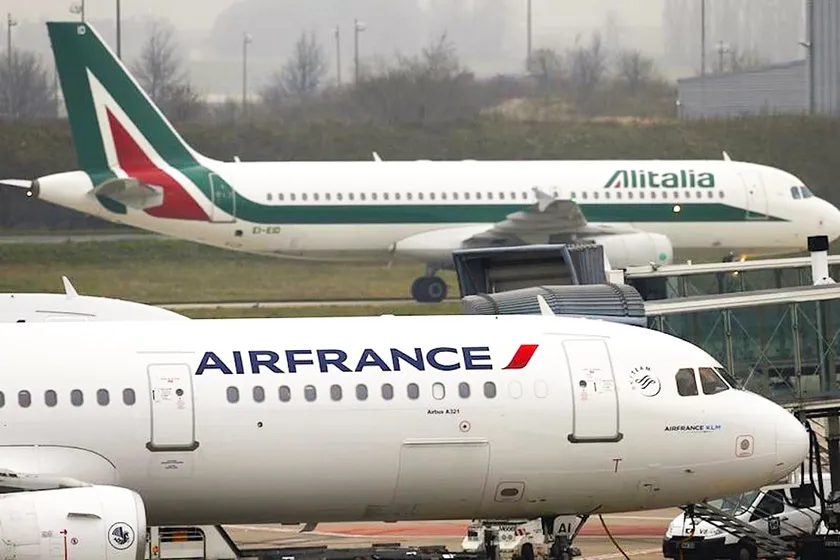
For years the lucrative Lagos–London corridor ran as a near-duopoly of British Airways and Virgin Atlantic, with Gulf carriers picking up connections — all of them foreign. Before real competition arrived, a one-way Lagos–London economy seat on BA cost around US$2,500, and business class US$8,827 1. Every one of those fares is revenue that leaves the continent.
And even the naira that foreign airlines do earn in Nigeria struggles to get home: their trapped funds in the country reached about US$812 million 3 at one point, money stuck behind FX scarcity. It is a strange, telling picture — a market so lucrative that carriers fight to serve it, and so strained that they cannot always repatriate what they make.
The one airline trying to claw it back
Then a Nigerian carrier broke the pattern. Air Peace launched Lagos–London in March 2024, selling return economy at about ₦1.2 million 2 — a fraction of the incumbents' fares. The response was immediate and revealing: within days BA's one-way economy fell from US$2,500 to US$1,364, and business from US$8,827 to US$4,814 1. Prices that had looked like the cost of the route turned out to be margin all along.
Whether Air Peace can actually hold that corridor against carriers with deeper pockets is a separate question — one we examined in the Air Peace aviation dossier. But the significance is plain: it is the clearest attempt yet to move the airfare from the exported column into the retained one.
The tax keeps coming back
One competitor dented the fares. It did not repeal the tax. Nigerian air fares have risen more than 300% in two years 4, and by the 2025 festive season the pressure was severe enough that the Senate summoned airlines over an "exploitative" airfare surge 5. December's demand is inelastic by design — a diaspora that has decided it is going home, whatever the price — and inelastic demand is exactly what makes a route so easy to tax.
That is the structural trap. As long as the metal, the routes and the slots are mostly owned by foreign carriers, the season's biggest cheque will keep clearing offshore, and the December spike will keep returning no matter how good the party gets 6.
The value-capture read
Our Detty December briefing showed the encouraging half of the story: the hospitality core — hotels, short-lets, promoters — is structurally hard to export and stays largely in local hands. The airfare is the mirror image. It is the biggest single spend of the whole homecoming, and it is captured mostly off-continent, before the local economy even opens for business.
Closing that gap is not a marketing problem; it is an ownership problem. Air Peace proved the premium was contestable. The trapped funds and the annual December surge prove that one airline cannot carry the whole homecoming. The season will only keep its largest cheque when the aircraft flying it home are owned by the continent it is flying to.

