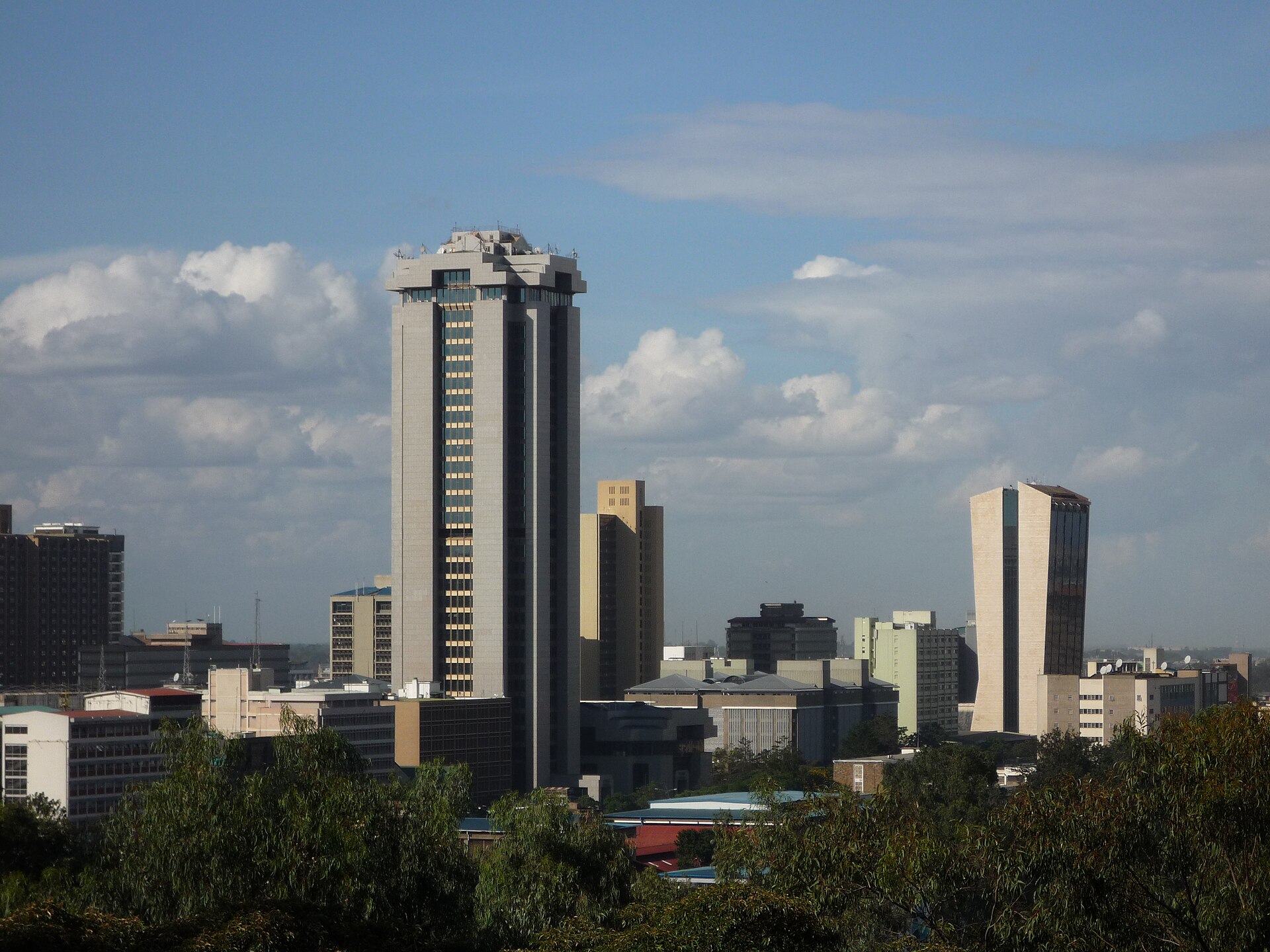
When Brand South Africa steps onto the stage at Africa Global PR Week in Nairobi from 26 to 28 August 2026, it will do something the continent has never done to itself: launch a standardised, continent-wide tool for measuring how African nations are perceived globally. The Africa Brand Index is billed as the first of its kind, and Brand South Africa arrives as the summit’s Strategic Nation Branding Partner, anchoring the track with a masterclass and a high-level fireside chat. 1 The obvious frame is that Africa is finally grading its own reputation instead of importing someone else’s scorecard. That is worth celebrating.
Here is the inversion. The Index arrives at the precise moment that Africa’s national brands are converging on the same three assets — creative-economy exports, youth, and diaspora reconnection — which risks producing a continent of interchangeable decks. Every ministry is buying a version of the same story: young, creative, open. An index that measures perception is about to benchmark a field that is quietly becoming indistinguishable. The question the moment demands is not who ranks highest. It is who authored the brand, and whether the story survives contact with the border post.
Look at the field. Kenya unveiled its ‘Experience Wonder’ campaign at ITB Berlin in March 2026, anchored under an ‘Origin of Wonder’ brand platform explicitly shaped for younger Millennial and Gen Z travellers who want authentic, shareable, immersive experiences. 4 In parallel, a 22-member task force has been convened to re-evaluate the long-running ‘Magical Kenya’ brand as regional competition intensifies, with a mandate to fold in artificial intelligence, design incentives for youth and women entrepreneurs, 5 and a Google partnership centred on digital skills and youth empowerment. 6 Visitor targets vary confusingly across reports — one widely cited figure puts arrivals at 7.5 million, 5 others cite 5 million by 2027 and 5.5 million by 2028 4 — so the number is best read as ambition, not confirmed forecast.
Uganda is running the same playbook with a diaspora twist. ‘Explore Uganda, The Pearl of Africa’ was built with CNN Create and the British-Ugandan spoken-word artist George the Poet, using film and digital platforms to tell the tourism story, backed by bus advertising in France, a cultural festival in Munich, and coffee promotion in Brussels. 3 The reported payoff: more than 7,400 French tourists since 2024, against roughly 1,800 previously. 3 Note what that partnership actually is — a diaspora voice hired to author a homeland’s image for a European audience. That is either the most honest version of this strategy or the most extractable, depending on who owns the upside.
Nigeria has pivoted its tourism proposition onto its creative industries outright — Afrobeats, Nollywood, fashion and fintech — after consolidating culture and the creative economy into the tourism portfolio. 2 It has paired the narrative with hard infrastructure: a centralised e-Visa system launched on 1 May 2025, fully digital, with approvals routed through the Nigeria Immigration Service headquarters in Abuja and decisions targeted within 48 hours. 7 South Africa, meanwhile, is refreshing its own nation-brand narrative around green-economy leadership and social cohesion, rolling out a Nation Brand Toolkit to force consistent messaging across government and the private sector. Four countries, one deck.
This is where the cultural-capital question gets sharp. Nigeria’s brand was not authored in a tourism ministry. It was authored by Burna Boy, by Tems, by the Nollywood machine and by a fashion scene that global luxury now studies. Afrobeats streams on one platform reportedly grew by thousands of per cent across 2021 to 2025; 8 the entertainment sector is projected toward the tens of billions of dollars. The state is doing something subtler than creating a brand — it is attempting to capture value from cultural equity that artists, largely unfunded, built first. The authorship sits with the creators. The branding apparatus is arriving late to claim the narrative and, ideally, monetise it. Whether the upside flows back to the authors is the value-capture test that no perception survey will ask.
Then there is execution — the gap between the diaspora-reconnection promise and the visa bureaucracy that governs it. The homecoming narrative is emotionally powerful and commercially real, but it dies at the border if the border does not cooperate. There is a reported roughly 25% surge in intra-African travel in the first quarter of 2026, tied to reciprocal visa-free entry between South Africa and Kenya. 2 Treat that figure with caution — it is single-sourced in trade press and should not be asserted as hard fact. But the direction of travel is the point: the countries closing the execution gap between the deck and the doorway are the ones the story will reward. Nigeria centralising its e-Visa in Abuja is an execution move dressed as an administrative one; a 48-hour digital approval is a brand promise kept in the one place the traveller actually feels it. A beautiful campaign about openness, undercut by a hostile arrivals hall, is not a brand. It is a lie with a good soundtrack. And this is precisely the layer that perception surveys are structurally blind to — you cannot poll your way to the truth of an immigration desk, because the people who felt it are not on the panel.
Into this arrives the Africa Brand Index, and MonoKromatik welcomes it without reservation. A continent that measures its own reputation on its own terms is overdue, and the framing from the summit is encouraging. Mary Njoki, Chair of Africa Global PR Week, has argued that nation branding is no longer about image alone but about trust, competitiveness, investment, influence and leadership. 1 That is the right vocabulary. The competition is good for everyone who takes this seriously, and we would rather share a field with a rigorous continental rubric than own an empty one.
But generosity is not the same as silence, so here is the stress-test. Most nation-brand indices measure perception — what a surveyed panel abroad believes about a country. Perception is a lagging, gameable signal. It can be moved by a CNN Create film and a bus wrap long before anything changes on the ground, which means a perception index can reward the deck precisely when the deck has detached from the lived reality. A continental index worth trusting has to measure three things the surveys usually skip: authorship (who actually built the cultural equity, and whether the state is crediting or capturing it), execution (does the openness narrative survive the visa queue, the arrivals hall, the actual arrival), and consequence (did value flow to citizens and creators, or only to the branding line item). That is a harder instrument to build than a sentiment tracker. It is also the only one that tells the truth.
That is the differentiator, and we state it plainly. MonoKromatik’s rubric is transparent and human-authored — a cultural-capital scorecard that grades idea, authorship, execution and consequence, and shows its working. We are not territorial about the Africa Brand Index; we are demanding of it, and of ourselves. A continent about to be sold back to itself as ‘young, creative, open’ deserves at least one instrument that asks whether the young got paid, the creatives got credited, and the openness was real once you landed. Nairobi in late August is the right place to start that argument. We intend to be in it.

&w=3840&q=75)