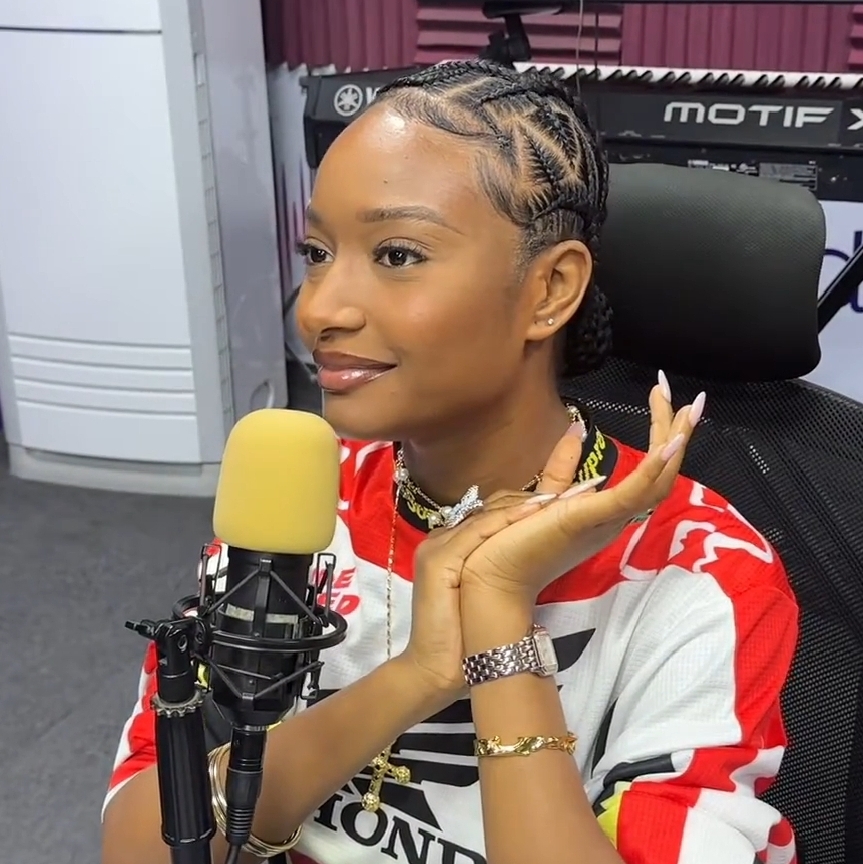
On 14 August 2026, Ayra Starr released her third album, Starrgirl — 16 tracks, features from ZAYN, Wizkid and Leon Thomas, credited to Mavin Records and Republic Records 1. Both labels sit inside the same parent: Universal Music Group. So when Afrobeats' most bankable young woman drops a global album cycle, the masters, the distribution and the marketing all route through a company headquartered in the Netherlands. That is not an accident of this release. It is the return on a deal UMG closed two years ago.
In February 2024, UMG acquired a majority stake in Mavin Global, the Lagos label Don Jazzy — Michael Collins Ajereh — founded in 2012 2. UMG did not disclose terms; Billboard reported the label had been shopped at a valuation “north of $125 million,” with a sale price in the region of $150–200 million 3. Early backer TPG Growth fully exited; Kupanda Capital kept a minority stake and an advisory role; Don Jazzy and COO Tega Oghenejobo stayed to run the label, which UMG said would “maintain autonomy” 2. A year later, UMG handed those same two men oversight of all its business in Nigeria 4. Vanguard called it the biggest exit in the history of African entertainment 5.
Mavin was not bought for its back catalogue. It was bought for its pipeline — Rema, Ayra Starr, Crayon, Ladipoe, Magixx and Bayanni 2. Ayra Starr is the sharpest edge of it: by 2024 her single “Rush” was nominated for Best African Music Performance at the inaugural Grammy for the category 6. Starrgirl is the first flagship album cycle from that roster to run entirely on UMG's rails, and the early signal was loud — Billboard readers voted it their favourite new music of the week at 87%-plus 7, and Nigerian outlets reported a record 1.82 million first-day streams on Spotify Nigeria 8 (a single-market figure; global chart data is not in yet).
Here is the uncomfortable arithmetic. Afrobeats' export engine is real and growing: Spotify's payouts to Nigerian music rose to roughly ₦60 billion — about $44 million — in 2025, and Nigerian music exports are up 49% over three years 910. But the growth chart flatters itself. Part of the 2024 jump was the naira's collapse inflating a local number rather than a proportional rise in dollars 9. And the rails that carry the growth — the label equity, the distribution margin, the global marketing spend — increasingly sit offshore. When the upside compounds, it compounds first for whoever owns the masters.
Mavin is the marquee case, not the only one. Warner completed its full acquisition of the African distributor Africori in February 2025, having bought in from 2020 11. Foreign Policy framed the Mavin deal plainly: the majors are taking Afrobeats and amapiano global — and, in the process, buying the continent's music infrastructure 12. The talent is African. The audience is increasingly global. The ownership is consolidating in New York, London and Amsterdam.
None of this makes the deal a bad one for the artists or the founders. UMG's capital, playlisting muscle and global distribution are exactly what turn a Lagos hit into a worldwide one, and Don Jazzy negotiated continued control and an expanded mandate — not an exit into irrelevance 24. That is a genuinely good outcome for the people who built Mavin. The question MonoKromatik keeps asking is narrower and sharper: as Afrobeats becomes one of the most valuable cultural exports on earth, what share of the equity — not the streams, the equity — stays on the continent that authored it? Starrgirl will sell. The catalogue it feeds is owned in Amsterdam.
